


 Francais
 Deutsch
 Italiano
Refine Your Search
Budapest Hungary 1916 stock footage and images
- Showing 529 to 534 of 876 results more
more Hide
Hide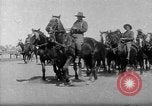
Australian Imperial light horse infantry regiment encampment during World War I.
Australian Light Horse Infantry men (with characteristics of both infantry and cavalry) at a home base in Australia, during World War 1. They move their horses, in groups of three, on a dirt track. Long Low wooden hitching rail is installed along the side of the dirt track. In the next scene, the horses are seen eating from feed bags all tied to a common rope line. The horsemen monitor them as they feed. One large horse stands alone and is petted by a horseman. Camera pans to reveal another long line of horses also feeding. Their feet are confined by rope tethers. Permanent camp buildings and some tents are seen in the background. Several of the horsemen kid around with each other. Two engage in a mock fist fight for the camera.
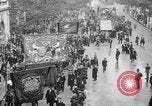
Trade unionists gather to protest higher food prices in Hyde Park, London during World War I.
Members of British trade unions gather in Hyde Park in London, England (Hyde Park, London W2 2EU, United Kingdom). Trade unionists protest rising food prices, during World War 1. They parade carrying their respective trade union banners and assemble to listen to speakers.
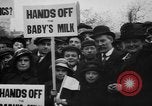
Londoners gather at Hyde Park to protest high food prices and milk shortage, during World War I
People gathered in Hyde Park, London, England, during World War 1, to protest high food prices and milk shortages. Most in this particular group are women and children. British carry signs that read ' hands off the baby's milk' and ' feed babys or pigs' A woman holds up a crying baby.
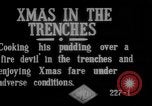
British troops heat and share a Christmas pudding in a trench during World War I.
World War 1 British soldiers dressed in cold weather gear, in a trench with snow all around. A Sergeant heats a canned Christmas pudding over a "fire devil" (metal cooking stand) in the trench. He opens the can and distributes contents to other soldiers in the trench. The soldiers pose and smile after sharing the pudding.
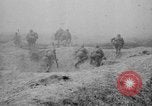
French troops charge out of trenches and incur casualties, in World War I. They carry wounded to field hospital in trenches.
French soldiers charge, from protection of a deep crater, and suffer casualties, during World War I. Several fallen soldiers are seen on the ground. Troops carry wounded comrades on litters to a field hospital in the trenches. Walking wounded walk in trenches beside a red cross sign.
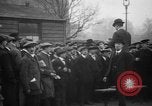
Men in Britain receiving personal notices for military service in World War I. Group is led by military officials.
Conscripted British men receive personal notices as their names are read at public gathering. The drafted men assemble and march off for training and World War 1 service, accompanied by uniformed officials. Friends and bystanders, including a number of women, walk along beside and behind the new recruits on their way to war.