


 Francais
 Deutsch
 Italiano
Refine Your Search
Chalons-en-Champagne France 1921 stock footage and images
- Showing 1261 to 1266 of 5759 results more
more Hide
Hide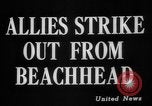
Allies bring reinforcements and supplies following the succesful establishment of beachheads during the invasion of Normandy, France, in World War II
Beachhead at Normandy, France, following the Allied invasion in June, 1944 during World War 2. Numerous supply ships are in the water offshore. Landing craft are all along the beach. Military vehicles fill the beach itself. British and American troops, ashore, observe ship maneuvering near a floating dock. British infantry pour from the open ramp of large British landing craft, behind some American troops already landed and walking along the shore. American soldiers aboard a landing craft next to a transport ship. Closeup of one of the soldiers in the craft, who wears "Screaming Eagle" patch of 101st Airborne Division. The open deck of an exceptionally large landing craft is seen jammed with U.S. troops, ready to depart from a transport ship. They wave for the camera. An American army truck driving out of British Landing Ship Tank (HM 415) onto a floating dock. It makes its way behind others headed toward the shore. Closeup of soldier wielding a sledge hammer to secure pierced steel plank (Marsden Matting) onto the beach. A DUKW (duck amphibious truck). German prisoners of war, disarmed and under guard, marching casually toward the beach. Closeups of some passing the camera. View from the beach of some wading out to a waiting landing craft. View on the beach of others approaching the beach for evacuation. View shifts to captured German film depicting German coastal defenses and structures of the so-called "Atlantic Wall." German Field Marshal, Erwin Rommel, accompanied by Field Marshal, Gerd von Rundstedt, as they inspect the fortifications. Views of coastal guns. Several German soldiers, using a 4-wheel dolly, roll a huge shell and powder charge out of a bunker. They roll it toward a camouflaged railway gun. German soldiers climbing steel stairs up to the railway gun and hand-cranking the barrel into firing elevation. Marshal Rommel accompanied by a Navy admiral and a soldier, walks up to the twin barrels of a coastal defense gun. the pause directly in front of the barrels and converse. The Admiral and the soldier both salute, perhaps acknowledging a comment or order from Rommel. Extreme closeup of the gun barrels.Next, back on the beachhead, Briitish soldiers are seen walking along the beach past knocked out German fortifications and standing near other abandoned ones. A British soldier swings a sledge hammer a reinforced concrete structure on the beach. A French man and woman waving at American troops passing them. British soldiers riding in a British Universal Personnel Carrier, MK II. Two Frenchmen wave at the troops. In nearby town, British soldiers are happily greeted by local inhabitants, including a woman with a baby on the sidewalk; children looking out a window; and people gathered at a street corner. A British soldier holds a French boy and offers him a piece of candy. An American M7 ("Priest") self-propelled 105mm howitzer and armed with a 12.7mm anti-aircraft machine gun. It moves through an intersection controlled by an MP (military policeman). Another one named "Apache" follows it. Local French inhabitants cheering the Americans as they pass through the town. An American soldier stands near several children as a DUKW amphibious truck veers somewhat, to avoid them while passing. He bends down to talk to the children and shares some candy with them. Infantrymen walk into a town, keeping close to buildings on both sides of the street. French men,women, and children wave and show "V for Victory" signs as some military policemen walk past.
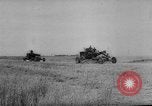
Allied troops construct airstrips and Dwight D. Eisenhower and George C. Marshall inspect Allied positions in France.
Allied troops in France during World War II. A bulldozer levels land for constructing airstrips. A group of men discusses. Ground troops unload a truck. Several aircraft in flight. Airplanes land at a constructed airstrip. Allied Supreme Commander Dwight D Eisenhower and U.S. Army Chief of Staff George C. Marshall arrive. They both view Allied positions. A damaged airplane on the ground. Artillery is fired and explosions and smoke rise. Tanks pass along the streets of a city.
American nurses and Red Cross workers of Allied troops give treatment to wounded soldiers in France.
Allied troops in France during World War II. A Red Cross sign on a tent. Red Cross workers of Allied troops carry wounded soldiers. Wounded soldiers on stretchers. An American nurse gives treatment to the wounded. A group of nurses sitting on the ground. A nurse drinks soup.
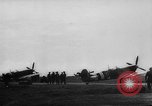
Allied airplanes bomb and strafe German emplacements in France.
Allied airplanes attack German positions in France during World War II. Allied fighter airplanes prepare to take off. The airplanes take off. They bomb and strafe German emplacements. Explosions occur and smoke rises. A fire burns.
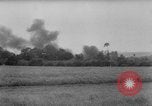
Winston Churchill, Jan Christiaan Smuts and Field Marshal Montgomery view Allied positions in France.
Allied troops in France during World War II. An Allied soldier watches through binoculars. Allied troops move into action. Troops walk in a trench. Army tanks in the background. A large crowd of French civilians gather as a French officer addresses them. French people show 'V' sign for victory. Prime Minister of the United Kingdom Winston Churchill, Prime Minister of South Africa Jan Christiaan Smuts and Commander of Allied 21st Army Group British Field Marshal Bernard Law Montgomery view Allied positions.
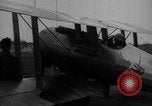
Captains J. A. Meissner and Eddie Rickenbacker seated in their airborne aircraft in France, during World War I.
United States Army Air Service (USAAS) 94th Fighter Squadron in France during World War 1. Lt Eddie Rickenbacker seated in the cockpit of a 94th Squadron Nieuport 28c.1fighter #12, as a ground crewman turns a propeller and the engine starts. The squadron's "Hat in Ring" logo is painted on the fuselage. Jump to October 1918 - Captain J. A. Meissner seated in the cockpit of a SPAD S.XIIIc.1 fighter. April 1918: Lieutenant Edwin Green seated in the cockpit of a Nieuport 28c.1 which starts to taxi. Another Nieuport takes off and climbs. Forward to October 1918 - Captain J. A. Meissner seated in the cockpit turns around and points towards the ground. A mock dogfight between two WW I bi-winged aircraft. American Army aviator Captain Eddie Rickenbacker seated in the cockpit of a USAAS Dayton-Wright DH-4 bomber looks back and waves. Aircraft is in flight. Aerial views of the ground showing a coastline below. The aircraft climbing over the clouds. Captain J.A. Meissner seated in the cockpit of an airborne aircraft. Captain Rickenbacker in his SPAD S.XIII fighter #1 in flight over the clouds. (Note: This is a segment of a longer film described in Eddie Rickenbacker's 1919 book, "Fighting the Flying Circus." It was filmed by Capt.Cooper of the U.S. Army Signal Corps from October 18th - 21st, 1918, and contained reenactments of air combat, some of it with a captured German Hanover C.III observation plane.) (WWI,WW1, World War One, First World War)
CRITICALPAST.COM: About Us | Contact Us | FAQs - How to Order | License Agreement | My Account | My Lightboxes | Shopping Cart | Advanced Search | Featured Collections | Website Terms & Conditions | Privacy Policy ©2026 CriticalPast LLC.
License Agreement |
Terms & Conditions |
Privacy Policy
©2026 CriticalPast LLC.