


 Francais
 Deutsch
 Italiano
Refine Your Search
Chalons-en-Champagne France 1921 stock footage and images
- Showing 2599 to 2604 of 5770 results more
more Hide
Hide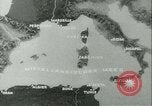
German and Italian units mobilize and occupy Southern France in World War II
A map shows countries bordering the Mediterranean Sea. German army and Italian army motorized units occupy Southern France during World War 2. German and Italian soldiers, tanks, and artillery move along on a road. Many German Quad 20mm anti aircraft guns (Flakvierling 38) in the Port of Marseilles, including some by the Marseille Basilica, high above the port . Ocean liners in the port. German soldiers sit around a truck. Sailors prepare equipment and guns. French officers explain the port facilities to German officers. Civilians in the city. Motorists, cyclists and pedestrians on the streets. Sign for the town of Cerbere. Motorized columns including German tanks proceed to the border with Spain. German and Spanish troops fraternize. Soldiers greet each other and interact. Fortifications are constructed on the South France coast. Axis soldiers camouflage artillery on the beach.
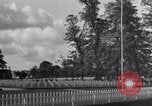
United States soldiers and officers at a military cemetery in France for Memorial Day services in 1945.
American soldiers and officers at a military cemetery in Ste Mere Eglise, France. Flags on grave markers. Soldiers stand with flags in hand. Officers stand. They pay respect to the graves of the American soldiers killed in World War 2 in the invasion of France. They place wreath on a grave. Children watch the officers paying respect to the graves. Soldiers stand with flags. Soldiers band. They fire in the air. They march with the band.
U.S. Army soldiers stand in front of a house in Saint Mere Eglise, France and enjoy coffee from a French civilian woman.
Soldiers of U.S. Army 1st battalion, 8th infantry regiment, 4th division in the days after invasion of France. The U.S. Army soldiers stand in front of a house in Saint Mere Eglise, France. A French woman pours coffee into canteen cups held by soldiers. Soldiers drink coffee and several smile and enjoy the coffee. They talk amongst themselves. (World War II period).
French woman gives chocolates to Free French soldiers in Lucé-sous-Ballon France (WW2)
Free French 2nd Armored Division troops in Lucé-sous-Ballon France during World War 2. Road sign reads “D. 123 Lucé sous Ballon”. French soldiers converge outside a shop at 7 Rue Louis Louaze 72290 Lucé-sous-Ballon, at the intersection of D123 and Le Grand Champ du Sablon. Sign on the wall of the shop says “Chocolat Menier”. A motorcycle is parked outside the shop. A French woman holding a “Cross of Lorraine” (symbol of Free France and French resistance against Nazi Germany) distributes chocolates from her basket. French woman smiling. Two soldiers kiss the French woman’s cheeks. French soldiers, vehicles and locals crowd outside the café. Two French Red Cross soldiers in an armored vehicle receive a bucket of water. Convoy of Free French soldiers continues down Le Grand Champ du Sablon as they leave Lucé-sous-Ballon
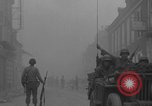
U.S. soldiers assist French civilians during liberation of Isigny-sur-Mer, France, in WW2
Rubble in the streets and burning buildings in the town of Isigny-sur-Mer, France, three days after the Allied invasion of France in World War 2. U.S. Army 29th Infantry Division soldiers stand guard in the captured city and other American Army units drive through the town, past burning buildings caused by Allied bombing the day before to counter German forces in the city. Wide view of the Place Gambetta at Rue Émile Demagny, with soldiers in distance standing near a stone pedestal and monument at center of town honoring Émile Demagny. A mix of U.S. soldiers and French civilians are seen in the streets. Close up view of flames and smoke coming from a burning building that has partially collapsed into the street. A U.S. Army soldier holds the hand of an elderly French woman and escorts her past the flames and through the rubble. Wide view shows the soldier and the woman in the center of a street with rubble from destroyed buildings on both sides.
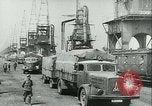
German troops transport war material, build bridges, prepare for battle and sort mail during the Battle of France.
The German assault on France during the Battle of France in World War II. German war material hauled into France. Trucks are loaded at docks. Soldiers load material. German trucks haul the war material into France. A road sign gives directions for 'Mecheln, Brussel, Antwerp, Mons, Bayern'. The convoy advances. Soldiers and horses in trucks. German soldiers sort and load cans, ammunition and other war equipment into trucks. German engineers and technicians build and repair war material. Engineers repair a bridge. Huge equipment used for the repair. Smoke emitted from a locomotive engine as it crosses the bridge. Soldiers seated cleaning ammunition. German civilians manufacture war material. Workers manufacture ammunition, rifles, guns, shells and artillery pieces. German officers confer over a map on a table. Soldiers ready artillery. Trucks transport German war supplies. German soldiers eat, drink and rest. Some wash clothes, bathe, get hair cuts, get dresses, and read. A soldier bathes a dog in a tub, another washes clothes in a tub. A soldier uses a hand pump, another dries clothes on a line. The men clean ammunition, clean and shoe horses. Soldiers lined up before an officer in a field. German officers and soldiers sated at tables. Officers confer over a map. Soldiers sort mail while others write letters. A sign reads 'Deutsche Feldpost' (German Army Postal Service). A soldier with a mail bag at the entrance. He gets into a mail van and leaves. Soldiers sort mails and parcels.
CRITICALPAST.COM: About Us | Contact Us | FAQs - How to Order | License Agreement | My Account | My Lightboxes | Shopping Cart | Advanced Search | Featured Collections | Website Terms & Conditions | Privacy Policy ©2026 CriticalPast LLC.
License Agreement |
Terms & Conditions |
Privacy Policy
©2026 CriticalPast LLC.