


 Francais
 Deutsch
 Italiano
Refine Your Search
Chalons-en-Champagne France 1921 stock footage and images
- Showing 4195 to 4200 of 5770 results more
more Hide
Hide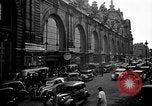
Travelers crowd in front of Gare d'Orsay station trying to leave Paris; Champ Elysees lights at night
Departing passengers and luggage crowd sidewalk outside of Gare d'Orsay train station in Paris, shortly before Battle of France in World War 2. Automobiles jam the street in front of the station. Travelers include very old people and families. Two women carry babies. View of the Champ Elysees at night. Cars and lights in shops.
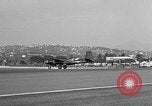
U.S. Air Force Search and Rescue team prepares to fly to site of crashed C-47 in Italian-French Alps
Air Search for United States Air Force aircraft C-47 which crashed in French Italian Alps. B-26 aircraft taxis at Nice Airport, France. A French C-47 lands on a runway. Paramedics prepare to board a C-47 for personnel and equipment drop in crash site area. Rescue personnel load equipment into C-47. Pilots and paramedics check map. Group kneels on ramp with map spread out. Paramedic jumpmaster, Master Sergeant Curtiss, of the 84th Air Rescue Squadron, holds pre-mission briefing. Major Rufus Hessberg, paramedic flight surgeon, is among the group preparing for the mission.
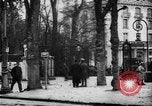
Allied and German representatives arrive at the Palace of Versailles in Paris to discuss the terms of Treaty of Versailles.
Signing of Treaty of Versailles in Paris, France. Soldiers guard the Palace of Versailles. Allied and German representatives arrive at the palace and get off their cars. Representatives being greeted by French officers as they enter the palace to discuss the terms of the peace treaty. Arrival of Georges Clemenceau and he exits car. British Prime Minister David Lloyd George arrives next. Marshal Ferdinand Foch reviews troops. U.S. President Woodrow Wilson arrives at the palace, exits car, removes his top hat, and extends his hand to greet officials.
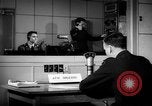
Educational, Cultural and entertaining broadcast by announcers at AFN (Armed Forces Network) Radio Station.
The AFN (American Forces Network) announcer speaks in French as part of an educational program, at AFN Orleans in France. Sgt. Bill Crawford talks about cultures and history of various nations. From AFN Berlin, Mrs. Jean Vavrin talks about cooking and various recipes. Also from Berlin, Pat Hicks hosts childrens program for the young listeners.
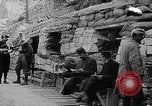
French soldiers relaxing after capturing Carency from Germans (battle of Arras) in World War I.
French troops occupying former German Battalion Dugout at Carency, France, during World War I. Old German sign still posted above the entrance reads: "Bataillons Unterstand Abschnitts komandeur Dora Zweifel?". The French regained this position in the so-called battle of Arras. French troops are relaxing on benches outside, and walking in and out of the building.
Floating ports prefabricated and towed across the English Channel for invasion of Europe; D-Day scenes in World War 2
Ships, supplies, troops, and weapons being marshalled for the invasion of Europe. Allied troops under fire wade ashore from landing craft during D-Day invasion of Normandy France. Allied troops on the beaches of Normandy. A floating port, consisting of Phoenix breakwaters, steel piers and related structures, designed in Quebec, Canada, assembled in England, and towed across the English Channel. A dozen Allied fighter aircraft in close formation fly over the floating port convoy. Aerial views of the numerous elements of the floating port. Diagrams of the floating port and building of a Mulberry harbour. Views of the sinking of caissons. Old Allied ships being maneuvered and scuttled to form a breakwater. A floating bridge extending to the beachhead. Trucks moving over the floating bridge. Barrage balloons over the beachhead. A storm inflicts severe damage to phoenixes and the new port. But supply operations resume after repairs are made off the coast of Normandy. Views of war weary U.S. Army troops taking a break for chow in the days after the D-Day invasion. American troops enjoy a hot meal and eat rations. Some smile. A soldier smoking a cigarette. A U.S. soldier cheers on fellow soldiers riding away in an Army truck.
CRITICALPAST.COM: About Us | Contact Us | FAQs - How to Order | License Agreement | My Account | My Lightboxes | Shopping Cart | Advanced Search | Featured Collections | Website Terms & Conditions | Privacy Policy ©2026 CriticalPast LLC.
License Agreement |
Terms & Conditions |
Privacy Policy
©2026 CriticalPast LLC.