


 Francais
 Deutsch
 Italiano
Refine Your Search
Chalons-en-Champagne France 1921 stock footage and images
- Showing 4405 to 4410 of 5770 results more
more Hide
Hide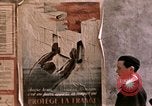
Allied airmen in the European Theater toward end of World War II.
Allied airmen and U.S. war correspondents in the European Theater near end of World War II. A poster in French shows a man erecting a wall and the slogan "Protege La France." A French boy wearing a beret stands beside it. Another poster reads 'Its a long way to Rome' and shows British and American flags superimposed over the city of Rome on a map of Italy. A U.S. Army Air Force airman poses near a small Army Air Force aircraft. A photographer and press correspondent talk to the airman. Another Allied airman wearing sun glasses. He removes his glasses and smiles.
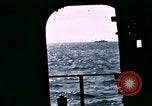
British officers confer aboard a ship underway in the Atlantic Ocean during World War II.
Allied troops aboard a ship underway in the Atlantic Ocean prior to the Allied invasion of France during World War II. Allied ships underway at sea. A landing craft at sea. Allied officers aboard a ship. One of them smokes a cigar. A Landing Ship Tank underway at sea. A number of ships underway. A signalman looks through binoculars. Silhouetted face of a man aboard a ship. The open sea. British officers confer on the bridge of a ship. A man in an overcoat aboard a ship.
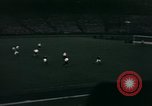
U.S. and British officers, soldiers, and civilians watch a game of soccer in London, England.
U.S. and other allied military officers in London, England shortly before the Invasion of France by Allied forces. A soccer (football) match played near London. The match in progress. A large number of people gathered to watch the match. U.S. Army officers and British officers seated in a stand as they watch the game of soccer. An officer smokes a cigar as he watches the game. A wounded soldier with bandaged face watches the game. (World War II period).
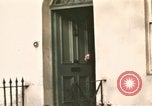
British and U.S. Army officers with British Field Marshal Alan Brooke in London, England.
British military officers and U.S. Army officers in London, England shortly before the Invasion of France by Allied forces. British Field Marshal Alan Brooke with two officers (one American) and a woman comes out of a house and poses. Field Marshal Brooke and the woman talk. Field Marshal Brooke speaks to the officers and poses. A different U.S. Army officer joins them and they pose. (World War II period).
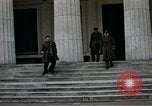
U.S. war correspondents in the streets of London, England shortly before D-Day in World War 2
U.S. war correspondents in London, England shortly before the Invasion of France by Allied forces. The uniformed correspondents climb down the stairs of a building. An officer walks down a street. Double decker buses, cars and other vehicular traffic on streets of London. Victoria Memorial outside Buckingham Palace. A British officer gets out of a car.
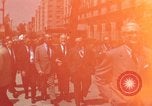
President Nixon meets with former war correspondents before they travel to Europe for D-Day 25th anniversary
World War II war correspondents gather in Washington DC before returning to Europe for ceremonies commemorating the 25th anniversary of the Allied invasion of France. War correspondents walking on the streets of Washington DC. They pass a long painted mural wall depicting scenes from American life. They stop at guard station of a White House entrance gate and then enter gates at the White House grounds as a White House officer checks them in. President Richard Nixon meeting with the correspondents. The President and a correspondent hold a document and pose for a picture. The correspondents pose with President Nixon on the White House lawn. President Nixon poses with the document, as the correspondents stand near him. Nixon talks to the men and picks up and pets the White House dog named Pasha, who was Trish Nixon's Yorkshire terrier.
CRITICALPAST.COM: About Us | Contact Us | FAQs - How to Order | License Agreement | My Account | My Lightboxes | Shopping Cart | Advanced Search | Featured Collections | Website Terms & Conditions | Privacy Policy ©2026 CriticalPast LLC.
License Agreement |
Terms & Conditions |
Privacy Policy
©2026 CriticalPast LLC.