


 Francais
 Deutsch
 Italiano
Refine Your Search
Chalons-en-Champagne France 1921 stock footage and images
- Showing 43 to 48 of 5759 results more
more Hide
Hide
Aerial bombing experiments on the battleship Ostfriesland and Brig Gen Mitchell with Secretary of war John Weeks.
Experiments on the aerial bombing of water crafts off Virginia Capes in the United States. July 20 and 21, 1921: Latest type First Line battleship, the heavily armored Ostfriesland at sea. Specifications of the ship. Handley Page 0/400 bombers in flight. The Ostfriesland under bombing attack. Explosions on and around the ship. Three 1,100 bombs hit the ship directly. View of the deck and bow. A 2000lb bomb caves in the starboard quarter. The ship tilted to one side and sinking. A final bomb dropped on the ship. Brigadier General William Mitchell congratulates the pilots and bombers. Secretary of War John W Weeks and U.S. Army General John J Pershing inspect Langley Field with other officers. Brigadier General Mitchell explains the NBS-1 bomber to Secretary Weeks. The group of Air Service pilots pose for a photographer in front of hangers.
Special tests on USS Alabama and Brig Gen William Mitchell with a group of Air Service officers.
Special tests on USS Alabama off the United States coast. September 1921: USS Alabama at sea. 50 lb Navy type smoke bombs used to obscure the attack by heavy bombers. Smoke trails all around the ship. Phosphorus bombs explode around the ship. 100lb high explosive bombs dropped on it. The ship under attack of 300lb demolition bombs. Smoke clouds over damaged parts. Three NBS-1 in flight over Langley Field. Bombers drop four 2000lb bombs in the final attack. Ship tilted to one side. Three Martin Bombers drop two 1,100lb bombs to finish the attack. A mushroom cloud rises from the explosions. The ship lies half submerged in water due to anchoring in shallow water. Wrecked hull, damaged deck. Soldiers inspect the damage. Brigadier General William Mitchell stands with a group of Air Service officers.
Bombing and sinking of warships off coast of United States as part of Genearal Billy Mitchell's demonstrations of air power.
Aerial view of target ship sinking after being bombed during tests of bomber capabilities against warships, in 1921, as part of General Billy Mitchell's demonstrations of airpower. Views of U.S. Navy battleships firing heavy guns at sea.
U.S. Labor strife - strikes and lockouts in the clothing industry in the 1920s
Post-World War 1 United States marked by labor-management strife and strikes, especially in the garment industry. Clothing workers are seen busy at their jobs in a factory in New York City. A man is seen symbolically closing and locking a steel door (narrative refers to a company "lockout.") Footage of police officers and crowd of laborers on New York City street. Police try to maintain order as crowds fill garment district streets in protest. Montage of persons awaiting a June 1921 decision by the Supreme Court of the State of New York, Kings County. Narrator announces that Justice James C. Van Siclen, has granted an injunction (against all picketing by the Amalgamated Clothing Workers of America). Narrator quotes Van Siclen's opening statement in the decision: "The court must stand at all times as the representative of capital, of the captains of industry..." View of Sidney Hillman, leader of the Amalgamated union (ACWA) sitting with other union members. View of a bustling New York City street lined with tenements and pushcarts in the lower east side of Manhattan. A man washing his face at a sink. A woman preparing a meal over a stove. Four children sharing a large bed. A gathering of idled clothing workers in a school room setting. Some in art classes. Dancers entertaining locked out workers. Young people presenting a puppet show. Narrator states that the lockout lasted 6 months, but the union prevailed. View of pleased union members.
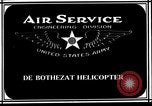
De Bothezat helicopter being tested during its development at the engineering division of McCook Field in Dayton,Ohio
Shows the rotor blade for the de Bothezat helicopter being tested during its development at the engineering division of McCook Field in Dayton,Ohio. Inventor George de Bothezat was hired by the U.S. Army Air Service in 1921 to produce a helicopter. This footage shows various tests being conducted: First a test of the " plane radical lifting screw ". The rotor is seen moving at high speed and lifting the front of the cart to which it is anchored. Second is a test showing the pitch variation mechanism. Next sequence show U.S. Army Lieutenant Colonel J.E. Fechet, Major T.H. Bane, and the inventor of the helicopter George deBothezat discussing with each other. De Bothezat points to the aircraft mechanism as he talks to the officers. De Bothezat and four Army officers sit in the helicopter to test the lift capability. The rotor rotates and lifts the front end of the cart with the 5 men seated in it, absorbing 30 horsepower.
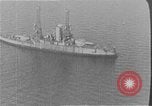
USS Alabama is hit by bombs during demonstration by Army Air Service DH4 bomber airplanes in the Chesapeake Bay.
Bombing demonstration by U.S. Army Air Service DH4 aircraft under command of Brigadier General Billy Mitchell. The target is Battleship USS Alabama, in September, 1921 in the Chesapeake Bay, United States. Army flier is seen checking security of a bomb under wing of aircraft. USS Alabama underway in the Chesapeake Bay. Aerial views from United States Army Air Service planes in flight over the battleship. USS Alabama is hit by a bomb. Later it is hit by a phosphorus poison gas bomb. Finally it is hit by 2000 pound bombs. The USS Alabama rolls over halfway, in shallow waters.
CRITICALPAST.COM: About Us | Contact Us | FAQs - How to Order | License Agreement | My Account | My Lightboxes | Shopping Cart | Advanced Search | Featured Collections | Website Terms & Conditions | Privacy Policy ©2026 CriticalPast LLC.
License Agreement |
Terms & Conditions |
Privacy Policy
©2026 CriticalPast LLC.