


 Francais
 Deutsch
 Italiano
Refine Your Search
China 1963 stock footage and images
- Showing 949 to 954 of 1923 results more
more Hide
Hide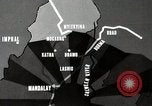
American and Chinese forces advance and capture Japanese held Bhamo in Burma, during World War II
Animated map shows American and Chinese forces advancing from Myitkyina to Bhamo, while British forces move to Mogamng to Katha, in Burma during the India-China-Burma campaign of World War 2. Mandalay, Lashio, the Burma Road, and Salween River are also shown on the map. Chinese troops are seen with pack animals moving along road marked by sign reading: "Bhamo Road." Chinese and American troops cross the Irrawaddy River by Pontoon bridge. A heavier item (M3 Lee medium tank) moves via a raft. M3 tanks also cross at affordable locations. Advancing troops move to extreme sides of road for security. Aerial view of Bhamo, on river's edge. Allies employ artillery and U.S. Army Air Forces P-39 Bell Air Cobra planes drop bombs. A Republic P-47 airplane is also seen dropping bombs. Chinese troops fire Browning M1917 machine guns and automatic rifles, as they advance upon the town. Another aerial view of smoke rising at various places in Bhamo. Lieutenant General Daniel Isom Sultan, Commander India-Burma theater, speaks about subsequent advance to the Ledo Road.
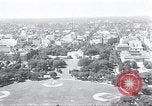
"Fuji Art Shoppe" in Washington D C
View of Washington D C city. Proprietor of "Fuji art shoppe" in Washington DC, is interviewed by a Japanese man. Proprietor shows around the shop. Articles like plates,vase and other China crockery can be seen. Small gift houses and other gift items made by wood can also be seen. Movies like Gates of Hell,The Magnificent Seven,Ugetsu, Samurai, Rasho-Mon can be viewed in the cinema hall.1964-65
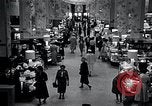
Japanese products for sale in Woodward & Lothrop Department Store, Washington, DC
Woodward and Lothrop department store in Washington DC. Customers come in to the shop and check Japanese items like China plates and crockery by Noritake company. A saleswoman helps customers. Two American women take a look at a dinner set helped by a salesman. Women look at a model bed room furnished with light lamps and furniture like bed and side tables in the Japanese Shop. A light with Japanese shade hangs from ceiling.1964-65.
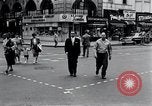
Japanese Books and Antiques in Washington, DC
Japanese man walks on a busy market street in Washington, DC. Japanese man window shops at a bookstore. English translation of Japanese Books 'Artistry in Ink' written by Seiroku Noma and 'Snow Country' or 'Yukiguni', in Japanese, by Yasunari Kawabata are on display for sale. Japanese paintings with writing and prints and . Japanese man walks into 'S Kriger Anique shop' and is greeted by shop proprietor. Japanese antique statuettes, china plates, bowls and box are on display for sale in antique shop. Japanese man holds a Newsweek magazine titled 'The New Surge The New America'. Japanese man talks. Scenes from World trade fair. Japanese stall in group five displaying Skis by R K Mizuno of japan. 1964-65.
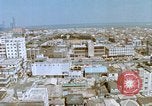
Street scenes and the people in Naha, Okinawa Island (Japan)
View of Naha, the capital of Okinawa Island in Japan. Cars drive along the streets of Naha. Shop signs written in Japanese are seen on Kokusai-dori Street. Japanese pedestrians walk on Kokusai-dori. Shoppers enter the Mitsukoshi Department store. Shop signs read “Okinawa Bird Center”, “Kokusai Watch Store”, “Noritake Naha China Shop”, “Bank of the Ryukyus” and “Souvenir Stores Fuji Omiyage”. Beauty salon sign in Japanese reads “Perm Beauty Salon Moriyama”. A woman buying mandarin oranges from a fruit store. Hands open a pack of chopsticks before eating a Chinese meal (beef broccoli, fried rice and egg rolls). Women walk past Johnny’s Gift Store in Naha. A Japanese movie poster hangs outside a building. Elderly Japanese men and women walking on the street. Groups of male and female High School students cross the road. Japanese salarymen wearing sunglasses cross the road. Farmers working on the field. A mother holding her baby on the street. A man browses for sunglasses from a street vendor. A Japanese Office Lady (OL) typing on a typewriter. Fishermen with net. A mason chiseling a rock. A construction worker operating a digger. A lineman working on powerlines.
Dramatic and animated presentation about production of alcohol and its taxation process in United States.
Alcohol production and taxation system: dramatization and animation. Dramatic raid of alcohol and tobacco tax division on illegal moonshine stills in a forest in the southern U.S. Officials of the Alchohol and Tobacco Tax Division of the Internal Revenue Service walk in woods. Illegal moonshiners sit in woods with rifle in hand and sacks on ground. Horse cart in the woods. Barrels of alcohol. Men fight. The officers dynamite and explode an illegal still. Animation shows the ancient time when men discovered the intoxicating effect of alcohol in different parts of world like Greece and China. Taxes on alcohol. Excess grain used by colonial government and process of making alcohol by grain. Alcohol making industry at a farm and exchange of necessary goods with alcohol. Alcohol making industry at small scale and factory of alcohol. The production of alcohol starts in1866 and reaches 15 million dollars and 90 million barrels production rate. Truck in 1950s driving into a brewery plant. View of giant cooper brewing kettles in brewery. The process of brewing beer. Production of beer is shown, with grains like barley and rice passing through machines and into brewing kettles. Alcohol as main source of revenue. Officials work at the permissive branch for administration of laws related to liquor, tobacco, cigarette paper and tubes production. Women and men sitting at desks. Women doing typing and clerical work reviewing forms and applications. Worker adds mash through a tube to a giant kettle in a distillery. In the Seagram's bourbon whiskey distillery in Louisville Kentucky, workers assemble wooden barrels, prepare flaming barrel lids for bourbon barrels, and they pound stoppers in barrels with a mallet and prepare them for shipment while an IRS inspector looks on. Government official of the IRS supervises production, packaging and labeling services in the factory. Seagram name and Louisville location seen printed on the barrels.