


 Francais
 Deutsch
 Italiano
Refine Your Search
China 1963 stock footage and images
- Showing 1045 to 1050 of 1923 results more
more Hide
Hide
Africans in the countryside.
'The word of god in Africa ' A map of Africa with a highlighted southern portion. Length and breadth of Africa. Countries that fit into the area occupied by Africa. An animation shows countries like America, India, China and others fitting into the area occupied by Africa. Africans outside their huts in countryside. People move across the railroad tracks.

A procession of decorated boats rows across a stream in Xochimilco, Mexico.
Beautifully decorated canoes and floats rowed across a stream at an annual procession in Xochimilco, Mexico. Men and women on board the boats. Men and women display Charro and China Poblana dresses.
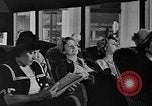
World War II film intended to encourage American civilians (especially women) to participate in the home front war efforts.
Mix of actual World War 2 footage scenes outside the United States, and dramatized war scenes inside the U.S. Narrator speaks as a U.S. soldier writes a letter to his mother at home, in which he contrasts the hardships of war torn countries and peoples with the relative safety and lack of suffering of the U.S. population during World War 2. Opening scene shows typical American women riding in a bus. One woman, ostensibly the soldier's mother, climbs aboard a bus as another woman steps out of it. A woman visits a friend who says she had to give up her Red Cross work because it didn't leave her time to get her hair done each week. A group of women at a garden party bridge club. Narrator says one of them could not work at a USO canteen because it conflicted with her bridge party. A woman lounging in a garden chair, is claimed to avoid a war job because they are all boring and dirty. A maid serves some hard to obtain foods to two woman at lunch. The hostess accused of obtaining them on the black market. The scene shifts to the letter writing son serving with the army in Europe. He relates taking a village recently, and the film shows residents cheering as the American soldiers occupy it. Fire fighters direct streams of water on burning wrecked buildings. Refugees fleeing their homes. Several nuns helping some as they evacuate. shells striking as refugees travel. Populations fleeing and refugee citizens leaving as invading forces come, in Russia, Czechoslovakia, Poland, France and France. View of people running for shelter in China. At this point, the film shows the chaos in those countries superimposed on America, where fires are being fought, and ambulances respond to help injured. A woman picks up her child as she and others run, looking skyward with dread. Air raid sirens sound in the background. A British soldier looks over a scene where Asian people are evacuating from war torn homes. A group of despairing European people. The film creates an imaginary image of and ordinary American woman digging through the rubble of her destroyed home. American women lined up, in front of bomb damaged buildings, to receive one egg a month. Other American civilians lined up to receive a ration of potatoes. Women in England are seen shoveling rubble from the remains of their homes after a blitz bombing by the German Luftwaffe. In Russia many women are seen digging and performing manual labor which the narrator says is labor forced by invading forces (possible slave labor forced by Nazi German forces). Women in Greece clearing rubble. Again, film creates imaginary view of Americans clearing rubble from their destroyed houses and evacuating en masse. Two American women comforting another in front of her burning home. More views of Americans in mass evacuation, carrying their belonging with them. Narrator states children are evacuated first and them film shows scenes of English children being sent to safety on buses. View of Russians evacuating in horse-drawn carts. Imaginary transition to Americans evacuating known local places. Chinese evacuating across a bridge, assisted by British soldiers. More imaginary scenes of Americans evacuating. A soldier writing a letter and then packing up his gear to move on with members of his army unit. They line up in formation and then march. Imaginary view of American women marching side by side with them. Glimpse of large formation of uniformed nurses marching. Last scene is of American flag superimposed on marchers.
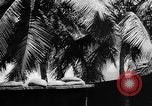
Protective measures taken by Americans in Hawaii, after the Japanese attack on Pearl Harbor.
Aftermath of Pearl Harbor attack. People in Oahu, Hawaii, prepare to deal with more air attacks by Japanese. Armed U.S. soldier in sandbagged position, in Hawaii. The territorial governor of Hawaii, Joseph Poindexter, signing a declaration of Martial Law. Four thousand members of Oahu's Civil Defense Committee, dressed in dark bottoms and white tops, wearing steel helmets with "W" on them, standing at attention in formation on grounds of a stadium. Windows in all downtown shops taped to prevent flying glass. Sand bags surrounding a power substation. Huge quantities of barbed wire in a storage yard and strung along the beaches, along highways, around schools, and public buildings of Oahu. A man pushing a lawn mower between sandbagged defense positions in a residential neighborhood. Construction machinery digging defensive trenches. Bomb shelters being constructed of precast concrete. Air raid sirens installed and school children leaving their building and sheltering in deep trenches during a test. Very small children taking shelter in zig-zag trenches and donning gas masks. Huge assemblies of children, and of grownups, all donning gas masks. Little children being dressed in capsule-like "bunny mask" protective gear.One of them crying inside the covering. Crowds of women and children lined up on a veranda waiting to receive these "bunny masks." Military personnel, civilians, and school children, all carrying personal gas masks with them at all times. Innumerable old rubber tires saved in an open yard. Japanese-Americans donating blood to the American Red Cross and lined up to buy war bonds. Soldiers arresting a Japanese resident known to be an enemy agent. Boarded up shops of Japanese-Americans, who had been interned. Japanese-Americans removing all Japanese language signs from their areas. Language school buildings with closed signs. An empty and boarded-up Shinto temple. One Japanese-American replacing his cafe sign with one reading: "Keep 'Em Flying Cafe." U.S. Army troops posted on roadways. The Aloha Tower in camouflage paint. A Lurline steamship leaving port, and being replaced by warships. Prewar view of people enjoying Waikakee beach, and current view of two boys playing in sand near barbed wire barriers. City streets deserted at twilight, as blackout procedures take effect at dusk. Views of darkened homes and palm trees silhouetted against sky at dusk. The "ghost" of a sailor killed in World War II, stands in front of Arlington cemetery, Washington, DC, and converses with the ghost of a soldier killed in World War I. They discuss idealistic notions about ending wars for good. Displays of flags is seen, including: Australia; Belgium; Brazil; Canada; China; Costa Rica; Cuba; Czechoslovakia; Dominican Republic; England; Ethopia; Greece; Guatemala; Haiti; Honduras; India; Yugoslavia; Luxembourg; Mexico; The Netherlands; New Zealand; Nicaragua; Norway; Panama; The Philippines; Poland; Russia; El Salvador; South Africa; and the U.S.A. "V" created in the sky by a skywriting airplane.

United States Arms Plants speed production during World War II.
View of the Ford Willow Run Bomber Plant in Ypsilanti, Michigan. Henry Ford in conversation with the British and American supply heads, Oliver Littleton and Donald Nelson. A B-24 bomber in the background. The touring party visits assembly line of the Ford Tank Plant. Several tanks roll out of the plant. In Washington DC China's Foreign Minister TV Soong concludes a land lease agreement with the U.S. Secretary of the State, Hall. On the Pacific Coast workers of a bomber plant are visited by the American Hero of War, General James Doolittle. General addresses the workers. The workers applaud and cheer. General Doolittle smiles and poses.
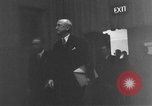
James F. Byrnes urges that Iran be given a chance to speak at UN Security Council meeting regarding Soviet military in Iran
Segment from the United Nations Security Council meeting at Hunter College, New York City, United States, on March 27, 1946. At the time, the Soviet Union, with its troops in Iran, and with interest in the governance and autonomy of Azerbaijan, was pushing to postpone discussion of the appeal by Iran that the action of the Soviet Army in Iran was a threat to international peace and security. American statesman James F. Byrnes, Edward R. Stettinius, Soviet diplomat Andrei Gromyko and representatives of the UN Security Council member countries are seen entering the conference room at Hunter College, New York City. The dignitaries seated at a table. Delegates and spectators present. Gromyko, the Soviet representative to the United Nations, speaks in Russian. Other delegates listen, seated behind. A delegate from China speaks. Several delegates raise their hands with questions. U.S. representative James Byrnes demands that the Iranians be given a chance to be heard. The Soviet delegation stands and exits the talks abruptly. Iranian delegate Hossein Ala', Iran's Ambassador to the United States approaches the table and is seated. The delegates listen as Mr. Hossein Ala addresses the council. Mr. Ala urges the council to take action, saying, "Iran views with grave concern any delay in the consideration by the council of the merits of these disputes. For these reasons, on behalf of my government, I request the council to take up these matters at once and reach, without reference to further negotiations, a solution consistent with the principles of the charter."