


 Francais
 Deutsch
 Italiano
Refine Your Search
China 1963 stock footage and images
- Showing 1243 to 1248 of 1923 results more
more Hide
Hide
President John F. Kennedy at the Tomb of the Unknown soldier on Veterans Day in Virginia, United states.
A film about President John F. Kennedy's last Veterans Day ceremony at Arlington National Cemetery in Virginia, United States, just 11 days before his assassination. The President's Own United States Marine Corps Band plays at the Amphitheater. Honor Guard and Color Guard march amidst spectators towards the podium. Band plays as Honor Guards hand over six freedom torches to representatives of six different nations at the ceremony. Chairman of the Veterans Day National Committee addresses the gathering. He talks about the importance of Veterans Day. U.S. Army General David M. Shoe addresses the audiences. View of graves and scenes at the Arlington National Cemetery. The United States Marine Band plays. Various views of the musicians as they play, and of band director Albert F. Schoepper. People applaud. A man amongst the audiences clicks pictures. People stand as President John F. Kennedy leaves. People pay respect to the war veterans. Marine Corps War Memorial. A guard at the Tomb of the Unknowns. Wreaths at the Tomb of the Unknown soldier.
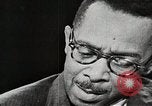
K Clark interviews Martin Luther King on non-violence movement of African Americans and the America's Promise in United States.
Doctor Kenneth Clark, Professor of Psychology at the City College of New York; Director of Fallen Youth Opportunities Unlimited and Research Director, North Pride Center for Interpretation sits in a chair. He interviews Martin Luther King Jr., the famed civil rights leader. Martin Luther King Jr. expresses his views on love, the non-violence movement, and America's promise. King reacts to reported comments from Malcolm X about King's non-violent movement. Martin Luther King, Jr. speaks about the demonstrations in Birmingham, and the teaching of the philosophy of non-violence that was effective in Birmingham in the face of violence from others.
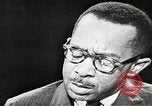
Martin Luther King Jr. tells about coordination of committees working during the civil rights movement in United States.
Doctor Kenneth Clark, Professor of Psychology at the City College of New York; Director of Fallen Youth Opportunities Unlimited and Research Director, North Pride Center for Interpretation, interviews Martin Luther King Jr. Dr. Martin Luther King Jr. speaks about coordination of various committees working during civil rights movement of African Americans. He comments on the cooperation between the NAACP, CORE (Congress of Racial Equality), and others, citing efforts in Birmingham and in voter registration drives.

Kenneth Clark interviews Malcolm X on civil rights movement of African Americans in the United States.
A poster advertising an event featuring Malcolm X and black muslims. Malcolm X exits a car. Flashback scene to African American civil rights demonstrators being repelled with water from fire hoses and police arresting some. Malcolm X addresses a gathering. Doctor Kenneth Clark, Professor of Psychology at the City College of New York; Director of Fallen Youth Opportunities Unlimited and Research Director, North Pride Center for Interpretation, interviews Malcolm X on civil right movement of African Americans. Malcolm X speaks about condition of black people in America and the Supremacy of God. Topics also include comparisons of Malcolm X positions to White Supremacy, and discussions of anti-semitism, guilt of white people, muslim faith, immorality of western society and separation from western society, and self-defense by African Americans in the face of violence.
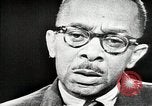
Malcolm X expresses views on non-violence movement of Martin Luther King Jr. during civil rights movement in United States.
Doctor Kenneth Clark, Professor of Psychology at the City College of New York; Director of Fallen Youth Opportunities Unlimited and Research Director, North Pride Center for Interpretation, interviews Malcolm X on civil right movement of African Americans. Discussion includes teachings of non-violence by Martin Luther King, and Malcolm X deriding that position. He calls Dr. King a 20th century Uncle Tom. He speaks against King's positions on forgiveness and he states that King's positions would lead to continued segregation. Clark asks about Malcolm X's goals. Malcolm X talks about the need for improvement in moral fiber of African Americans. He states that the white man is against brotherhood and is against peace, which is contrary to Muslim teachings. Malcolm X derides integration saying "you don't integrate with a sinking ship." He also talks about issues and conflicts of representation from people who have intermarried. He talks about police brutality and how the President did not send in troops to protect African Americans from attacks by dogs in Birmingham, but only sent in troops when African Americans erupted, in order to protect white people there. He talks about hypocrisy of whites in America.
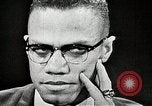
Malcolm X expresses his views on future of African Americans, in an interview on civil rights movement in the United States.
Doctor Kenneth Clark, Professor of Psychology at the City College of New York; Director of Fallen Youth Opportunities Unlimited and Research Director, North Pride Center for Interpretation, interviews Malcolm X on civil right movement of African Americans. Malcolm X expresses his views on future for blacks in America. Malcolm X talks of the need for white people to be in discussion with leaders of the Muslim religion. He says that white leaders need to hear God's analysis. He talks of an oncoming racial explosion due to dissatisfaction of black people. He talks of need for black people to separate from the whites and to be on their own land. He says that complete separation is the only solution to the black and white problem in the country.