


 Francais
 Deutsch
 Italiano
Refine Your Search
Colombey-les-Belles France 1918 stock footage and images
- Showing 4585 to 4590 of 6521 results more
more Hide
Hide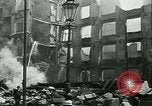
British response to Nazi air raids in Battle of Britain, and use of American radar in the European Theater during World War II.
The role and contribution of the U.S. Army Signal Corps in combat and war. Opening scenes show bomb damage due to German Luftwaffe blitzkrieg air raids (The Blitz) in Southern Counties of London earlier during Battle of Britain in World War 2. Firemen and rescue workers try to extinguish the fires with water hoses. The rescue workers conduct operations amidst bomb damaged buildings and rubble. Severely damaged buildings. Rubble strewn all over the streets in England. A Food Flying Squad van makes its way on the streets. Food distributed from the van. A British man walks amidst the rubble. Relief work in progress. Buckets of food and water lying at camps. Displaced civilian people eat and drink. London civilian residents evacuate numerous areas. Evacuees walk across a bridge. Big Ben seen in the background. Allied bombers in flight. Royal Air Force de Havilland Mosquito aircraft track and shoot down enemy aircraft. The dogfights result in mid air explosions. Two soldiers operate a U.S. radar designed to direct antiaircraft fire in combat area. The radar tracks a target moving up to 600 miles an hour. The soldiers track down aerial targets, the gun directors make adjustments and the antiaircraft guns are fired at buzz bombs. Enemy V-1 Flying bombs are hit and downed before they can reach the coastline. German V-1 rockets are tracked over England by radar and shot down. An V-1 is hit. It descends to the ground and explodes. France: A downed V-1 flying bomb is examined. The wreckage of a V-1 in a field. Soldiers and civilians near the wrecked V-1 Flying Bomb
Signal Corps weekly film reports sent to Photographic Center and used in training films for U.S. troops during World War II.
The role and contribution of the U.S. Army Signal Corps in combat and war. Amphibious landings of the first wave of Allied troops including Signal Corps Units in Normandy, France on D Day during World War 2. The Joint Assault Signal Companies (a Signal Corps Unit that accompanies the soldiers on every beach landing) go ashore in Normandy. Soldiers in landing crafts approach the beach. Landing crafts anchored along the shore line. A U.S. flag on the beach. Crafts approach the beach. U.S. Army Signal Corps combat photographers using motion picture cameras to film the battle that ensues on the beach and in the fields. Gun fire and explosions in the battlefield, filmed by combat cameraman. Allied aircraft in flight. Airmen load weekly film reports of the war in all Theaters made by Signal Corps officers from a van into an aircraft. The films are sent to the Photographic Center in New York. A soldier assembles the films. Technicians organize and arrange the films. They place the film reels onto racks. The film content is used to make training and orientation films for the U.S. troops. Troops watch the films in order to cut down the training period, and stay informed about the order of event in other Theaters of Operation. The films include 'Why We Fight' and 'The Fighting Men' series. Clips and recordings from these films.
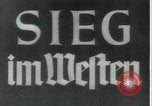
Germany under Paul Von Hindenburg during World War I and Adolf Hitler during World War II.
'Sieg im Westen' (Victory in the West) depicts Germany in World War I, and the first phase of German assault on France and the Low Countries during World War II. German troops swear loyalty to Nazi German Fuhrer Adolf Hitler. Panoramic views of the German countryside. Mountains, farmers harvesting crops, German cities, a cathedral, steel mills and coal mines. German troops reviewed at a colonial post. German troops advance during World War I. German President Paul Von Hindenburg and Generalquartiermeister (Quartermaster general) Erich Ludendorff. Animated maps depict powers allied with and arrayed against Germany in WW I, the extent of German advances, and the effect of the Versailles Treaty on Germany's borders. Forts are demolished, cannon and hangars destroyed, ships scuttled, and planes junked. German communists arouse crowds. Communist literature, montage demonstrates hyperinflation during the Weimar Republic. Inflated price posted on food. German Fuhrer Adolf Hitler reviews storm troops. Paul Von Hindenburg reviews German troops. German troops train with wooden tanks. French Prime Minister Andre Leon Blum and other officers review a military parade at Champ-Elysees in Paris. Troops march before the Arc de Triomphe. Paul Von Hindenburg appoints Adolf Hitler Reich chancellor. Hitler spades some earth, men build factories, war material production begins during rearmament of Germany, and concrete is laid for an autobahn (freeway).
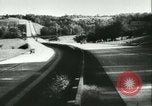
British Expeditionary Force troops mobilize in England while Adolf Hitler is greeted by thousands as he rides through Vienna.
The first phase of German assault on France and the Low Countries during World War II. Vehicles move on an autobahn (freeway). In England: British troops parade and drill. British recruits in civilian clothing are seen with baggage as they join military during recruitment for war effort. German Fuhrer Adolf Hitler reviews German troops. War materiel rolls from German factories, including views of artillery, tanks, and aircraft for German war effort rolling off of production lines. Hitler rides through Vienna Austria and across the Czechoslovakian border. Large group of people gathered on the streets greet him and give the Nazi salute. Hitler in his car as it makes its way across the border. Soldiers give the Nazi salute.
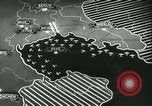
German engineers plan defense strategies against Czechoslovakia and Poland, and Hitler Youth construct the Siegfried Line.
The first phase of German assault on France and the Low Countries during World War II. Animated map illustrates Czechoslovakia and Poland's aggressions against Germany. The map depicts their planned advance towards Berlin. German engineers plan defense strategies. Railroads supply material during the war. Hitler Youth work on the construction of dragons teeth on the Siegfried Line.
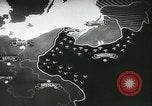
British officials meet in England as Adolf Hitler prepares his troops in Germany during World War II.
The first phase of German assault on France and the Low Countries during World War II. Animated maps illustrate Czechoslovakia and Poland defenses against Germany, and the East Prussian Corridor. Civilians including children flee war violence. German troops and tanks parade. England: UK Prime Minister Neville Chamberlain addresses a gathering. Britain's Foreign Secretary Lord Halifax (Edward Fredrick Lindley Wood, 1st Earl of Halifax), Winston Churchill, Leon Blum, and other officials. Germany: Hitler arrives at the Reichstag in Berlin. He addresses the Nazi officers and officials. A sign for the custom border district at Kreis. Bullet ridden walls and bomb damaged buildings. German troops load and fire artillery. German Panzer tank units invade Poland in 1939. Hitler looks through an artillery periscope. Black smoke rises due to numerous explosions.
CRITICALPAST.COM: About Us | Contact Us | FAQs - How to Order | License Agreement | My Account | My Lightboxes | Shopping Cart | Advanced Search | Featured Collections | Website Terms & Conditions | Privacy Policy ©2026 CriticalPast LLC.
License Agreement |
Terms & Conditions |
Privacy Policy
©2026 CriticalPast LLC.