


 Francais
 Deutsch
 Italiano
Refine Your Search
Colombey-les-Belles France 1918 stock footage and images
- Showing 499 to 504 of 6520 results more
more Hide
Hide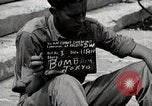
Views of Zōjōji temple in Tokyo damaged during World War II
Statue of Kannon, the Buddhist bodhisattva associated with mercy. Zōjōji temple (4 Chome-7-35 Shibakoen, Minato City, Tokyo 105-0011, Japan) and its vegetable garden show extensive damage from air raid bombings during World War 2. Rubble is scattered all over the temple grounds. A bell in Zōjōji temple. Building housing the bell shows damage. The Shiba Tōshō-gū (4 Chome-8-10 Shibakoen, Minato City, Tokyo 105-0011, Japan), enshrining the first Japanese Shogun Tokugawa Ieyasu, located beside the Zōjōji temple shows similar damage.
Allied troops capture Myitkyina, Burma, and Japanese 15th and 33rd Divisions counterattack British Forces at Imphal in India (WW2)
At opening, film shows U.S. Army Air Forces Bell P-39 Bell Air Cobra aircraft dropping bombs on on Japanese held northern airfield of Myitkyina, which was later captured by the 3rd Battalion Merrill's on July 26, 1944. Aerial view from U.S. aircraft bombing the Japanese occupied city of Myitkyina, on the west bank of the Ayeyarwady River, in Burma. Heavy smoke rising from bombs striking targets at the river's edge. (Narrator states, "the siege lasted 78 days.") Next, a regiment of Merrill's Marauders marches unopposed into the city. Animated map shows Japanese forces (15th and 33rd Division troops) attacking British-held town of Imphal, Burma. Ensuing scenes show well entrenched British forces in battle, with British soldiers firing heavy artillery, mortars, and Vickers machine guns. Glimpse of shells striking in hills. Momentary glimpse of Allied aircraft above the hills. (Narrator states the British "chewed up a couple of Jap divisions"," and the Allied rear lines of communication remained secure.) Animated map shows Chinese forces attacking Japanese forces west of the Salween River. View from a high position above the river bank. Rubber rafts line the shore and troops are assembling on the land. Next, troops are seen wading neck deep crossing the river with supplies floating along with them. Some paddle a jeep across the river on a makeshift raft. A truck at the edge of the river. Soldiers pulling together on a long rope line. Others crossing with hands on a line to support them as they wade in the water. Trucks bogging down in deep mud are helped by tow lines to others, ahead. Troops in a village where the road is inundated by rain waters flowing across it as a jeep goes past. Vehicles of all kinds sidelined by flooding waters. Jeeps speeding through water in some places and moving very slowly in the center of a muddy road where troops make their way on either side. Chinese soldiers scaling the stone wall of a fortress using ladders they made for the purpose. Troops firing a small artillery field piece and then charging towards battle-damaged buildings. Several are seen using flame throwers, that set building afire. More views of Chinese soldiers firing artillery and heavy machine guns. (World War II period)
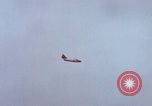
U.S. Navy pilots in advanced training on their specialized aircrafts and getting their wings in the United States.
Naval aviator in training seen flying a F9 Cougar aircraft and practicing air to air gunnery and bombing and low level navigation. Aircraft landing on USS Lexington (CV-16) in Gulf of Mexico near Corpus Christi, Texas. Pilot Point of view (POV) shot from inside cockpit of aircraft as it descends approaching aircraft carrier deck for landing. Pilot performs arrested landing on deck of aircraft carrier. Two Grumman F-11 Tiger jet aircraft taking off from a ground runway, in tandem. Aerial views of formation of F-11 Tiger aircraft as they perform aerial rendezvous operations and fly in formation and in hunter-killer formation. Two F-11 aircraft perform strafing operations and aerial tactics and high altitude radar intercepts. View of pilot in cockpit of US Navy S-2 Tracker anti-submarine aircraft, and then aerial view of S-2 Tracker aircraft in flight over water. Pilots training in helicopters. A pilot flying a Bell H-13 Sioux helicopter at Ellyson Field near Pensacola. Close-up view of pilot and instructor inside Bell H-13 helicopter in flight. View of H-34 Seahorse helicopter in flight and landing. Pilots get their wings pinned on during ceremony. African American naval aviator has his wings pinned on him by his wife. Senior captain representing chief of naval air advance training pins wings on pilot's uniform in a ceremony. View of P-3 Orion aircraft parked on airfield and pilot walking away from aircraft. View of P-3 Orion aircraft taking off directly overhead of viewer at end of runway. SH-2 Seasprite helicopter taking off and in flight out of Key West, Florida. F4B Phantoms. Navy pilots in briefing on an aircraft carrier learn about a training operation.
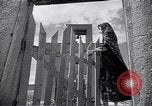
A young Catholic woman prays in St. Thomas Church in Abiquiu, New Mexico
A young Roman Catholic woman with her head covered by a veil, opens gate and enters cross-marked doors of adobe St. Thomas Church (1, Church Plaza, Abiquiu, NM 87510, United States). A crucifix stands in the courtyard, opposite the door. A bell tower and bell is seen atop the building. Inside, the woman is seen approaching an elaborate altar, behind which are depictions of saints and other works of local art. Closeups of religious figurines adorning shelves beside altar. The girl kneels and prays before the altar. Closeup of crucifix at center of wall behind altar. Closeups of other religious figurines and paintings decorating space around the altar. The woman bends down to light a candle.
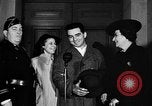
The first draft lottery being conducted in Washington DC, under the 1940 Selective Service Act of 1940
The first Selective Service lottery conducted in Washington, DC, on October 29, 1940, in the United States. An American Legion member, in uniform, poses with Mrs. Robert Bell and her son and a young woman (her daughter?) after her son's draft number (158) had been the first one drawn in the Washington DC Lottery. Dr. Baxter talks with Mrs. Bell and asks why she exclaimed out loud when the first number was drawn. Dr. Baxter gives her the capsule in which her son's draft number was contained. Views of the audience at the The Andrew W. Mellon Auditorium at 14th Street and Constitution Avenue, where the lottery was being conducted.
A gunner prepares to hit a target during the flight of a B-17 in the European Theater.
Mission footage outtakes from the film "Memphis Belle". B-17 Flying Fortress in flight in the European Theater. An aerial view of group of B-17s in flight. A pilot in the cockpit. He wears an oxygen mask and the bell inflates and deflates. A gunner prepares to hit a target. Views of the nose guns while in flight. The planes fly in formation leaving vapor trails behind.
CRITICALPAST.COM: About Us | Contact Us | FAQs - How to Order | License Agreement | My Account | My Lightboxes | Shopping Cart | Advanced Search | Featured Collections | Website Terms & Conditions | Privacy Policy ©2026 CriticalPast LLC.
License Agreement |
Terms & Conditions |
Privacy Policy
©2026 CriticalPast LLC.