


 Francais
 Deutsch
 Italiano
Refine Your Search
Colombey-les-Belles France 1918 stock footage and images
- Showing 5941 to 5946 of 6520 results more
more Hide
Hide
German and British soldiers and mascot dog of Manchester Regiment, fallen during Battle of the Somme in World War I
Fallen German soldiers lying in no-man's land, following an episode in the Battle of the Somme, during World War 1. A dog, mascot of the Manchester Regiment, fallen alongside his master on the battlefield, both victims of a charge at "Dantzig Alley." Views of other dead soldiers, both British and German, in fields and trenches.
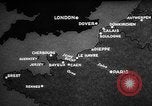
Marshal Erwin Rommel and staff coordinate German defenses on the Invasion Front, during World War II.
German defensive operations on the channel invasion front during World War 2. A map of key cities and towns along the English Channel coast lines. German Marshal Erwin Rommel, in charge of German defenses is seen with his staff. German troops in the battlefields. Soldiers, at side of road, drink from backpack water container carried by a comrade. German infantry squad moves cautiously along edge of a country road. Germans string wire for communications and employ it to coordinate artillery fire. Views of German artillerymen loading and firing heavy guns. Several knocked out British Sherman tanks of the 11th Armored Division (Black Bull Division). Individual German soldiers digging foxholes.
United States forces return home after the end of World War I.
End of World War I. Franklin D Roosevelt, Assistant Secretary of Navy observing the departure of American troops from Europe after the end of World War I. American troops disembark from a ship as they return home after the war. Roosevelt speaks to Secretary of Navy, Josephus Daniels.
Airmen of the 65th Fighter Squadron have fun playing mucic in Alto, Corsica, during world War II.
Airmen of the U.S. Army Air Forces 65th Fighter Squadron, gather for some fun, playing instruments and singing, at their camp in Alto, Corsica, during World War 2. Aircraft in flight. The 65th Squadron's Fighting Cock logo is displayed on the top of their wooden building. Men play violin and accordion, while another sings.
Demonstrations of early aircraft by aviators in Europe.
A film on the development of air power of the United States. Wilbur Wright demonstrated his invention before the King of Italy and Italian government officials in 1909. Soldiers push the Wright aircraft out of a hangar. The King of Italy and Italian officials watch the take off of the Wright aircraft from a launching rail. Flight of five early model aircraft over water. French aviator Louis Bleriot seated in his Bleriot VI Tandem monoplane. A man turns the propeller and starts the aircraft. A man working on a Farman Voisin bi-plane. American aviator Glenn H Curtiss seated in his Gold Bug bi-plane. He starts the motor and the aircraft taxis away.
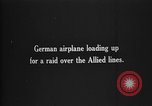
German biplane preparing for a mission. Aerial views of Verdun. German troops subject to British artillery barrage.
German pilots prepare to fly a mission in a Rumpler C.IV two-place biplane during World War I. German armorers stow small bombs in the rear cockpit, and mount a large one underneath the airplane. Scene shifts to pilot in cockpit as he taxis along an airfield. Skull and cross bones is painted on side of the airplane fuselage. A parabellum machine guns sits in the empty rear cockpit. Sequence shifts to aerial views of a city from a reconnaissance airplane, at 1000 meters altitude. Among things seen are a river and an impressive building (possibly a cathedral). Views of photographer taking pictures from the rear cockpit, while the airplane is in flight. Aerial views of the city of Verdun and of battles taking place in no-man's land. (indicated by smoke rising). At this point, a sequence shot by an intrepid German combat photographer, from the battle of the Somme,is inserted. It shows trenches subject to an intense British artillery barrage. The German troops are seen fleeing from their trenches and running to escape the bombardment. Some extremely heavy explosions occur on the German positions. (Note: a slate erroneously characterizes the running German soldiers as advancing.)
CRITICALPAST.COM: About Us | Contact Us | FAQs - How to Order | License Agreement | My Account | My Lightboxes | Shopping Cart | Advanced Search | Featured Collections | Website Terms & Conditions | Privacy Policy ©2026 CriticalPast LLC.
License Agreement |
Terms & Conditions |
Privacy Policy
©2026 CriticalPast LLC.