


 Francais
 Deutsch
 Italiano
Refine Your Search
Coney Island New York 1898 stock footage and images
- Showing 8449 to 8454 of 11259 results more
more Hide
Hide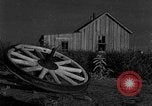
Farm machinery is used and postwar (WWI) decline of the wheat market results in overproduction in the Great Plains in the U.S.
A homestead on a farm in the U.S. Great Plains. Horse carts break the plains. A woman sweeps stairs. A man and a child stand on the plains near a plow. The homesteaders look towards the sky in hope of rain. An explosion on the land. News headlines: 'England declares war on Germany, Belgium invaded, French win at sea' and 'War news tumbles securities, Stock Exchange Closed, Wheat Prices Soar'. A man drives a tractor with a plow on a plain land and dust cloud rises. The plow breaks the plains. News headlines: 'Wilson proclaims war, Spy ring arrested, German ships seized' and 'War sends wheat soaring, Grain up 13 points, Pit in Pandemonium'. The postwar (WWI) decline of the wheat market results in overproduction and spurs dust bowl conditions: Farm machinery is used to sow the land. Wheat grains are poured into a thresher. A steamer at a sea. Tractors are driven and plows break the plains. A dust storm in the foreground. Overproduction of wheat shown. Farmers celebrate the production of wheat. Tractors driven in the Great Plains.

President John Kennedy attends first baseball game played at DC Stadium, between Washington Senators and Detroit Tigers, in 1962.
U.S. President John Kennedy attends the first ballgame played at the new $20 million District of Columbia Stadium, or DC Stadium, in April 1962. 45,000 spectators in stands for the opening of the stadium and the Major League Baseball season. Glimpse of the new DC Stadium in Washington, DC, filled with baseball fans. President John F. Kennedy enters the ballpark, accompanied by David Francis Powers, and proceeds toward seats bearing the Presidential seal. Spectators in nearby seats stand to greet the President, and several shake his hand. Scene shifts to players and newsmen on the field all focused on President Kennedy. News photographers are busy photographing him. Camera shifts to President Kennedy making a long throw followed by the ballplayers scrambling for it on the ballfield. View of the President smiling after his throw, with Illinois Republican Senator Everett Dirksen standing to his left, and slightly behind him, and David Powers to his right. Senator George Smathers of Florida is laughing behind them. The President bends down momentarily revealing Senator Mike Mansfield of Montana, directly behind him and Special Assistant to the President Lawrence “Larry” O’Brien, at Mansfield's right. Associate Press Secretary Andrew Hatcher, wearing sun glasses is behind and to left of Dirksen. Closeup of Home plate umpire Charlie Berry shouting "Play Ball!" after brief rain delay. Lights are on during daytime as game is played. Washington Senators player hits single to left field. Senators go on to beat the visiting Detroit Tigers 4-1. (Note: The stadium was later renamed Robert F. Kennedy Stadium, or RFK Stadium, in 1969).
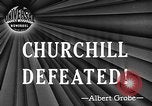
British Wartime General Election gives control to the Labor party in 1945
Opening slate of this film reads" Churchill Defeated." It goes on to show Winston Churchill attending his last meeting with wartime allied leaders at Podsdam, Germany in July, 1945. He shakes hands with Soviet Foreign Minister Vyacheslav Molotov. His replacement, Clement Attlee who is also there. View from above of Soviet leader, Joseph Stalin greeting the new British Prime Minister, Clement Attlee, who is accompanied by Foreign Secretary Anthony Eden and U.S. President Harry Truman, accompanied by Secretary of State James F. Byrnes. The wartime leaders gather around a large round table. Closeup of Marshal Stalin and Soviet Foreign Minister Molotov. Closeup of U.S. President Harry S. Truman at the conference table. View from above of the principals at the table. Film shifts to scenes of Major Attlee campaigning for votes. People in street listening to Ernest Bevin campaigning. Views of Winston Churchill being given a hearty farewell by a crowd, as he rides through on an open vehicle. Closeups of him he picks up a microphone to address the throng. Scene shifts to views of British voters casting their ballots. King George VI strolls with new Prime Minister Attlee and Winston Churchill. He poses with the new Prime Minister (Attlee) and Ernest Bevin on his right. At his left is Winston Churchill and Anthony Eden. Closeups of Clement Attlee.
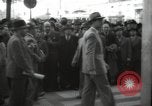
Crowd reading latest dispatches about African occupation outside newspaper offices in Lisbon, Portugal during World War II.
Crowd read news about African occupation in Lisbon, Portugal during World War II. Exterior of office of newspaper 'Seculo' shows crowd reading latest dispatches about African occupation. Exterior of office of newspaper 'Diario de Lisboa'. Newsboys around a door. News vendors rush down stairs with bundles of papers. News vendor's kiosk where papers of all countries are sold. Newsstand with foreign papers. First edition of Diario de Lisboa is sold at barber shop on the day of occupation of North Africa.
Mission and operations of the U.S. Army Service Forces during World War II
Film opens with an explosion at Pearl Harbor, Hawaii, December 7, 1941, during the Japanese attack in World War 2. The USS Arizona sinking. Newspaper headline reading "U.S. Declares War." Relief map globe of the world. Narrator speaks about accomplishments of the U.S. Army Service Forces since the Pearl Harbor attack. Glimpse of two M4 DV early Sherman tanks moving on a road. The famous Uncle Sam recruiting poster. Huge number of massed U.S. Army troops marching toward the camera lined 16 abreast. Army supply service personnel inspecting providers of all manner of supplies needed to feed, clothe, and equip the U.S. Army. Brief views of supply operations underway involving food and fuels. An Army truck and a P-38 lightning airplane (under wraps) being loaded aboard a ship. A warehouse stacked from floor to ceiling with military supplies. Forklifts moving in the aisles. Group of officers sitting around a table. Some wear shoulder patch of Army Service Forces on their uniforms. The processing of millions of volunteers and draftees for military service. Men in recruitment office being guided by staff. Lines of new recruits undergoing physical exams and then arriving in civilian clothes, with their baggage, at a training center. Barracks being constructed at a training camp or base in the United States. Camera pans across a large completed military camp. Soldiers forming up in front of barracks. Sign reads "Dispensary, Recruit Reception Center." Recruits lined up and receiving vaccinations against tropical and other diseases according to the regions to which they are being sent. An Army Sergeant assessing recruit qualifications for various military assignments. New recruits eating in a camp dining hall and also in a chow line at an outdoor field mess. Views of industrial workers picking up tools and assembling military equipment in war plants. A coal burning electric generating plant with 8 smoke stacks. A furnace with hot steel visible. An Army agent and an industrialist or business man signing contract documents. Glimpses of women war production workers placing items on a conveyer; guns being assembled by men in an armory; railroad train carrying freight across rugged U.S. territory; ocean-going ships ready for loading; cargo stacked up at ports; numerous 55 gallon drums ready for loading; rope slings of cargo being loaded for shipment; numerous army trucks ready for shipment to Allies, under "Lend Lease;" a nurse checking medical supplies for shipment; Many U.S. Army M3 tanks ready for shipment. Views of British forces engaged in the North African campaign, before the U.S. entry in World War 2. U.S. soldiers marching along a Camp road past a sign reading: "Headquarters, 725th Railway Operating Battalion" (Located in New Orleans). Rapid glimpses of various supplies, equipment, etc. being loaded for shipment abroad. Women war production workers in plants. Men in outdoor yards filling long lines of jerry cans. Views of clock hands moving. soldiers shooting automatic weapons (including tracer rounds) at a firing range.
U.S. recruits being classified for assignments and being informed about the progress of World War II and why they fight.
New U.S. army recruits seated at benches in the classification center, taking notes, as an instructor at a blackboard tells them how to fill out their classification questionnaires, during World War 2. View of machines processing the questionnaires. Hollerith 88 column punch cards being sorted by machine. Newspaper article about the Air Force efforts to improve classification and assignments of new airmen. A recruit being counseled. An Airmen in barracks, filling out a post card form to complain about his assignment. Servicemen working with sewing machines and at long cobbler's benches repairing shoes. U.S. soldiers in pith helmets, laying communications cable from a truck. A soldier recording information about a shipment of supplies. Soldiers filling 5-gallon "jerry cans" with fuel from a hose. Others serving at a communications center in woods. A soldier fastening a cable to a tank. Soldier standing on a truck. Large group of soldiers gathered to listen to a lecture about explosives. Army draftsmen at their work tables. Soldiers using information and training materials.(Narrator states these materials are often ignored.) An army newsmap for Monday, August 31, 1942 posted on an Army office wall. A sergeant points to July, 1943, on a current calendar next to it, illustrating that the newsmap is long out-of-date. View of another news map and narrator notes they are produced weekly. An officer speaking to an auditorium of soldiers. A soldier arranging his personal gear. Infantry on field maneuvers, firing rifles as they advance across a field. Soldiers firing a Browning water-cooled machine gun; a mortar; and a 105mm M101A1 howitzer. The sergeant using a newsmap to brief his staff about the progress of the war. Opening frames of a War Department Film Bulletin, and soldiers in a theater, watching the film. Opening frames of the film,"Why We Fight," that goes on to show animated map of the German advance across Europe in World War 2. Scenes of German forces on the move, towing artillery, riding on tanks, and entering towns as they invade countries of Europe. Women and children running in streets under bombardment, and civilians fleeing from their homes during aerial bombing. A Bombed out city and civilian corpses lying on the ground. Women in Poland, identifying their dead and grieving over them. German Heinkel He 111 aircraft dropping bombs. Norwegians evacuating the city in trucks, and other vehicles and on foot, during the German invasion. A squadron of German Messerschmitt Bf-109 aircraft in flight. German Ju-87, Stuka dive bombers diving on targets. Civilians rushing to a bomb shelter, and other refugees boarding a truck to evacuate. More He-111 bombers dropping bombs. A Ju-52 trimotor transport (type used to transport German paratroopers). Buildings ablaze in a town. Large formations of German aircraft of various types flying overhead. Building destroyed and burning from bombing. Ju-87s flying close past the camera.
CRITICALPAST.COM: About Us | Contact Us | FAQs - How to Order | License Agreement | My Account | My Lightboxes | Shopping Cart | Advanced Search | Featured Collections | Website Terms & Conditions | Privacy Policy ©2026 CriticalPast LLC.
License Agreement |
Terms & Conditions |
Privacy Policy
©2026 CriticalPast LLC.