


 Francais
 Deutsch
 Italiano

Refine Your Search
Coney Island New York 1898 stock footage and images
- Showing 8881 to 8886 of 11285 results more
 Hide
Color Sound
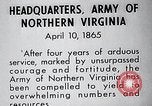
Damaged plantation homes after Civil War, barren land, and African American family migration
Activities around the Mississippi river in the United States in the early 1900s, in areas still affected by the Civil War. Text of General Robert E. Lee's announcement about surrendering the Army of Northern Virginia, April 10, 1865. Image of flames and fire burning a town or city. United States Civil War aftermath in the South. Scenes of several different empty and burned down plantation homes in the southern United States. View of the barren land and effects of erosion. Poor African American family with their belongings in a horse drawn wagon, walking on foot during the "Great Migration," moving to a new area of the United States in the north or west. View of the Mississippi River as seen from a moving boat at water level.
The processing and transportation of iron and coal along the Mississippi river on steamboats in the United States
The activities around the Mississippi river in the United States. Smoke from steel mills and factories of Pittsburgh, Pennsylvania and Wheeling, West Virginia. A crane lifts the iron ore. A crane lifts coal. View of factories spewing smoke and ash. Hot, molten iron being poured, with flames and sparks shooting outward as it is tipped to pour. Cotton bales on a conveyor. Making of cotton thread. Workers work on cotton bales. The cotton bales being loaded onto barges and a steamship. The steamboat in the Mississippi river travels to various places. Brief scenes of various known city views including St Paul and Minneapolis Minnesota; Davenport Iowa; Moline Illinois; Cincinnati; St. Louis; Omaha; Kansas City; New Orleans.

Drawing for lottery winners in Russia, Soviet Union.
A crowd in Russia gathered for the first lottery of a new internal loan for 3%. Children select winning lottery tickets from a spinning drum on stage in Russia. Winning numbers are displayed on a board. Attendees in the audience view their tickets.

Interior of a motorcycle plant in Russia, Soviet Union
Interior of a motorcycle plant in Russia. Workers shown operating new factory machinery. Soviet workers at tooling machines crafting small parts for motorcycles. Wide view of factory floor with many newly assembled motorcycles.
C-124 Globemaster cargo aircraft supporting SAC operations
An eight day clock on aircraft instrument panel. U.S. Air Force flight crew member packing gear, including cold weather clothing into his A-3 flight bag. Cargo being by means of the elevator into the cargo compartment of a Second Strategic Support Squadron C-124 Globemaster tail # 49-244, at Walker Air Force Base, New Mexico. B-36 strategic bomber seen in background. The men and equipment are headed to the Strategic Air Command's 509th Bomb Wing Forward Detachments at RAF Stations Mildenhall and Lakenheath, in England. (Note: This same aircraft, performing the same mission, successfully ditched in the North Atlantic on 23 Mar 1951, but no passengers or crew were ever recovered.).
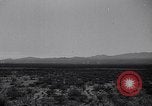
Montage of U.S. Strategic Air Command activities
U.S. Strategic Air Command (SAC) Bombardier leaning over bombsight. Several small explosions in circular pattern on SAC bombing range in flat open desert. Mountains in background. A SAC Convair B-36 bomber aircraft in flight. Two U.S. Air Force airmen remove camera from RB-36 aircraft and holding up large still photo aerial camera with large lens. Animation of flight of B-36 on practice bombing exercise in the United States . Aerial view of formation of four B-50 Superfortress aircraft of the 43rd Bomb Wing, stationed at Davis-Monthan Air Force Base, Tucson, Arizona. They are escorted by two straight-wing F-84 Thunderjet aircraft. Aerial view of a single Convair B-36 in flight. Circle R tail code indicates it belongs to the 6th Bomb Group stationed at Walker Air Force Base, New Mexico.
CRITICALPAST.COM: About Us | Contact Us | FAQs - How to Order | License Agreement | My Account | My Lightboxes | Shopping Cart | Advanced Search | Featured Collections | Website Terms & Conditions | Privacy Policy ©2026 CriticalPast LLC.
License Agreement |
Terms & Conditions |
Privacy Policy
©2026 CriticalPast LLC.