


 Francais
 Deutsch
 Italiano

Refine Your Search
Coney Island New York 1898 stock footage and images
- Showing 8965 to 8970 of 11285 results more
 Hide
Color Sound
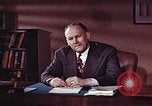
Doctor Harrison Flippin talks about penicillin therapy and its three basic principles in United States.
Doctor Harrison Flippin talks about new knowledge of penicillin therapy in a laboratory, and that no change should be made in anticipating penicillin therapy. He talks about three basic principles of penicillin: The organism must be susceptible to penicillin, the organism must be reached by penicillin in adequate concentration and the organism must be eradicated or suppressed.
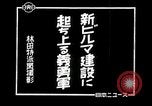
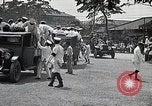
Scenes of Rangoon, Burma, under Japanese occupation during World War II.
Rangoon, Burma, under Japanese occupation during World War 2. Japanese propaganda film states, in Japanese, that Volunteer Corps is building a 'New 'Burma,' and that Volunteer corps training illustrates how people can enjoy and manage their freedom from the British. Burmese gather at open market in front of a hotel in Rangoon. Words "On Look Hotel" appear along with Japanese lettering on the hotel front. Several Japanese soldiers mingle amongst the crowd at an open market. All manner of foods and goods being sold. Women display fabrics. Crowd gathered in grandstand of stadium to watch Volunteer Corps training and parade. Shwedagon Paya (Pagoda), Buddhist temple seen in background. Japanese officer stands on steps and salutes as Volunteer Corps pass in review. Their most notable weapon is a machine gun mounted in a wagon.
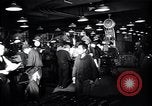
Postwar democracy brings freedom of press, freedom of speech and land reform to Japan after World War 2
Newspapers being printed in Japan soon after end of World War 2. Newspaper printing press machines running. People gathered on streets, where some rubble and destruction from war is still seen. People assembling and speaking freely in public. Japanese work at Press office and publish the news about democracy. Newspapers published. People buy newspapers and read. People read the posters. Postwar land reform program redistributes land to Japanese farmers, most of whom, were formally only tenants They shovel, dig the soil and sow the seeds. They harvest the crops.
Japan mobilizing for war
Scenes from 1930s during lead up to Second Sino-Japanese War, and World War 2. Narration by General of the Imperial Japanese Army Baron Sadao Araki. Opening scene shows a practice drill in which male emergency workers, in white uniforms, arrive by truck and assemble in a field, as hook and ladder fire trucks filled with firemen, arrive and turn into a circle. Glimpse of women nurses in white uniforms standing near a large Red Cross flag with Japanese writing on it. Scene shifts to traffic on a busy city street. Tnen a closeup of Japanese women in white garb, passing out leaflets to people. Boy Scouts at the corner of a building and Girl Scouts at another spot, solicit contributions for the troops. They use megaphones to get the attention of busy pedestrians. The girls hold baskets to collect contributions. Women in traditional Japanese garb stand on a street corner and encourage public support for Japanese soldiers, by knitting scarfs to be sent to them. Soldiers stand on a street corner wearing sashes and displaying a banner. More girl scouts (or uniformed school girls) soliciting support for the military. View from a high vantage point overlooking a bridge filled with pedestrians. Camera pans upward showing way into downtown. Japanese people attend a public display of airplanes at an airport in Osaka, where citizens have contributed to fund them. They crowd around two biwing planes. A woman bows at a temporary shrine set up honoring Japanese fliers. Closeup of airplane fuselage with writing on it. Quartering view from front of radial engine running on the airplane. Covered search lights sitting side by side. Anti-aircraft battery consisting of sound detection listening devices and guns. A Japanese army truck on display and then driving away. Closeup of an anti-aircraft searchlight. More views of sound detection devices. Air raid sirens. Two bi-wing airplanes. The one in foreground is equipped with a center ski. A Nakajima aircraft in flight overhead. A searchlight being demonstrated at night. Glimpse of firemen extinguishing a fire in a street, during exercise. Nurses and stretcher bearers in an emergency exercise. Soldiers remove signs from an army truck. Emergency workers in full protective gear, including gas masks, demonstrate and exercise emergency procedures using gas on a city street. A rifle being fired at a target. Girls lined up with rifles in prone position on a firing range. They stand up with their rifles. Riveters working on steel girders of a building under construction. Closeup of a hot rivet being installed. People traveling on motorcycles, cars, and bicycles. Feet of pedestrians walking on sidewalk. View from above of cars, motorcycles, bicycles, and pedestrians moving near an electric tram on a city street. Passenger railroad coaches passing the camera viewing from beside railroad tracks. A clamshell bucket unloading coal from a barge. Cargo in a net being unloaded from a ship to a dock. New automobiles driving on a Japanese highway. Trains moving through a rail yard with many rail lines. Japanese business commuters walking on a railroad station platform. Japanese Women working rapidly using headsets and manual phone plugs at a switchboard in a telephone exchange. A Japanese businessman using the telephone. A woman typing on an english typewriter keyboard. Construction workers using wrenches to bolt a steel part on a structure. Various kinds of machinery running rapidly. Hot steel being handled in a steel mill. Fires in furnaces and smoke billowing from factory smoke stacks next to numerous electric power lines.
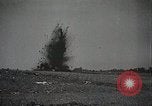
Japanese army conducts military exercises that involve inflatable rafts and pontoon bridges
Japanese Army conducts military exercise. Artillery shells explode in the distance. Some raise white smoke, while others create craters and throw large amounts of earth into the air. Japanese soldiers run carrying rolled up canvases. From them they remove and inflate rubber rafts that they carry up over a hill and down to a shoreline. They jump into the rafts and paddle furiously toward an opposite shore. The national red ball flag (sun-mark flag) is displayed on one raft. Closeup of occupants in one raft. Machine gun fire is heard in the background. The rafts reach the opposite shore where the troops jump out and charge up a hill in smoke. View from camera located at defensive obstacle as the troops arrive there. They place sections of pontoon bridges over the obstacles and cross over them. Then they carry bridge sections down a steep embankment to another shoreline where they place them end-to-end in the water to form a serpentine floating bridge. Soldiers on each section maneuver them with long poles into position spanning the water to the next shore. Next, armed troops are seen running across the new pontoon bridge. Two of them carry a version of a Hotchkiss machine gun (licensed by Japan as their Type 3 Heavy Machine Gun). One of the last few soldiers crossing the bridge, carries the sun-mark flag.
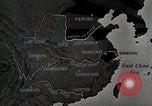
Chungking (Chongqing) city life, and bombing by Japanese forces during Second Sino-Japanese war
The Republic of China establishes its wartime capital at Chungking (Chongqing), China during the Second Sino-Japanese War. Animated map depicts areas of Japanese occupation and highlights cities including Lanchow (Lanzhou), Chengtu (Chengdu), and Kunming. It highlights Chungking (Chongqing) as the new capital of Nationalist China. Generalissimo Chiang Kai-shek is seen leading a group of Chinese leaders as they walk through an arched gate in Chungking (Chongqing). A busy street with shops and apartment houses, in the commercial district. It is filled with pedestrians, cart traffic along the curbs, and automobiles in the road center. Boatmen on the Yangtze River are seen below long steep steps leading up to the streets above. Views of houses clustered along the cliffs, and workmen digging bomb shelters into the cliffs. View from inside a shelter being hollowed out of the rock. Back in the Japanese occupied area, a car brings a Japanese Air Force leader who addresses a large group of fliers at an airbase. Next, Japanese air crews are seen running to their airplanes from their camp on the airfield and taking off in their Mitsubishi G3M bombers, to attack Chungking (Chongqing). Nakajima Ki-27 airplanes take off from the field and join in large formations overhead. A formation of Chinese World War 1 era is seen inflight, ostensibly to engage incoming Japanese bombers. Japanese crew member in a bomber sees the Chinese fighters and gunners in the bombers get ready to fire on them. The Chinese fighter planes dive at the bombers but are intercepted by Nakajima Ki-27 airplanes flying cover. Aerial dogfights ensue with Chinese planes being shot down, and the bombers continuing their way. Air raid sirens sound in Chungking and people run to their shelters, including many school children. Views of bomber crews at their stations and then of bombs falling with the Yangtze River below. Bombs exploding along the riverfront and inland, along the cliffs. View of machinery operating, and Chinese workers occupied in underground factories in Chungking (Chongqing). Fires burning throughout the city, from the bombing, and Chinese fire fighters working to extinguish them.
CRITICALPAST.COM: About Us | Contact Us | FAQs - How to Order | License Agreement | My Account | My Lightboxes | Shopping Cart | Advanced Search | Featured Collections | Website Terms & Conditions | Privacy Policy ©2026 CriticalPast LLC.
License Agreement |
Terms & Conditions |
Privacy Policy
©2026 CriticalPast LLC.