


 Francais
 Deutsch
 Italiano
Refine Your Search
Coney Island New York 1898 stock footage and images
- Showing 2857 to 2862 of 11259 results more
more Hide
Hide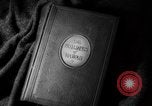
Glimpses into a book entitled "builders of Hawaii." Highlights in Hawaiian history. Portrait of Sanford Ballard Dole.
View of a book entitled "Builders of Hawaii." A hand opens it to several different places, revealing photos of persons who played roles in the early development of Hawaii. Also revealed are pages from the newspaper "Commercial Advertiser" reporting that flags changed as "Hawaii becomes the first outpost of Greater America" and "Old Glory is the new flag of the Hawaiian Islands." (This refers to the establishment of the Territory of Hawaii, under the U.S. Hawaiian Organic Act of 1900.) A portrait of Sanford Ballard Dole is shown. (He was the President of the Republic of Hawaii, 1894-1900, and its first Territorial Governor, 1900-1903.) Views of the Hawaiian State Archives Building, on the grounds of the Iolani Palace, in Honolulu. A plaque honoring Captain James Cook. Views of visitors inside an exhibit that includes a reproduction of an early Hawaiian cottage.
Film tracing the growth of the United States from 1607 to World War II
Waves crashing on a rocky shore. View of Plymouth Rock, with "1620" engraved on it. Coastline with hills and sea. A forest and primitive house of sticks. A church with watch tower. Reenactment of early immigrants felling trees and busy in a 17th Century settlement in Massachusetts. View upward of tall tree. Column on a building in Virginia; portico and clock on a building in Rhode Island;and a church in Carolina.The minuteman statue in Battle Green, Lexington,Massachusetts. Image of colonist James Otis. Statue of Thomas Jefferson. Image of Thomas Paine. Statue of Patrick Henry. Reenactment of British Red Coats charging up a hill during the American revolution. John Trumbull's painting, the "Declaration of Independence, July 4, 1776" in the Capitol Rotunda, Washington,DC. A copy of the document. Reenactment of General Washington's troops and snowy encampment at Valley Forge, in 1777. The colonial troops marching in the snow.Painting of George Washington praying in a glen. Painting by John Trumbull of Lord Cornwallis surrendering to George Washington at Yorktown, Virginia, October 17, 1781. The Constitution of the United States in the National Archives, Washington, DC. Liberty bell swinging. Early American flag with 13 stars and 13 stripes. Animated map showing the original 13 States. Reenactment of early settlers, in wagon trains, pushing Westward from the original colonies. New States being added to the animated map, until all 48 continental American States are filled in. An American flag displaying 48 States.
Reconstruction work underway in North Korea after World War II
Views of North Korea during 1945 through 1950. Reconstruction going on in North Korea, new buildings being built. Korean country side and small islands in the bay as waves break on the shore. A group of North Koreans arrives at diamond mountain resort and look at Koo Rong Hun falls, they pose for pictures. Men and women in a reading room.
Shows the importance and application of camouflage techniques during combat in World War 2.
A film 'Camouflage in Combat' underlines the importance of tactical exploitation and counteraction of shadows and use of nets, underbrush and other camouflage during World War II. The film shows U.S. soldiers going into a theater in the United States and watching a movie 'Camouflage'. The movie shows a soldier in a forest. He is shot down. A soldier approaches him. He looks skywards. He applies mud on his face to camouflage himself. Soldiers paint each other's faces with GI paint. On 5th June 1944, fully camouflaged Airborne and pathfinder U.S. paratroopers preparing for D-Day invasion jump over Normandy, France. Soldiers with camouflaged helmets. A soldier camouflages his helmet with grass and twigs. A soldier on an island with his helmet camouflaged with grass and twigs found in the area which gives him a perfect blend. U.S. soldiers with camouflaged helmets in France. A camouflaged tank rolls. An officer inspects soldiers standing in a line. Their helmets are camouflaged. A U.S. soldier hiding in shadows in Casino, Italy fires his gun. His ring sparkles. A soldier in a prone position fires. A New Zealand soldier fires while in shadows.
Events of World War 2, and creation of United Nations Organization following the surrender of Germany and Japan
Summary of World War II events and formation of the United Nations Organization. Soviet troops on Eastern Front of Europe fire artillery on German positions in 1944. Russian troops advance. German soldiers come out of buildings and surrender. Allied Forces land in France on D-Day. Allied troops and tanks fight Germans on streets in towns and villages of France. U.S. Army tanks fire at German positions. Various groups of German prisoners of war march along roads and are herded into prison camps operated by American and British forces. In 1945, the Allied leaders meet at Yalta on the Crimean Peninsula to discuss Allied military strategy in the final months of WWII. Leaders included British PM Winston Churchill, U.S. President Franklin D Roosevelt and Soviet Premier Joseph Stalin. The meeting of U.S. and Soviet Russian troops at the Elbe River. German Nazi Swastika symbol blown up in explosion atop Zeppelinfeld Nazi party rally grounds in Nuremberg. Aerial view of Berlin in ruins, as seen from low-flying aircraft flying directly over the Unter den Linden boulevard and the Brandenburg Gate. Wrecked and bombed German buildings seen everywhere. German officials signing surrender instrument at Rheims. U.S. President Harry S Truman, Winston Churchill and Joseph Stalin at Potsdam Conference. U.S. Marines battling on beaches of Pacific Islands. Iconic shot of U.S. Marines raising the American flag on Mount Suribachi at Iwo Jima. Aerial view of bombed and ruined city of Tokyo, Japan. The Japanese surrender to MacArthur aboard the battleship USS Missouri. General MacArthur speaks aboard Missouri. Victory celebrations all across the world, with some scenes from earlier V-E Day (Victory in Europe) day in May 1945, including crowds celebrating in Paris, France, and some scenes on V-J Day (Victory over Japan day) in August 1945. Crowds on streets celebrate. Happy crowds jam streets. Delegates of Nations, among them Andrei Gromyko and Vyascheslav Molotov meet in San Francisco and create a United Nations organization. Truman arrives at signing of UN charter. Various delegates sign charter. U.S. troops disembark troop carrier ships at U.S. ports and are discharged after completing military service in World War 2. Group of U.S. Army soldiers exits a church (the Chapel at Fort Dix, New Jersey), waving their discharge papers in hand.
Soldiers and correspondents move from the American flying boat PBY Catalina to a small boat in the Pacific Theater.
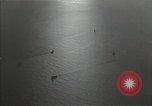
The soldiers and war correspondents aboard PBY Catalina of the 2d Emergency Rescue Squadron being transferred from Motorai Island in New Guinea to Mindanao in Philippines during World War II. Few vessels in the ocean. The PBY Catalina carrying the soldiers and war correspondents prepares to land on water. Several vessels in the ocean. A small boat carrying men approaches the flying boat after it has landed on water. Men with belongings transfer from the PBY Catalina to the small boat. The boat moves away.
CRITICALPAST.COM: About Us | Contact Us | FAQs - How to Order | License Agreement | My Account | My Lightboxes | Shopping Cart | Advanced Search | Featured Collections | Website Terms & Conditions | Privacy Policy ©2026 CriticalPast LLC.
License Agreement |
Terms & Conditions |
Privacy Policy
©2026 CriticalPast LLC.