


 Francais
 Deutsch
 Italiano
Refine Your Search
Coney Island New York 1898 stock footage and images
- Showing 3193 to 3198 of 11259 results more
more Hide
Hide
U.S. Vice President Nixon talks about the foreign policy of America prior to presidential elections in the United States.
The fourth presidential election debate between Democratic nominee Senator John F. Kennedy and Republican nominee U.S. Vice President Richard Nixon on 21st October 1960 in in New York, United States. News correspondent Quincy Howe speaks prior to the fourth Kennedy-Nixon presidential debate. Mr. Howe reads out the rules and conditions under which the candidates will proceed. He says that Senator Kennedy will make the second opening statement and the first closing statement. Vice President Nixon speaks about the present issue in the United States which is keeping peace without surrender. The peace which is threatened by international communist movements. Nixon says that the United States has to learn from mistakes made in past. He relates to this by mentioning the period of the Iron Curtain in Europe and during the Korean War. Nixon says that situation in President Dwight Eisenhower's administration is reversed. He says that the United States made errors in the past in misjudging the Communists, applying same rules of conduct that are applied to the leaders of the free world. Nixon mentions East-West Paris summit conference of 1960 and Eisenhower's policy regarding Formosa Strait (Taiwan). Nixon speaks that that United States should increase its military strength to high level regardless of what potential opponents have and if any surprise attack is launched, the United States can destroy their war-making capacity. Nixon further says that American policies of military strength, economic strength, and diplomatic firmness will keep the peace without surrender.
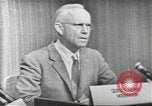
U.S. Senator John Kennedy talks about the foreign policy of America prior to presidential elections in the United States.
The fourth presidential election debate held between Democratic nominee Senator John F. Kennedy and Republican nominee U.S. Vice President Richard Nixon in New York, United States on 21st October 1960. ABC news correspondent Quincy Howe speaks prior to the fourth Kennedy-Nixon presidential debate. Senator Kennedy says he agrees with the policy of Eisenhower's administration regarding the Formosa Strait (Taiwan). He speaks about Communist influence of Cuban Prime Minister Fidel Castro on Latin Americans which is becoming a threat for the United States. Kennedy also mentions Communist Russians broadcasting ten times as many programs in Spanish to Latin America as the United States does. He talks about technical assistance given to Africa by the United States. He speaks about future of increasing communist influence in world. Kennedy mentions Liberia and the Union of South Africa who voted with America on the question of admission of Red China in the United Nations. Senator Kennedy speaks about Communist influence increasing in the world and relates to it by saying that there are six counties in Africa that are members of the United Nations and there is not a single American diplomatic representative in any of these six. He further speaks about military progress of Communist nations.
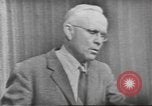
Vice President Nixon and Senator Kennedy debate over a fight against communism prior to presidential elections in the U.S.
The fourth presidential election debate held between Democratic nominee Senator John F. Kennedy and Republican nominee U.S. Vice President Richard Nixon in New York, United States on 21st October 1960. ABC News correspondent Quincy Howe speaks during the debate and allows correspondent Walter Cronkite to ask Senator Kennedy a question. Mr. Cronkite asks Senator Kennedy that in what areas the United States might take offensive against communism rather than being defensive to the Soviet Union. Senator Kennedy replies to the question and says that the eastern Europe is very vulnerable area according to him. He says there should be policies which make it possible to establish closer relation with a country like Poland and he also mentions the Hungarian Revolution. Senator Kennedy speaks about the relations between the Soviet Union and China. He says that India represents a great area for affirmative action by the free world. India started from about the same place that China did. India under a free society has been making some progress. But if India does not succeed, Communism can take over. He says that in Africa, Asia, Latin America, eastern Europe, the great force on their side is the desire of people to be free. Correspondent Howe asks Vice President Nixon to comment on the topic. Nixon speaks about Poland and says that Poland in not in a position to take any independent position under Soviet control. He talks about aids being sent to Poland from the U.S. and says that the U.S. can have more exchange with Poland or with any other Iron Curtain countries.
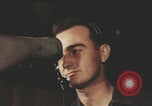
Giovanna Ferrara (Winner of Italian game show “Lascia o raddoppia?”) is interviewed for an Italian TV show on WATV 13
Italian celebrity Giovanna Ferrara is interviewed for an Italian TV show on WATV 13 in Newark, New Jersey. A television show for the Italian American community in New York is aired on WATV 13 (now known as WNET – THIRTEEN). A cameraman moves his camera. Camera is labeled with “WATV 13”. A production sound mixer prepares before taping. A boom microphone rotates. Front view of a studio color camera. A male host interviews Giovanna Ferrara, a celebrity and winner of a popular game show in Italy (“Lascia o raddoppia?”, the Italian version of “The $64,000 Question”), in Italian. The Italian host speaks to Giovanna Ferrara talk during the show. Both the host and Ferrara are seated behind a table with a sign that reads “WATV NEWS”. The Italian host asks Signora Ferrara, who won 5 million lire (approximately $ 8,000 in 1957), her motives in joining the game show. Giovanna Ferrara expressed feelings of gratitude and generosity after winning “Lascia o raddoppia?”. The host thanked Giovanna Ferrara for her time and congratulated her in her new career. The host shakes hands with the Italian celebrity after the end of her interview.
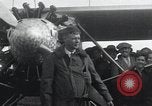
Aviator Charles Lindbergh takes off in 'Spirit of Saint Louis' on solo transatlantic flight.
Aviator Charles Lindbergh takes off on solo transatlantic flight from Roosevelt Field in New York. Charles Lindbergh poses with his mother in front of his plane 'Spirit of Saint Louis'. Charles Lindbergh then dons heavier flying suit and boards the plane. The "Spirit of St. Louis" hits a few bumps on takeoff roll and then gradually completes a shallow takeoff.
Scenes of the SS Morro Castle luxury cruise ship burning at sea, and of rescue of survivors on New Jersey coast.
(Sound present only at end of clip beginning around 3:10 mark). Scenes of Ward Line passenger ship, the SS Morro Castle, engulfed in fire during its return to New York from Havana, Cuba. Coast guard boats, fishing smacks, big liners stand by to rescue travelers from the ocean liner. Local citizens and police assembled on the coastline to retrieve the dead and nurse the wounded. Scenes of grief stricken and shocked survivors including men, women, and children. Some scenes from rescue ships which included the SS Andrea F. Luckenbach, the SS Monarch of Bermuda, and the SS City of Savannah. Three survivors recount their stories (sound is present at this point in the clip, starting around 3:10 mark).
CRITICALPAST.COM: About Us | Contact Us | FAQs - How to Order | License Agreement | My Account | My Lightboxes | Shopping Cart | Advanced Search | Featured Collections | Website Terms & Conditions | Privacy Policy ©2026 CriticalPast LLC.
License Agreement |
Terms & Conditions |
Privacy Policy
©2026 CriticalPast LLC.