


 Francais
 Deutsch
 Italiano
Refine Your Search
Coney Island New York 1898 stock footage and images
- Showing 3565 to 3570 of 11259 results more
more Hide
Hide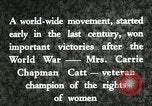
Mrs. Carrie Chapman Catt speaks about the 19th Amendment to the U.S. Constitution (ratified on August 18, 1920)
Mrs Carrie Chapman Catt speaks after ratification of the 19th amendment to the U.S. Constitution, giving women the right to vote. Catt, President of the National American Woman Suffrage Association, is seated in a chair in an office or library and reads from a prepared script. She traces the roots of the struggle, for the rights of women in America, back to an 1848 convention in Seneca Falls, New York. She notes that grievances related to woman suffrage were the same in number as grievances enumerated by male colonists in America against the British crown. She notes that it took George Washington 6 years to resolve those grievances via war, but it took 72 years for women to resolve their suffrage grievances via the law.
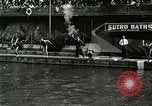
Miss Olga Dorfner of Philadelphia wins a back-stroke swimming race at Sutron Baths and Museum in San Francisco,California,1916.
Sutron Baths and Museum is written at a swimming pool. Participants are ready for a race. They jump in the pool and swim back-stroke towards the opposite end. Crowd cheers the participants. Miss Olga Dorfner,Philadelphia wins with first position;Miss Clarie Galligon,New York is second and Miss Dorothy Burns,Los Angles is at third position.
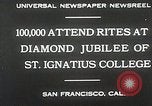
Diamond Jubilee of Roman Catholic Saint Ignatius College Preparatory is celebrated with a huge procession in San Francisco, California.
St. Ignatius College Preparatory celebrates its 75th anniversary or Diamond jubilee in San Francisco, California. Patrick Joseph Cardinal Hayes of New York is the principal guest. Women in white dresses lead the Roman Catholic procession outside the St. Ignatius College Preparatory (2001 37th Ave, San Francisco, CA 94116, United States). He stands with the college officials. Nuns cross rail tracks. They move in procession. Cardinal Hayes with others also moves. Catholic priests follow them. They reach to a decorated stage. Crowds line up on both sides. Cardinal with officials is on the stage. The Cardinal speaks to the people.
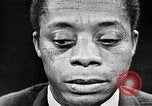
Views of Martin Luther King Jr. and Kenneth Clarke on the position of African Americans in the US; Civil Rights protest scenes
James Baldwin speaks in United States. Scenes of strife and struggle during civil rights movement. Policemen beat a African American man. Doctor Kenneth Clark, Professor of Psychology at the City College of New York; Director of Fallen Youth Opportunities Unlimited and Research Director, North Pride Center for Interpretation, sits in a chair during an interview. He speaks on the position of African Americans and America's Promise. Other scenes: Martin Luther King Jr. addresses a small gathering of African Americans. They are standing at the scene of a bombed out or destroyed church. He speaks about what happened there alluding that they know the truth of the racist hate crime. He speaks about remaining strong in striving for freedom for African American citizens. People around him sing and clap. Martin Luther King Jr. looks into a bible. Ebenezer Baptist Church and its interiors are seen, where Martin Luther King Jr. preaches. Exterior view of a Woolworths store where African Americans in protest sit at a segregated lunch counter at Woolworth store and wait to be served, in a non-violent demonstration. People pass through doors. Men moving on a road are stopped by a policeman. He stands with other policemen. The civil rights demonstrators stop and pray together. They are then directed to a waiting police paddy wagon van for arrest. Policeman hits a African American man. African Americans are put in police paddy wagons. Policemen detain African American demonstrators during a march and use dogs in rounding up demonstrators. Fire truck arrives during a protest and firemen spray fire hoses at African American demonstrators on May 7, 1963 in Birmingham Alabama during the Birmingham Campaign or movement. High powered fire hoses spraying water at demonstrators. Police chasing and detaining demonstrators in a crowd during a black civil rights demonstration. Martin Luther King Jr. leaving a courthouse, his wife by his side. He walks down the steps where a reporter asks him, "Dr. King how long do you expect to stay in jail". King replies "I'm under orders to keep walking."
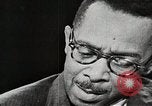
K Clark interviews Martin Luther King on non-violence movement of African Americans and the America's Promise in United States.
Doctor Kenneth Clark, Professor of Psychology at the City College of New York; Director of Fallen Youth Opportunities Unlimited and Research Director, North Pride Center for Interpretation sits in a chair. He interviews Martin Luther King Jr., the famed civil rights leader. Martin Luther King Jr. expresses his views on love, the non-violence movement, and America's promise. King reacts to reported comments from Malcolm X about King's non-violent movement. Martin Luther King, Jr. speaks about the demonstrations in Birmingham, and the teaching of the philosophy of non-violence that was effective in Birmingham in the face of violence from others.
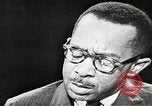
Martin Luther King Jr. tells about coordination of committees working during the civil rights movement in United States.
Doctor Kenneth Clark, Professor of Psychology at the City College of New York; Director of Fallen Youth Opportunities Unlimited and Research Director, North Pride Center for Interpretation, interviews Martin Luther King Jr. Dr. Martin Luther King Jr. speaks about coordination of various committees working during civil rights movement of African Americans. He comments on the cooperation between the NAACP, CORE (Congress of Racial Equality), and others, citing efforts in Birmingham and in voter registration drives.
CRITICALPAST.COM: About Us | Contact Us | FAQs - How to Order | License Agreement | My Account | My Lightboxes | Shopping Cart | Advanced Search | Featured Collections | Website Terms & Conditions | Privacy Policy ©2026 CriticalPast LLC.
License Agreement |
Terms & Conditions |
Privacy Policy
©2026 CriticalPast LLC.