


 Francais
 Deutsch
 Italiano
Refine Your Search
Coney Island New York 1898 stock footage and images
- Showing 3583 to 3588 of 11259 results more
more Hide
Hide
USIA tells the story of America, its democracy and diplomacy through ideas, people and pictures.
USIA tells the story of America. The Unanimous Declaration for the States of America by the Congress on July 4, 1776. The Statue of Liberty in New York. Atomic bomb explodes in Japan during the world war. U.S. troops prepare to defend America. U.S. State diplomats sign documents as they deal with Diplomacy. United States information Agency (USIA) tells the story of America through various means dealing with ideas, people and pictures. A person reads a book, announcers broadcast over radio, and cameramen record events. The USIA seal.

General Eisenhower as a World War II officer and as the U.S. President.
Scenes from life and career of Dwight D Eisenhower, 34th President of United States. U.S. Air Force plane lands and the President disembarks the plane in India, in 1959. He is greeted by the Indian President Dr Rajendra Prasad and other dignitaries. Emblem of 'Panama'. Sign of 'welcome Ike Crusader'. Large crowd welcomes Eisenhower. Motorcade goes through the city's street. Milestones in General Eisenhower's life and the international esteem with which he is held. Lt Col Eisenhower concerned about U.S. isolationism in 1940 as World War 2 is underway. Explosions in Europe due to bombing by German aircraft. Eisenhower and other officers in the General Staff study a map. Eisenhower plans the strategy as the commander of Operation Torch (he is shown talking to General George C. Marshall and Winston Churchill). President Eisenhower visits 4 continents and meets several leaders. Large crowds welcome him. General Eisenhower prepares for D-Day Invasion of France during World War 2. June 5, 1944: The Allied forces including troops, artillery, equipment, ammunition, aircraft and ships prepared. June 6, 1944: The Allies invade Normandy. Troops wade through the water during D-Day Normandy beach landings, while under enemy fire. German soldiers surrender. May 7, 1945: Nazi General Alfred Jodl signs the unconditional surrender of his government. General Eisenhower returns to the U.S. He receives a hero's welcome in New York during a parade. He visits his hometown in Kansas. Pictures of his family, childhood and college days. Eisenhower on his visits to various countries as President.
Crab canning and shipping of cargo in Japan.
Technical experts inspect crab. Exterior of factory of Three Diamond Brand. Labeling and Repacking: Japanese workers lacquer and label the tin cans of crab in a factory. Experts inspect the tins. Sign board of 'Fancy Crab Meat, New York'. Four different grades of Japanese Canned Crab Association, Yokohama for export: Fancy (Red), Choice (Indigo), Fair (Blue), and Passed A (purple). Logo of Three Diamond on cargo. Workers bring the cargo for shipping. Cargo boats are loaded and taken to Yokohama. Supervisors inspect the cargo. Steamer Olympia Maru loaded. Flag of Three Diamond Brand at steamer.
American leaders visit Japan. American soldiers and Japanese citizens get to know one another
General Douglas MacArthur exits a building in occupied Japan. General Matthew Ridgway greets officers and officials in Japan. Secretary of State John Foster Dulles waves farewell and boards an airplane in Japan. Roman Catholic Francis Cardinal Spellman of New York greets American soldiers and Japanese people. Vice President and Mrs. Richard Nixon are greeted upon arrival in Japan. Ordinary American soldiers meet ordinary Japanese people.

Imperial Japanese Army (IJA) soldiers commit war atrocities and murder during World War II
Atrocities committed by Imperial Japanese Army (IJA) soldiers in China and other parts of Asia during World War II. War workers in offices, factories, and mills shift their attention to the narrator. Smoke rises from factory smokestacks and chimneys. American workers manufacture war materiel in factories. Factory workers shovel coal to the furnace. Japanese soldiers abuse elderly Chinese women. A Japanese soldier toss an infant before striking with a bayonet midair. A Chinese woman watches with shock. IJA troops drag and bury Chinese civilians alive. IJA troops burn cities and shoot victims at close range. Soldiers place the remains of dead Chinese men, women, and children in truck. Japanese soldiers torture and kill Chinese civilians and are depicted killing American Prisoners of War (POW). Aerial views of San Francisco, Chicago, Pittsburgh, and New York. A dead Japanese soldier with flies covering his face. A newly built M4 Sherman tank moves inside a factory. Body of a Japanese soldier wearing round glasses. Dead Japanese soldiers seen with repeating American wartime propaganda message that every piece of wartime production "kills a Jap." Tanks, trucks, planes, shells, guns, and artillery are manufactured in United States factories and plants during World War II. Americans urged to take war jobs to help win World War 2.
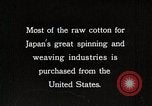
Cotton industry and urbanization in Japan
Cotton production, transport, and urbanization in Japan. Shipment of raw cotton from the United States are unloaded from a freighter on a Japanese port. Dock worker pulls lever. The package is offloaded from the ship. Various machines process United States cotton in Japanese factories. OSK Line ship Naruto Maru sailing in New York City. The captain of the Naruto Maru stands beside the Japanese flag. The urbanization of Japanese cities. Overcrowded houses and slum areas because of industrialization in Japan. Vehicles move on the road in a Japanese city.
CRITICALPAST.COM: About Us | Contact Us | FAQs - How to Order | License Agreement | My Account | My Lightboxes | Shopping Cart | Advanced Search | Featured Collections | Website Terms & Conditions | Privacy Policy ©2026 CriticalPast LLC.
License Agreement |
Terms & Conditions |
Privacy Policy
©2026 CriticalPast LLC.