


 Francais
 Deutsch
 Italiano
Refine Your Search
Coney Island New York 1898 stock footage and images
- Showing 3925 to 3930 of 11259 results more
more Hide
Hide
Boy Scouts visit the Pentagon building and meet U.S. Secretary of Defense James Forrestal during Boy Scout Week 1949.
Eagle Scouts from the 12 regions of the Boy Scouts of America visit the Pentagon building in Arlington Virginia during Boy Scout Week 1949 (celebrating the 39th anniversary of the Boy Scouts of America). The group of Boy Scouts on the steps of the Pentagon building. The Boy Scouts look around at the building and surroundings. The scouts walk up the stairs and enter the Pentagon building. U.S. Secretary of Defense James Forrestal seated in his office. The Defense Secretary meets with the scouts and talks to them. He shakes hands with various Boy Scouts. The 12 scouts in the group are: Alan Fritts of Troop 11 in Mankato, Minnesota; Andrew L. Clement, senior patrol leader of Troop 2 in Raleigh, North Carolina; George Barron of Troop 17 in Franklin, Virginia; Daniel Abbott of Senior Outfit 16, in Newtonville, Massachusetts; James Roswurm of Troop 31 in Huron, Ohio; Charles S. Wilson of Troop 3, in Bristol Tennessee; H. Cumings Johnson of Senior Outfit 230 in Traverse City, Michigan; Joseph L. Cox of Troop 98 in Trenton, Missouri; Howard M. Williams of Explorer Post 345 in Houston, Texas; James C. Vincent of Sea Scout Ship 232 in Brookings, Oregon; James E. Gill of Air Scout Squadron 234 in Berkeley, California; L. Drury Cathers of Troop 22 in Gouverneur, New York.
U.S. Army Brigadier General Prichard talking to Boy Scouts in his office at the Pentagon building in Arlington County, Virginia.
Eagle rank Boy Scouts representing the 12 regions of the Boy Scouts of America visit the Pentagon building in Arlington County, Virginia, during Boy Scout Week 1949. The interiors of the office of U.S. Army Brigadier General Vernon E Prichard. Boy Scouts arrive in the office and meet Brigadier General Prichard. A wall map in the background. Brigadier General Prichard speaks to the boys. The Vice Chief of Staff General Joseph Lawton Collins, talking to the boys in his office. The 12 Boy Scout representatives are: Alan Fritts of Troop 11 in Mankato, Minnesota; Andrew L. Clement, senior patrol leader of Troop 2 in Raleigh, North Carolina; George Barron of Troop 17 in Franklin, Virginia; Daniel Abbott of Senior Outfit 16, in Newtonville, Massachusetts; James Roswurm of Troop 31 in Huron, Ohio; Charles S. Wilson of Troop 3, in Bristol Tennessee; H. Cumings Johnson of Senior Outfit 230 in Traverse City, Michigan; Joseph L. Cox of Troop 98 in Trenton, Missouri; Howard M. Williams of Explorer Post 345 in Houston, Texas; James C. Vincent of Sea Scout Ship 232 in Brookings, Oregon; James E. Gill of Air Scout Squadron 234 in Berkeley, California; L. Drury Cathers of Troop 22 in Gouverneur, New York.
The production of war films and other work in the Signal Corps Photographic Center in the United States (WW2)
Soldiers of the U.S. Signal Corps in the European Theater during World War II. Signal Corps cameramen of Army Pictorial Service photograph and film an amphibious landing. The soldiers wade ashore. U.S. soldiers advance on a battlefield, firing rifles. Camera man present. Street fighting on the war front. The wall of a building leans and crashes to the ground as a U.S. Army camera man captures moving image footage on camera. U.S. soldier rips a Nazi German eagle symbol from a building and it crashes to the street. A U.S. Army Air Corps B-17 aircraft in flight , seen from beside and close up from below and beside. View of exterior of Signal Corps Photographic Center building in New York. Men working inside the Signal Corps Photographic Center in the United States. Soldiers at film cutting machines at work, and view of film canisters in storage. The production of films in the center including a segment from "Why We Fight" and one from "The Fighting Men" pictures. Several war related films, and training and orientation films are produced. The foreign version of the films are also made so that they can be seen by other countries. Scene of an American soldier speaking Japanese in a U.S. military created film. Bing Crosby singing "Accentuate the Positive" during a filmed segment for the American G.I. audience at a USO show. Elevated view of war material and equipment stacked in a massive warehouse building, with Signal Corps workers moving about in the building. Men working and placing more equipment in the building. 'MacArthur's Headquarters' written on a wooden shipping crate. Boxes of war materiel being loaded into trucks, railroad train cars, and ships for transport to the war front in World War 2. Views of various kinds of Signal Corps communication equipment, radios, transmitters, cameras, vacuum tubes and other electronic equipment that was innovated during World War II. A moisture-proof switchboard is tested in the field. A U.S. Army Signal Corps soldier holding a phone during the switchboard testing.
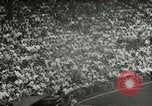
People watch Dodger-Giant baseball game and horse racing on TV, 1950
1950 newsreel clip on growth of the television industry in the United States. Announcer notes the popularity of athletic events on TV (especially baseball) . Shots of game between Brooklyn Dodgers and New York Giants at the Giants' stadium, the Polo Grounds. Vintage TV cameras marked 'WPIX' capture the action. #36 Don Newcombe of the Dodgers pitches to #12 Eddie Stanky of the Giants. Cameras transmit game to TV control center, which sends signal to home antennas. Woman and three boys seen watching television broadcast of the game at home on a small 1950s-era TV in a family living room. Scene shifts to horse racing, with camera marked NBC WNBT capturing an unknown horse race. Men at bar seen watching the race.

Wounded being treated after a tornado hits an area of Ohio in the United States, during 1974 Super Outbreak of tornadoes.
A documentary on occurrence of a tornado in the United States, during Super Outbreak of tornadoes in April 1974 that hit regions in many states, including Illinois, Indiana, Michigan, Ohio, Kentucky, Tennessee, Alabama, Mississippi, Georgia, North Carolina, Virginia, West Virginia, and New York; and also the Canadian province of Ontario. Focus of clip is on areas of Xenia Ohio and Dayton Ohio. Exterior of a building. Interior of National Weather Service office. A man talking over a radio. Other men at a broadcast station warning about the tornado. Radars trying to locate the positions of the tornado. Information about the center of the tornado and the areas towards which the tornado is heading is shown. A train on a railway track. The tornado hits the train. Ambulances and rescue workers working to help them. Men in discussion. Cars driving on the street. The rescue workers searching for wounded and dead people. The tornado heading towards other areas. Men locating the areas of the tornado on a map. Warning being given out in other areas about the tornado. The wounded being taken to a hospital. Doctors treating the injured. A man plotting the location of the tornado on a map.
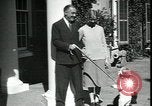
Governor Franklin D Roosevelt addresses people at the 1932 Democratic National Convention in Chicago, Illinois.
The 1932 Democratic National Convention in Chicago, Illinois. New York Governor Franklin Delano Roosevelt with his daughter Anna Roosevelt and granddaughter Anna Eleanor Roosevelt Dall (sometimes known as Sistie) outside a building circa 1930. Roosevelt holds a cane while leaning against a column and plays with his grandson using the cane. People gather in the convention hall for the 1932 Democratic National Convention. Roosevelt addresses them, speaking of the need to "break foolish traditions" and "to win in this crusade to restore America to its own people." The people applaud.
CRITICALPAST.COM: About Us | Contact Us | FAQs - How to Order | License Agreement | My Account | My Lightboxes | Shopping Cart | Advanced Search | Featured Collections | Website Terms & Conditions | Privacy Policy ©2026 CriticalPast LLC.
License Agreement |
Terms & Conditions |
Privacy Policy
©2026 CriticalPast LLC.