


 Francais
 Deutsch
 Italiano

Refine Your Search
Crimea Ukraine 1942 stock footage and images
- Showing 73 to 78 of 2514 results more
 Hide
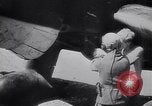
German Luftwaffe operations primarily in siege of Sevastopol in World War II
German ground crews hand crank JU-87 Stuka dive bombers to start them, during World War 2. A flight of four fly over the camera, carrying a bomb under each wing. Scene shifts to German Bf-109 fighters being readied for takeoff. German ace, Captain Hans-Joachim Marseille, is being helped into cockpit of his Messerschmitt Bf-109, by a crew chief. Camera focuses on the tail of his airplane displaying eagle atop a wreath encircling "100." An iron cross appears below the wreath. Ground crews crank start other Bf-109s, that taxi out and are seen, next, in formation flying above clouds. Closeup of two airborne Ju-87 Stuka dive bombers. View from the air of the harbor at Sevastopol, Crimea. Stukas dive bombing Sevastopol. German ground forces bombarding Sevastopol with heavy artillery. German soldiers advancing towards an area being shelled by German tanks. German soldiers gather near radio operator at base of a concrete building using radio to communicate. Stuka dive bombers overhead. Bombs exploding in the city. A Junkers 88 bomber in flight. Bombs dropping on Port below. View of pilot in cockpit of German bomber. View from air of bomb craters below. View from cockpit of a Ju-88 of another Ju-88 ahead. View from overflying German aircraft of silent Soviet Coastal guns atop Fort Maxim Gorky. (Note: Some scenes may be from unrelated times and places. For example, Hans-Joachim Marseille, was know primarily for his flying exploits in Africa.)
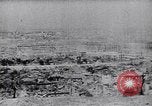
Sevastopol falls to German and Romanian forces under command of General Erich von Manstein, in World War II
Camera pans over destruction in aftermath of German siege of Sevastopol, Crimea, in World War 2. German General Erich von Manstein, Commander of German and Romanian forces, visits with officers in the ruins of Fort Maxim Gorky. He shakes hands with several of his troops, standing in front of one of the Soviet 305mm coastal guns atop the fort. Scenes of wrecked Soviet defensive batteries. Romanian troops testing the area for buried land mines. A flag identifies location of one. Romanian soldiers removing a buried mine. Romanian officers overseeing the operation. Romanian troops moving downward from the slopes toward the city, where smoke rises from bombardment. German troops moving toward bunkers. One throws a hand grenade. German soldiers moving through the city in house-to-house operations. Soviet warships sunk in the harbor. The Nazi flag flying above damaged building overlooking the harbor. What appear to be twin towers of a Russian Church and a minaret are seen in the rubble. A German soldier lays out a Nazi flag to smooth it for raising, as smoke billows from fires behind him. Camera pans the bombed and shelled hillsides in the area. Some horses stand on the hillside. A damaged artillery field piece stands amidst rubble. A deep bomb crater is shown. Soviet prisoners walk down from the fortifications. A long line of Soviet prisoners is seen marching under guard. Narrator states they number some 90 thousand.

Algeria, November 1942: Vichy French Generals preparing to depart Oran; Operation Torch Generals exit meeting in Algiers
American soldiers hold back crowds on a street in Oran, Algeria. Vichy French officers seen inside room and balcony above street, looking out at American soldiers and crowd (this is near timeframe that the Darlan Agreement was signed). View up and down street with civilians, cars, and bus on the street. American soldier standing in front of of the Hotel D' Angleterre. Next scene shows Vichy French military officers standing in a group with their luggage on the street, with American guards nearby, preparing to be removed from the city. Downhill is Hotel Geneve. U.S. Army guards prevent French civilians from heading up hill toward French officers. Next scene shows French African troops lined on the sides of the street at attention. French military band members stand just beyond them. Scene changes abruptly to new location under sunny skies, with French General Henri Giraud walking with a cane in his right hand, and another French officer beside him. U.S. Army Lieutenant General Mark Clark emerges from building, followed by Lieutenant General Dwight D Eisenhower, and then British Admiral Sir Andrew Cunningham. (This final scene is likely in Algiers where the Generals met in the range November 13-14, 1942 after Algiers fell quickly, following the start of the Operation Torch landings. See also the final scene of clip 65675020515 which shows this same scene with these same officers exiting this building, but from a different camera angle.)
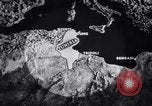
Allied soldiers in North Africa celebrate Christmas in 1942 and assemble for Roosevelt visit in January 1943
Allied Forces in North Africa during Christmas, 1942, during World War 2. Map of Tunisia. Ancient Roman ruins, including the Amphitheater of El Jem. A native plows a field. Children ride mules. Christian Cathedrals in various places. Interiors of a cathedral. At various places Allied soldiers hold Christmas Services outdoors. Camel Corps troops astride their camels. A Christmas service in front of a Curtiss P-40 aircraft displaying an American flag on its right wing and a Christian flag on its left. Scenes of children celebrating Christmas in different parts of the world, including boys throwing snowballs at each other outside a school building in the United States (Lettering above doorway of school reads "Durham Public School", possibly in Durham, NC. Graves of dead soldiers. Religious services held for the allied soldiers. British General Montgomery attends a religious service. Bells ring in churches across the world Sign reads 'A Happy Christmas'. Soldiers carry sacks. Letters brought for soldiers on a jeep. Soldiers run to get their letters. A soldier reads his letter. A soldier wakes up to find a filled stocking hung on his tent. Another soldier opens a parcel. 'Pine Grove USA' and 'Birney Cave Mincoka' written on two signs. Soldiers open parcels. Empty boxes, cups and bottles on a table. Preparation for the Christmas feast. Feathers are plucked from a turkey. Many bottles of rum in a row. Chickens are removed from an airplane. Soldiers in a chow line. A pudding on a plate is put on the table. A bowl of oranges on a table with some WAC (Womens Army Corps) service members. A sign in the background reads 'A Merry Xmas' Soldiers feed their pets. A puppy is fed. A donkey and a pig are fed. A pet monkey grooms a soldier's head. Candy is thrown to the native children. The Red Cross dispenses milk given by soldiers to native children. Soldiers go sightseeing in Egypt and observe an Egyptian magician. The Great Sphinx of Giza with the Pyramid of Khafre in the background as Allied soldiers fall off a camel they are trying to ride. Native people of Morocco in a city market area. Women pass in veils. British Soldiers play Cricket. American soldiers play baseball. A soldier plays a guitar. Another soldier views a magazine with a young woman centerfold picture. Soldiers polish uniform brass and shine shoes to prepare for assembly. Others take baths in tubs outdoors. With all troops assembled, President Roosevelt visits, riding in a jeep (while in the area for the Casablanca Conference). He is accompanied by Lieutenant General Mark Clark and General George Patton, riding in the back of the jeep. Later the President is seen sitting sideways in the jeep, holding his hat over his heart as he passes troops lined along the roadside. Secret Service agents ride behind carrying machine guns. The generals in his jeep salute as they pass the colors. Next, British Prime Minister Churchill is seen greeted by an honor guard of four British soldiers during his time in Casablanca for the Casablanca Conference. He is seen beside a gate labeled "Villa #3" which was the Villa “Mirador in the complex of Villas beside the Anfa Hotel.

Excited spectators at baseball game between Brooklyn Dodgers and St. Louis Cardinals, 1942
Clip begins Pete Reiser of the Dodgers and Murry Dickson of the Cardinals shaking hands and talking before baseball game between the St. Louis Cardinals and Brooklyn Dodgers at Ebbets Field in Brooklyn New York. Shot of Dodgers standing atop dugout step. Brief shot of Dodgers manager Leo Durocher. Majority of clip focuses on fans in the stands. Spectators in early 1940s-style clothing, both men and women, are seen in varying moods as the game progresses. Many close up views of fans and spectators, sometimes cheering, sometimes angry and booing, other times expectant and tense. Many men wearing suits, ties and hats, and smoking big cigars; female fans wearing dresses. (Note: the large crowd and downbeat mood of the spectators suggests this game could be from either September 11 or 12, 1942, both games which the Dodgers lost to the Cardinals at Ebetts Field as the teams battled for first place in the National League.) (World War II period).
Test flights of German missile A-4 V2 rocket in Peenemunde. First fully successful flight on Oct. 3, 1942.
Opening slate mentions speed and pressures generated in the test launch of A4 V2 rocket. The rocket launches and appears to be successful, moving up and out of sight. However, some white smoke descends and lingers in the atmosphere afterwards. The next slate states that the causes of the malfunctions have been identified and corrected. It is followed by a slate showing date of 3 October, 1942, and another about last instructions before the 3rd launch. German rocket scientist, Konrad Dannenberg, is seen discussing matters with several German officers at the test site. (Dannenberg is in the center of the group. Second from left is possibly Wernher von Braun. Second from right is possibly General Walter Dornberger.) The next slate reads: 1558 hours (3:58 PM) followed by one reading: Fire free. A German officer is seen speaking those words into a microphone. Camera shows a technicians hand as he sets firing switches on a control panel. ;Closeup of V2 rocket engine firing up. The rocket ascends successfully and disappears from sight. (Note: The footage at the end of clip showing the successful Oct 3 flight of A-4 V2 rocket was reportedly part of a film shown to Hitler at his Wolfe's Lair in 1943.) (World War II period).