


 Francais
 Deutsch
 Italiano
Refine Your Search
Crimea Ukraine 1942 stock footage and images
- Showing 1327 to 1332 of 2514 results more
more Hide
Hide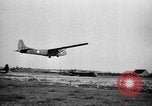
German Stuka dive bombers drops bombs on Dunkirk in France.
Events related to World War II. View of destroyed German planes inside a bombed factory. B-24 aircraft lands on runway. Aerial views of German Stuka dive bomber diving and dropping bombs. Flaming map of Europe. Scenes of Dunkirk, France. Stuka bombers British troop try to board boats.
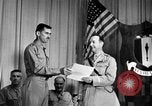
German air-raids over France during World War II.
Events related to World War II. Aerial view of German bomber dropping bombs over enemy installations in France. Explosions on the ground. Wall of building crashes to the ground. German Junker 52s take off an airfield. Japanese cavalry and troops pass in a review.
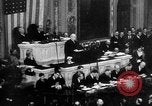
United States pilot training activity at start of World War II
Training of America's fliers, at start of World War 2. Brief scene of Congress in session. A Link trainer in motion at Randolph Field, Texas. Line of training planes with engines running, at the Advanced Flying School, Kelly Field, Texas. (Aircraft 33 & 34 are AT-6s, and the rest in the line-up are earlier BC-1s.) A Northrop A-17 taxiing on the tarmac, at March Field, California. Several views of B-17s taking off.
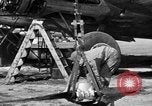
A B-25 aircraft crashes while landing on a runway during World War II.
Events related to World War II. Man attaches an aircraft propeller to hook of a crane. The propeller is lifted. Technician works on an engine of the aircraft in the background. B-25 comes in for a landing and crashing while doing so. View of a warehouse at the airbase. An aircraft taxis on runway.
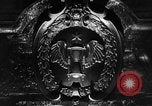
Roman Rudenko presents counts against convicted Nazi criminals during Nuremberg Trials; flashback scenes during war.
Portion of the Nuremberg Trials held at the Palace of Justice in Nuremberg, Germany. Flashback scenes to a variety of Nazi crimes against humanity during World War II. Chief prosecutor from Russia, Roman A Rudenko, presents Counts 3 and 4 against the convicted Nazi criminals; charging commitment of war crimes in Germany and countries which Germany occupied; including abuse, starvation, and execution of prisoners of war. Faces of convicts in the courtroom are shown, including Hermann Goering, Rudolf Hess (or Heß), Joachim von Ribbentrop, Wilhelm Keitel, Karl Donitz, Erich Raeder, Baldur von Schirach and Fritz Sauckel. Flashback scenes shows German soldiers serving on screening teams, searching and separating eastern front prisoners of war. Group of Russian soldier prisoners being force run marched, following behind a German tank beside a prison camp. Aerial view through German bomber window of large numbers of Russian soldier prisoners assembled. Ground level views of overcrowded prison grounds filled with prisoners. German General Erwin von Lahousen on the witness stand during Nuremberg trials giving testimony about his attendance at conferences where crimes against populations were plotted. View of Wilhelm Canaris, Goering and Hitler in meeting room in discussion with German officers. Next scene shows a farmhouse and farm buildings. A car is parked beside a farm building with metal pipes extending from the automobile exhaust system, through the exterior wall of the farm building (to gas occupants with carbon monoxide). Starved, emaciated Polish prisoners from Nazi concentration camps arrive riding on the back of a horse cart. German staff in white coats made to look like medical staff assist naked and emaciated men and child prisoners climbing down from the horse cart. They put robes over some holocaust victims. They lead them to the door of the farm building. Next scene shows atrocity evidence as the car is seen running poison gas into the building. Scene of homes in a village burning in flames as German soldiers watch.
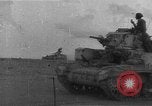
British 8th Army tanks advance and fire in North Africa.
British Honey tanks (American Stuart light tanks, initially provided under Lend Lease) in North Africa. Two single columns of British 8th Army tanks roll along desert roads in North Africa. Tanks fire at night and flashes occur. (World War II period).
CRITICALPAST.COM: About Us | Contact Us | FAQs - How to Order | License Agreement | My Account | My Lightboxes | Shopping Cart | Advanced Search | Featured Collections | Website Terms & Conditions | Privacy Policy ©2026 CriticalPast LLC.
License Agreement |
Terms & Conditions |
Privacy Policy
©2026 CriticalPast LLC.