


 Francais
 Deutsch
 Italiano

Refine Your Search
Croydon London England United Kingdom 1932 stock footage and images
- Showing 6283 to 6288 of 16124 results more
 Hide
Color Sound
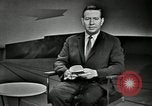
Famous international personalities are shown visiting the U.S. in the 1920s.
A 1959 production featuring footage of personalities visiting the United States circa 1920s. Douglas Edwards, an American television anchor speaks about the people who visited America. The French actress Sarah Bernhardt visits America. She is greeted by the people. In 1914 she is honored by the French government. Madam Ernestine Schumann-Heink, famous contralto, on board ship with friends. Modern interpretive dancer Ruth St. Denis, with a troupe of women dancers. Russian composer, conductor, and pianist Sergei Rachmaninoff, onboard ship. Polish pianist and statesman, Ignacy Jan Paderewski, arriving in America. Famous Irish tenor, John McCormack, arriving in America. Italian tenor, Enrico Caruso, seen with friends, as he visits America. George Bernard Shaw, the Irish playwright visits America. Arthur Ignatius Conan Doyle, creator of the Sherlock Holmes stands with his family. Maurice Maetterlinck, Belgian playwright and Nobel laureate on deck with companion. Michael Arlen, best-selling author, arrives in America. Joseph Conrad, Polish-born English novelist, is seen with ship's officers. British writer, H.G.Wells, tips his hat as he arrives on a ship to America. Douglas Edwards then presents a public interest announcement about civil defense planning, for the U.S. Office of Civil and Defense Mobilization, sponsor of the show (during the Cold War). This is followed by voice-over from unidentified speaker urging citizens to take part in civil defense. Shown is a cutaway view illustrating emergency supplies of canned foods, and other supplies stored in a home basement for emergencies. A sign describes it as part of a "Family Fallout Shelter." Narrator states that civil defense is an American tradition.
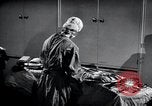
U.S Army Medical Service in Korea. Injured U.S. soldiers evacuated to the United States during the Korean War.
Scenes inside U.S. Army hospital in Japan. Surgeons scrub hand and arms at sinks before surgery. Surgeons prepare for operation on patient. Patients are moved about and treated. Nurse tending bedridden patient. Several soldiers seen leaving to return to duty in Korea. Others are transported to Haneda Air Base, near Tokyo, where the Military Air Transport Command operates long range aircraft in the so-called "Pacific Air Shuttle." A wounded soldier is taken from an ambulance and placed aboard a transport aircraft. Interior of aircraft is shown, with stretchers, medical workers and nurses. Aerial view of Honolulu, Hawaii from aircraft. The aircraft lands at Hawaii where wounded are cared for at Tripler Army Hospital until ready to continue journey to Travis Air Force Base in California. View from cockpit of aircraft landing at Travis Air Force Base. Wounded patients being moved through rear cargo doors of C-97 aircraft. Exterior view of fountains and main entrance at Walter Reed U.S. Army General Hospital in Washington, DC. Captain Zimmerman introduces Lt. Col. S.J. Newsome, who was a surgeon in Korea with the 7th Division. Dr. Newsome emphasizes "speed" as the most important factor in recovery of wounded soldiers. He also mentions the problem of disease affecting soldiers in foreign places like Korea, saying that, "Korea is a disease ridden country" with cases of pnemonia, smallpox, and "orgental diseases we had never seen before." Scenes of Army doctors performing medical examinations on soldier patients. Wounded being placed aboard jeep in Korean War. Soldier firing rifle. Soldiers slogging through mud and water. Soldiers firing artillery in the snow, and evacuating wounded on inflated litter in snow. Combat in jungle. View of civilian people wasing at side of river in India. Civilian dead in streets.
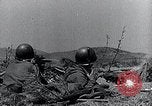
The U.S. female soldiers in uniform march and General Matthew Ridgway speaks on the services provided by women in U.S. army.
TV program, 'The big picture, ' depicts the role of women in the U.S. Army. U.S. Army Captain Carl Zimmerman speaks on the role of women in the American army. U.S. army soldiers marching. U.S. women soldiers in uniform marching. United States army General Matthew Bunker Ridgway speaks about the services provided by women in the U.S. army.
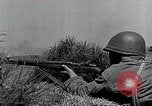
Role of American women in the military; WACS, nurses, and other military roles for women in World War 1 and World War 2
The role of women in the armed forces in the United States. A U.S. Army sniper fires a 1903 Springfield rifle on the Korean front during the Korean War. A woman in the Women's Army Corps (WAC) inspecting such a rifle in the U.S. Several Patton Tanks moving up a hilly road in Korean War. A WAC testing the turret of a Patton tank. U.S. Army women at desks as they work with Army men in an office. Picture depicts Molly Pitcher, wife of a fallen U.S. Revolutionary War artilleryman. Depiction of George Washington at desk. Depiction of Clara Barton, an American nurse with a wounded soldier. Reenactment of Clara Barton working with another women. A man holds the flag of the American red cross. Actual footage of a Wright Brothers aircraft in flight. Women in long dresses pushing an early model of car. A group of American soldiers in World War I running on a battlefield.. U.S. Army troops wearing gas masks and firing rifles from trench in World War I. American women war production workers assembling belts of machine gun bullets during World War I in a munitions factory in the United States. A nurse tending a wounded soldier. A woman nurse helping place a wounded soldiers into an ambulance in Europe, in World War I. Nurses in an operating theater in a hospital during World War I. Women march in victory parade at end of World War I. Women's suffrage demonstration by suffragists (sometimes called suffragettes) in front of the White House and then women and men entering a polling place to vote around time of of 19th amendment giving women the right to vote in 1920. Aviatrix Amelia Earhart climbing down from an airplane. Swimmer Gertrude Ederle on an award stand. U.S. Navy Vought SB2U-2 planes in flight as they drop bombs. Scene of Pearl Harbor attack by Japanese during World War 2. Army nurses look out from deck of ship in World War II. Soldiers fire artillery. View of mountains and scenes of combat on islands in the Pacific during WWII. General Mark Clark awards nurse Silver Star medal. Repatriated Army nurses, who were prisoners, are loaded onto an aircraft by means of a fork lift. In 1942, President Franklin D. Roosevelt signs legislation establishing the Women's Army Auxiliary Corps (WAAC). Secretary of State George Marshall and others witness the signing. Depiction of Godess Athena. Women volunteering for WAAC move in a line carrying bags. American women in military uniform marching. WAAC volunteers being processed. Women receive physical exams and receive inoculations. WAAC personnel being trained: working on X rays, in medical pharmacy laboratories, food service, and radio work. Women on board warships in World War 2.
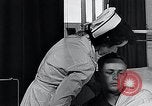
Women performing various duties being trained at the U.S. Women's Army Corps training center in the United States
The role of women in in the United States Army. A nurse helps an injured soldier in a hospital. A physiotherapist moves the leg of a soldier. A women dietitian works in the laboratory. View of Congress, on June 1948, during passage of the Women's Armed Services Act. Colonel Mary A. Hallaren being appointed as the first WAC officer in the regular Army of the United States. General George Marshall witnesses the appointment and swears in Sergeant Bates, as the first enlisted woman in the regular Army, as Colonel Hallaren witnesses. Women recruits arrive at WAC processing center by train. They get into a bus. Women enter the WAC training center. They are issued uniforms. Women being taught military matters in open air classrooms. WAC in close order drill, and donning gas masks.
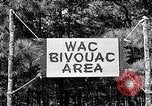
U.S. Women's Army Corps personnel training in different fields and given career advice at the training center
The role of women in the United States Army. A sign reads ' WAC Bivouac area'. Women carry heavy packs and march. During 10 minute break, they sit on ground and talk. Women's Army Corps (WAC) personnel set up tents and line up for chow, eating from mess kits. Women play softball. A woman reads letter from home. A woman drinks from a canteen. Women exercise and do calisthenics. They learn unarmed defense tactics. WAC military police march in formation. A woman being interviewed. Women in classrooms being given career guidance. A woman works on the punch card machine. A man and a woman drafting. Women work in the kitchen. Women work in laboratories. A woman on X ray machine and a solider lying on the table. Dentists check soldier. A woman being commissioned as an officer. Women disembark from a ship. WAC assigned to Japan, Paris or Germany. Views of a Shinto shrine in Japan, the Arc de Triomphe in Paris, and people in Berlin walking through Brandenburg gate British Sector and heading to other side, as German police officers watch. Woman assists male officers in a meeting, as the men view early television screen. View of Patton tank on the move.
CRITICALPAST.COM: About Us | Contact Us | FAQs - How to Order | License Agreement | My Account | My Lightboxes | Shopping Cart | Advanced Search | Featured Collections | Website Terms & Conditions | Privacy Policy ©2026 CriticalPast LLC.
License Agreement |
Terms & Conditions |
Privacy Policy
©2026 CriticalPast LLC.