


 Francais
 Deutsch
 Italiano

Refine Your Search
Croydon London England United Kingdom 1932 stock footage and images
- Showing 6481 to 6486 of 16124 results more
 Hide
Color Sound
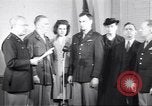
U.S. General George Marshall awards Distinguished Service Cross to Lieutenant Gerry Kisters in the United States.
U.S. Lieutenant Gerry Kisters awarded Distinguished Service Cross in the United States during World War II. Chief of Staff of the U.S. Army General George Marshall stands alongside Lieutenant Gerry Kisters and his family. Also in the group is General Lesley McNair. Officer reads citation. General Marshall pins DSC (Distinguished Service Cross) on uniform of Lieutenant Kisters and shakes hands with him. Lieutenant Kisters kisses his wife and his family congratulates him.

Historic aviation scenes. Wright Brothers; Louis Bleriot; Theodore Roosevelt; Seaplane; biplane crash
Views of various historic early aircraft. The wright Brothers, assisted by ground crewmen, prepare a Wright Flyer for takeoff. The aircraft is placed into position on a catapult track. Men turn the propellers, and the engine is started. A large weight is dropped from a tower to provide thrust to the catapult, and the aircraft takes off and makes a low pass over the field. An early Bleriot flying machine, with box kite characteristics, takes off and flies over a field. A U.S. Army officer walks past two men working on a Wright Flyer (Wright Brother?). A Wright Flyer takes off and flies over a field. Theodore Roosevelt steps from a Wright plane after flying with Archibald Hoxsey at an airshow at Kinloch Field in St. Louis, Missouri on October 11, 1910. Roosevelt shakes hands with a man as several officials stand nearby. Views of two early airplanes in flight. Louis Bleriot in cockpit of his airplane, turns propeller by hand. The Bleriot XI airplane under full power, held back by ground helpers, and then let go for take off. An early monoplane in flight. An early airplane maneuvers and turns. An early seaplane lands on a body of water. A biplane plunging to earth and crashing.

Dr. Vannevar Bush work at his desk at American Physics Institute at 57 East 55th Street, New York City.
Carnegie institution of Washington D.C. and American Physics Institute in New York. Exteriors of Carnegie institution of Washington Headquarters. People arrive and leave the headquarters. Car arrives at the entrance of the building. Interiors of American Physics Institute at 57 East 55th Street. Reenactment shows Dr. Vannevar Bush working at his desk. He signs a few documents.
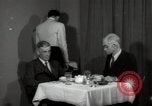
Meeting of Dr. George Pegram and Dr. Vannevar Bush in the United States concerning atomic bomb during World War II.
Reenactment shows a meeting of Head of American Physics Department George Pegram and Dr. Vannevar Bush in the United States concerning atomic bomb during World War II. Dr. Pegram and Dr. Bush talks at dinner. Pregram, just returned from Britain, reports to Bush that the Germans are working on an atomic bomb. He says that the British scientists are of the opinion that a uranium bomb is practicable but big industrial output necessary makes it imperative. Therefore work must be done in America. Bush says he is to see the President the next day, and he is confident they will get all the help they need.

The French ship "Pourquoi Pas?" underway in Antarctica, during 2nd French Antarctic Charcot Expedition
The bow ot the French antarctic exploration vessel, "Pourquoi Pas?" is seen as it makes way in antarctic waters. Ice floes are all around. The occasion is the second French Antiarctic expedition headed by explorer Jean-Baptiste Charcot.

Workers operate automatic data processing machines in tax administration at U.S. Internal Revenue Service Computer Center.
A film discussing automatic data processing and introduction of the use of computers in tax administration. Animation depicts two early computer models converse with each other. The exteriors of a building shows a sign which reads 'US Treasury Department Internal Revenue Service National Computer Center' located in Martinsburg, West Virginia. The interiors of the building show computer equipment reel to reel tapes mounted and other equipment in operation. Process of return processing shows workers at various data processing machines and early computers. A worker pushes a button on a machine. Workers working with and without machines. Workers sort bags filled with tax return mail.
CRITICALPAST.COM: About Us | Contact Us | FAQs - How to Order | License Agreement | My Account | My Lightboxes | Shopping Cart | Advanced Search | Featured Collections | Website Terms & Conditions | Privacy Policy ©2026 CriticalPast LLC.
License Agreement |
Terms & Conditions |
Privacy Policy
©2026 CriticalPast LLC.