


 Francais
 Deutsch
 Italiano

Refine Your Search
Croydon London England United Kingdom 1932 stock footage and images
- Showing 16069 to 16074 of 16124 results more
 Hide
Color Sound

John William Davis, Democratic Presidential Nominee, campaigns in hometown of Clarksburg, West Virginia
Democratic Presidential nominee, John W. Davis, receives tumultous reception in his home town of Clarksburg, West Virginia. Well-wishers jam the streets, bunting is hung on building, and a brass band plays. An open automobile, carrying the Presidential nominee, proceeds slowly through mass of spectators. Davis stands in the car, waves at the crowd, and shakes hand with spectators. Later, he wipes his face with a hankerchief, as he stands with his wife, Ellen G. (Bassel) Davis, on the balcony of a house. Crowd cheers him. One holds sign reading: "West Virginia." Mr. and Mrs. Davis pose for photograph. Mrs. Davis holds bouquet of flowers. Nominee Davis speaks from a podium. Banner on podium displays official motto of West Virginia: "Montani Semper Liberi" (Mountaineers are always free). American flags are massed behind him.
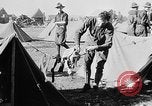
U.S. National Guard troops encamped at Fort Bliss before commencing the Punitive Expedition into Mexico
National Guard soldiers, called up for the Punitive Expedition into Mexico, are seen at camp in Fort Bliss. They attend to ordinary tasks, such as hanging clothes to dry on their tent ropes. A group are gathered together for mail call and receive letters and packages from home. Next, many are seen seated on the ground, writing letters, themselves. Troops gather around an outdoor mess stove where food is being prepared. Next they are seen carrying their personal mess gear as they walk past tents. They then line up for food in a chow line at an outdoor kitchen. Troops seated on the ground, eating a meal from their personal mess kits. Some of the soldiers gather where they are filmed playing with two puppies and a small goat. Much of the remaining footage shows soldiers engaged in all manner of competitive physical games such as horse and rider, and various team races. The final shots show Brigadier General John J. Pershing posing with members of his staff, and closeups of him seated in a chair and then standing outside his rustic quarters.
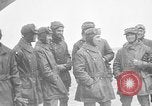
U.S. 1st Aero Squadron supports Punitive Expedition into Mexico
U.S. aviators of the 1st Aero Squadron pose in front of a Curtiss JN-3 airplane their base in Columbus, New Mexico, in 1916. The rest of their aircraft are lined up, parked, side by side. Scene shifts abruptly to views of camp below, from an airplane flying above it. Pilot is seen in open cockpit.

Unmodified cars (right out of showroom) compete in Car and Driver magazine's Stock Car Challenge race, Lime Rock, Connecticut
Highlights of the annual "Car and driver Showroom Stock Car Challenge." Scenes of Lime Rock Park, a road course auto racing track in Connecticut. A large crowd of spectators and racers gathered in the park. Competitors seen tightening wheel lug nuts and and cleaning car windows. Spectators watch as the racers drive through the race track. These races are partially funded by automobile manufacturers who use unmodified cars for racing and evaluate engineering, performances and safety features of the cars. Race drivers check power plants, transmissions, differentials in driving aspects, suspension system, tires and wheels, braking system, body safety measures, emission control system and bumpers of the cars they buy. Peter Gregg gives a demonstration of safety driving measures. Another famous race driver Bob Bonderant, shares his driving experience with driving safety education. Police, ambulance and fire department send their members to driving schools so that students can improve their driving skills and pursue public driving duties. Civilians attend an automobile show where they are made aware about the latest features like rear view mirror, stronger bumpers and improved suspension. Racing scenes of cars careening, throwing up dirt, spinning 180 degrees, coming up on two wheels, and similar events on the track. Police car demonstrates quick maneuver to avoid road hazard.
United States Army Redstone missile is displayed at the Grand Central Station in New York, United States.
Scene opens shows spectators looking at a U.S. Army Redstone missile lying in its side in Grand Central Station, New York City (89 E 42nd St, New York, NY 10017, United States). The Ordnance Corps logo is painted on the missile side. Some workmen use a manual hoist to raise the 5-ton missile upright. View from above of the missile being slowly tilted upright. Closeup of spectators looking upward as it moves. Another view from above as the missile is about half-way raised. Exhibit is a salute to the International Geophysical Year. Closeup of more people watching the missile being pulled up. Among others, they include a woman with two small girls, and a U.S. Airman in khaki uniform. View from above of the missile finally standing completely upright on the station floor with a large American flag displayed on the wall behind it.
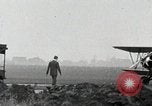
An aircraft piloted by aviator Charles Lindbergh takes off from a field in Hicksville, New York.
American aviator Charles Lindbergh takes off in an aircraft from Hicksville, New York. At an airfield, Charles Lindbergh walks towards a 1930 Perth Amboy Bird BK aircraft with registration number N727Y. He examines the aircraft. Men gathered around the plane. Propellers of the biplane aircraft rotate as engine starts. Lindbergh taxis and takes off in the aircraft and the plane is seen climbing.
CRITICALPAST.COM: About Us | Contact Us | FAQs - How to Order | License Agreement | My Account | My Lightboxes | Shopping Cart | Advanced Search | Featured Collections | Website Terms & Conditions | Privacy Policy ©2026 CriticalPast LLC.
License Agreement |
Terms & Conditions |
Privacy Policy
©2026 CriticalPast LLC.