


 Francais
 Deutsch
 Italiano

Refine Your Search
Croydon London England United Kingdom 1932 stock footage and images
- Showing 2221 to 2226 of 26292 results more
 Hide
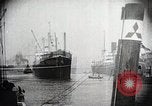
Canned crab tins displayed in Japan.
Steamers underway at sea in Japan. The flag of Japan at steamer. Logo of Three Diamond Brand on steamer. Various countries signs on map. The map explains the data of cases of USA, Hawaii, Canada, England, Australia, France, Germany, Denmark, Sweden and others countries for year of 1924-1927. Tins of 'Three Diamond, Fancy CrabMeat'. Tins of 'Icebond Brand, Selected CrabMeat' displayed. Three Diamond Brand of canned crab and logo of Three Diamond.

Marshall Plan fosters industrial rebuilding and recovery in Europe, following World War II.
The recovery of Europe after the devastation of War as a result of the Marshall Plan. The steel industry in Linz Austria and views inside a steel plant factory. Volkswagen Type 1 Car assembly operations in a Volkswagen factory in Germany and view of VW Volkswagen Beetle or VW bug cars being built; scenes from a rubber factory in England.
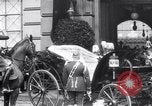
Wedding of Princess Viktoria Luise of Prussia and Prince Ernest Augustus of Brunswick- Luneburg, in Berlin, Germany
Various scenes, not necessarily in chronological order, associated with the wedding of Princess Viktoria Luise of Prussia, daughter of Kaiser Wilhelm II, and Prince Ernest Augustus of Brunswick- Luneburg, son of the Duke and Duchess of Cumberland on 24 May, 1913, in Berlin, Germany. British King George V enters a royal coach followed by German Kaiser Wilhelm II. Footman places carriage robe over their legs and they depart, followed by a mounted military rider escort. Another royal coach arrives immediately and Empress Auguste Victoria (Augusta Victoria) of Germany and Queen Mary of England, step into it. The coach moves away. View of many men in formal military uniforms on walkway behind. More carriages arriving as many ladies emerge from passageway to the walkway in the background. Princess Viktoria Luise, and Prince Ernest Augustus enter a motorcar. Contingents of mounted German Guards Cuirassiers lead the way for the royal coaches carrying King George V of Britain and Kaiser Wilhelm II of Germany, and Empress Auguste Victoria and Queen Mary of Teck. More contingents of mounted German Guards Cuirassiers follow behind.
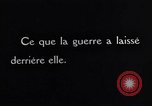
Film depicting some of the tragic human aftermath during and after World War I
A film looking at some of the tragic human costs of World War 1 ("The Great War"). Opening slates read, (in French) "What the war has left behind it." "9 million dead." Then, a vast battlefield cemetery is shown,filled with rough wooden crosses. Camera pans over parts of it. Another, better tended cemetery is seen with finer crosses. Then another battlefield graveyard, with freshly dug graves and rough markers is shown. Slate reads, "The sea, a vast tomb." Another slate reads, millions of crippled," followed by scenes of Allied soldiers and medics, carrying their gear, across a barren battlefield. One rough cross is seen.In next scene it is clear they are scouring the battlefield for wounded and dead. Stretcher bearers make their way cautiously across ditches and makeshift bridges as they retrieve the wounded. Two assist a walking wounded soldier with bandaged eyes. Wounded seen being brought into a sandbagged brick building serving as a hospital. A field ambulance also takes patients from the hospital. A convoy of field ambulances carry wounded from the battlefields. A two-stacker British hospital ship steaming at high speed away from a French port, headed for England. Wounded British war veterans being moved in wicker wheel chairs outside a substantial building. Uniformed attendant picks one up bodily and places him into another wicker wheel chair that allows his legs to be outstretched. The attendant covers him with a blanket. Next, that veteran is seen, conversing with a men, in an outdoor area, where other wheel-chair bound veterans are enjoying small flower gardens and socializing in the sunshine. A white-coated caregiver assists a stooped veteran who takes many small steps to walk. Next is seen the famous 1919 painting by John Singer Sargeant, of blinded soldiers on the battlefield, titled, "Gassed." (It is now in the British Imperial War Museum.) Slate reads "They'll never see again," and several blind veterans are seen in dark glasses walking outdoors in the company of others. Blind veterans, injured in gas attacks, are seen making baskets by hand.
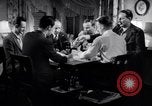
British factory worker and his American counterpart on an international exchange visit to the Lockheed aircraft plant in Los Angeles (WW2)
A British guest on labor exchange program visit to the U.S. is staying as a house guest of his counterpart American in Los Angeles, California. We see him with several friends of his host, who also work at the Lockheed aircraft plant. They are teaching him the card game of poker. The leave to attend a meeting of District Lodge 727, International Association of Machinists and Aerospace Workers, AFL-CIO (Lockheed-California Company). There the British guest is allowed to ask questions of the union. He and his American counterpart are seen at a podium as the Briton asks about the strength of the union inside the Lockheed plant. The local union Secretary responds that they have 45 thousand members in the Lockheed plant and, noting that the British man was a shop steward back in England, mentioned that the local also had 3000 shop stewards in the Lockheed factory. The British visitor asked how the union would be affected after the war, when labor requirements would be reduced. A member answers that the first action would be to return to a 40 hour work week (from the wartime 50 hour week). He states that some workers would return to pre-war work and jobs. Finally, he says they expect Lockheed to expand the scope of its manufacturing to include consumer goods. The union is asked about accommodating workers returning from the military and answers that it is covered in the union contract, which calls for their seniority to continue to accrue while in service. The union also provides for war injured handicapped workers to return to work, and sponsored legislation to provide post-service education opportunities for all returning veterans. Asked about women now employed in the plants, one woman union member stated that many would return to their homes. But the immediate need is to employ more women to the help the Allied forces win World War II as soon as possible. Regarding the prospect of post-war employment, one union member noted the national need to convert from wartime production to the manufacture of consumer goods. The union members favored the idea of continuing labor union exchange visits between the Allied countries in the future.

Siamese King Prajadhipok and his Queen visit a Riviera port in Villefranche, France
Siamese King Prajadhipok and his Queen visit a Riviera port in Villefranche, France on their way to England.
CRITICALPAST.COM: About Us | Contact Us | FAQs - How to Order | License Agreement | My Account | My Lightboxes | Shopping Cart | Advanced Search | Featured Collections | Website Terms & Conditions | Privacy Policy ©2026 CriticalPast LLC.
License Agreement |
Terms & Conditions |
Privacy Policy
©2026 CriticalPast LLC.