


 Francais
 Deutsch
 Italiano

Refine Your Search
Croydon London England United Kingdom 1932 stock footage and images
- Showing 3343 to 3348 of 26293 results more
 Hide
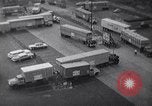
United States monitoring Cuba and enforcing Kennedy's shipment quarantine order during the Cuban Missle Crisis
Community fallout shelters being stocked. Lorries and trucks on road carry supplies. View of Red Ball trucking line truck. Aerial, exterior view of United Nations Building in New York City. View inside United Nations building. United Nation Ambassador Stevenson asks the USSR delegate whether there are missile bases on Cuba. President Kennedy signs Quarantine order on what materials may be shipped to Cuba, to begin 10am on October 24, 1962. B-52 bombers take off, taking 24 hour missions. Interceptors and fighters take off. Views on aircraft carriers with fueling and takeoff operations on flight deck. Radar dishes and radio communications. U.S. battleship at sea. U.S. intercepts Soviet tanker and allows her to proceed. Reconnaissance aircraft over Cuba. Views of White House. SAC bombers and anti aircraft missiles on 5 to 15 minute alert to handle any critical situation. Interiors of control room inside the Headquarters of American Air Defense Command.
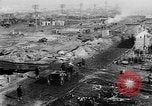
Ammunition being produced at an arsenal in the United States during World War I.
War preparations in the United States during World War I. A horse drawn cart moves along a road near shipyard, with lumber everywhere. Machines inside an arsenal in the United States as men work on them to produce ammunition. United States flag hangs against a building as workers gather at a rally outside it. Men salute to the flag.
Models of houses on display as architects discuss the future trends in housing in United States.
' Tomorrow housing' about the housing trends in United States in years to come. An intersection of highways in the United States with flyovers and vehicles moving over them. Models of modern and futuristic buildings and roads of the future, seen just after the end of World War 2 during expansion of home ownership in America. Newspaper articles and headlines about the growing need to develop new houses. A woman steps away from a bank teller window after making a deposit. A sign in the bank reads 'Save for your future home'. A United States Navy sailor discusses about future houses with women. Architects look at a model of future houses and discuss. A sailor and his family look at models of various suburban house designs.
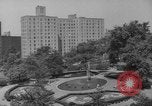
A new planned housing community with various amenities like drug store, theater, laundromat in United States.
Improvement in housing facilities in post war era in United States. A planned housing community in the United States with various facilities like children's parks, baseball fields, a Liggett's drug store, a movie theater and a laundromat laundry facility. The theater marquee advertises Allan Ladd and Loretta Young, "And Now Tomorrow", and "Our hearts were young and gay" with Gail Russell and Diana Lynn. Woman loading clothes into an early model laundromat washing machine. Children play about in the area around the houses and run down from a pedestrian bridge that crosses a road. Ice cream man pushes an ice cream cart with an Eskimo Pie advertisement on the cart. The man rings a bell as children run to the ice cream cart. A woman inside a well ventilated and well lit up house. Men and a woman conduct research about improving housing facilities in United States.
Use of colored grenades by a unit to know the direction of the enemy fire during WW2.
The types, uses and importance of colored smoke grenades during WWII. An enactment shows units during an advance. Laying out a cloth in an arrow sign indicating the direction of an enemy fire and burning a smoke grenade near it. The smoke signal indicates the help required by the unit in knowing the direction of the enemy fire. A reconnaissance plane surveys the combat area and enemy installations. A pillbox being located and smoke grenades being burst. Soldiers fire 4.2 mortars at the pillbox and smoke rises. Smoke engulfs the pillbox. Ground units attack the area. A soldier sets off a colored smoke grenade to indicate cease fire. Soldiers advance and smoke from colored grenades rises.
Recognition, capabilities and similarities of Japanese Zero fighter plane and United States P-40 Warhawk (WW2)
Recognition and capabilities of Japanese World War II Zero fighter plane. Japanese Mitsubishi A6M Zero in flight. Animated diagram of Zero fighter plane shows its wings, tail and engine. Animated picture of Zero fighter plane and United States P-40 Warhawk. The similarities and differences of both the aircraft is shown. United States P-40 Warhawk in flight. Actor Ronald Reagan dramatizes the experience of mistakenly shooting at a P-40. Officers converse with each other. Pilot looks at pictures of P-40 War Hawk on wall. Airmen discuss the differences and similarities between Japanese Zero fighter plane and the United States P-40 Warhawk. Pilot seated in cockpit of P-40 Warhawk. Airmen ask questions of Ronald Reagan. Pilot Ronald Reagan then takes to the air, correctly identifies a Japanese Zero fighter plane and shoots at it.
CRITICALPAST.COM: About Us | Contact Us | FAQs - How to Order | License Agreement | My Account | My Lightboxes | Shopping Cart | Advanced Search | Featured Collections | Website Terms & Conditions | Privacy Policy ©2026 CriticalPast LLC.
License Agreement |
Terms & Conditions |
Privacy Policy
©2026 CriticalPast LLC.