


 Francais
 Deutsch
 Italiano

Refine Your Search
Croydon London England United Kingdom 1932 stock footage and images
- Showing 5281 to 5286 of 16124 results more
 Hide
Color Sound
C-5 Aircraft taxis on runway. General description of C-5 with emphasis on its 28 wheel landing gear
C-5 Aircraft taxis to come to the runway. Narrator describes features of the C-5. Pilot and Copilot seated inside cockpit. 'Beware of Blast' written on side of the C-5 Aircraft. Airman explains about the flexibility and 28 wheels of the aircraft with the help of a model. Adapting to crosswind landing. Forward, aft, and level "kneeling" of the aircraft is shown. View of control panels inside the aircraft.

Pilot explains safe taxiing of C-5, emphasizing its extreme size and potential for damage from obstacles and foreign objects
Pilot explains safe taxiiing of the C-5, with the help of a model. He emphasizes the need to care due to the sheer size of the overall aircraft, from nose to very high tail section and wing tip to wing tip, where outboard engines can be operating only 9 feet above areas outside of runway where foreign object damage could occur.
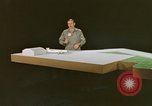
Pilot explains ground handling operations of C-5 Aircraft with the help of a model.
Air Force pilot explains ground handling operations of C-5 Aircraft with the help of a model. He turns the model aircraft to come on the runway. An actual C-5 Aircraft taxis on runway with a vehicle in front. Airman gives hand signals as aircraft turns.Pilot cautions of need to turn off radars on C-5 when on ground due to danger of radiation igniting certain fuels, or electrically sensitive explosive devices.
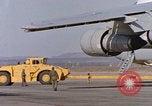
Towing and ground handling of C-5. Docking to load or unload cargo
Air Force pilot explains ground handling operations of C-5 Aircraft. Vehicle towing a C-5 Aircraft on tarmac. Using model, narrator cautions about misleading perceptions of ground handlers due to unusual dimensions of the giant C-5. Discussion and example of the mating of the C-5 with its air transportable loading dock.
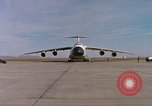
C-5 Aircraft taxis and turns on runway. Pilot narrator discusses jet blast hazard to personnel and equipment on ground
Pilot narrator explains ground operations of C-5 Aircraft with the help of a model. Pilot and copilot seated inside cockpit of C-5 Aircraft use check lists and start engines. C-5 Aircraft taxis toward the runway. Narrator explains that jet blast from C-5 can be like hurricane force winds.
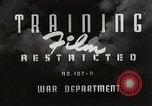
U.S. Army Air forces pilots learn about the Republic P-47 Thunderbolt airplane
From a U.S. Army Air Force Training film, "How to Fly the P-47. Pilot Familiarization." United States pilot seated on table writes a postcard to his mother, "Mrs D.Q. Hopkins. 1024 Clay Avenue, Pelham, New York" Board in the background with 'Daily Assignment of today' written on it. Scene shifts to forward view from cockpit of a Republic P-47 aircraft flying low over the flight line at an Air Base. Momentary glimpse of the pilot and his post card in the office. Back again, to forward view from cockpit of a P-47, but this time it is on final approach to the runway. Scene shifts to ground view of a P-47 landing. It taxis to the ramp and parks. The crew chief stands on the wing as the pilot completes and signs the aircraft's Form 1 (record of any problems). Five pilots walk past the flight line. The pilot, wearing a seat pack parachute, climbs down from the cockpit. The five pilots, seen earlier, approach, and one introduces them to the P-47 pilot (Captain Hopkins). They are Lieutenants assigned to his training flight. He greets them and shakes hands with all. The group ask questions about the P-47. Then they all go to the pilots room. As Captain Hopkins takes off his flight gear he tells them the P-47 is designed to operate at high altitude. He describes the P-47, referencing a large illustration of it on the wall. (World War II; WW II; World War 2; World War Two)
CRITICALPAST.COM: About Us | Contact Us | FAQs - How to Order | License Agreement | My Account | My Lightboxes | Shopping Cart | Advanced Search | Featured Collections | Website Terms & Conditions | Privacy Policy ©2026 CriticalPast LLC.
License Agreement |
Terms & Conditions |
Privacy Policy
©2026 CriticalPast LLC.