


 Francais
 Deutsch
 Italiano
Refine Your Search
Cuba 1898 stock footage and images
- Showing 265 to 270 of 349 results more
more Hide
Hide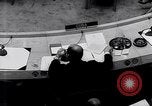
Cuban President Osvaldo Dorticos speaks in United Nations Assembly in New York, United States.
Cuban President Osvaldo Dorticos addresses United Nations assembly. Name Plate of Cuba on table. Cuban President sits and speak from his place. Papers lay on table.
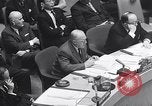
Cuban President Osvaldo Dorticos speaks in United Nations Assembly, New York, United States, about U.S. aggressive actions.
Cuban President Osvaldo Dorticos addresses United Nations meeting. He asks U.S. Ambassador Stevenson the political, moral and legal grounds of U.S. charter. He states the aggressive acts of U.S. on small states of Cuba and that U.S. has no positive ideas.
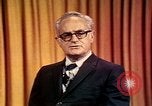
Moderator Peter Lasigor concludes and restates issues raised by Stennis and Fulbright in United States during a debate.
Moderator concludes debate on 'Role of Congress in Foreign Policies' between John C Stennis, Chairman, Armed Service Committee and William J Fulbright Chairman, Foreign Relations Committee in United States organized by American Enterprise Institute. The Moderator Peter Lasigor says that Stennis and Fulbright disagree on the issue of Congress's role in foreign policy. Stennis has said that the Congress has contributed in making 40 mutual treaties and plays a crucial role in making Foreign Policies. Stennis states the resolutions passed on the issues of Cuba, Berlin and others. Lasigor says that both of them agree on the point of reassessment. The points Fulbright raised were about the war making functions and deprivation of senate from the agreement on war issues.
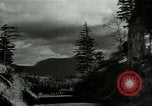
American landscape views 1930s; contributions of U.S. soldiers in the history and development of the USA.
The involvement of the American soldier in the history and growth of the United States from early 1900s until roughly 1938 before World War 2. Views of western United States countryside and mountain areas, including Mount Hood in Oregon, as seen from a slow moving car or other vehicle on a roadway. Wide, expansive landscape views in the U.S. Two Confederate and one Union uniformed veteran soldiers of the American Civil War walk together in the Arlington National Cemetery, in Virginia. U.S. Army soldiers marching at a an Army base, likely early 1930s, and wearing World War 1 era helmets. U.S. Army soldiers marching in a parade in Washington DC with U.S. Capitol in the background. Views of cities and towns in which U.S. Army posts were established, in the United States. Wide view of downtown Colorado Springs, Colorado, with Antlers Hotel in the distance and Pikes Peak in the far distance. Next shot is an unidentified downtown main street in the U.S. 1930s, followed by a scene of an industrial plant with a large water tower and snow covered low mountains in the distance. Next scene is the San Francisco skyline in the 1930s with the Bay Bridge in the far distance. Army troops and cavalry creating trails and paths, and eventually railroads, in wilderness areas of the United States. A railroad locomotive approaching beside the camera position at high speed, and then passing by pulling train cars. View of the Presidio Army Base and the Golden Gate Bridge, California. Subtle references to U.S. Army accomplishments, including curbing Mississippi River floods (Corps of Engineers) and conquering Yellow Fever (Army Doctor Walter Reed). Point of view (POV) shot from moving railroad train in a Colorado canyon; a side wheeler River boat on the Mississippi River; a sugar cane field in Cuba. View of locks in the Panama Canal. Statue of World War I soldiers.
Delegates of the 7th Assembly of the League of Nations leave meeting hall in Geneva, Switzerland; typists record notes.
Delegates of the 7th Assembly of the League of Nations at the Council Meeting at Pales Des Nations in Geneva, Switzerland. The meeting is over and the Council members leave the hall. Shows several delegates such as M. Scialjoa of Italy, M.Villegas of Chile, De Bethancourt of Cuba, Raoul Dandurand of Canada. Empty meeting hall. Women work on typewriters.
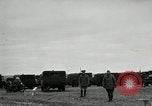
Visiting Latin American military officers get acquainted with 37mm anti-tank guns at Fort Riley Kansas.
Visiting Latin American military officers get hands-on experience with anti-tank gun at Fort Riley Kansas. U.S. Army Soldiers load 37mm anti-tank guns mounted on army jeep. Captain Gonzalo from Cuba, Lt. Nava Rotas from Mexico, Lt. Chavez from Peru take turns to adjust the gun, aim through the gun telescope and give the firing orders. (World War II period).