


 Francais
 Deutsch
 Italiano
Refine Your Search
D-Day stock footage and images
- Showing 1375 to 1380 of 4856 results more
more Hide
Hide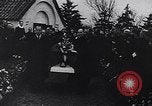
Denmark under German martial law during World War II
Film made by Danes, after increasing tensions between them and German occupation forces that invaded Denmark in 1940, boiled over in August 1943, and the Germans placed Denmark under martial law. It covers the period 1943 and 1944, after which the film was smuggled out of the country. Opening scene shows pallbearers at the funeral of Kaj Harald Leininger Munk (aka Kaj Munk) a Danish playwright and Lutheran pastor, who was assassinated by Nazi Gestapo agents, on 4 January, 1944. Narrator states that Nazi murder leagues assassinated some of Denmark's greatest leaders to intimidate the Danes and quell any rebellions. The coffin of Pastor Munk is lowered into its grave. Memorial stone and flowers are shown. Smoke rising and then a large conflagration are seen, from Danish acts of sabotage. Damaged buildings and more fires, from Danish resistance, are seen. In response, the "Schalburg Corps," a Danish volunteer branch of the Nazi SS, began counter-sabotage (called Shalbotage by the Danes). Film shows fireman on ladders at the building of the Paramount Movie Company, Ltd. where smoke is coming from the windows. (Narrator says film companies that refused every form of collaboration were blown up.) View of severely damaged Nordisk film studio at Helerup. Windows shattered in department stores and in all shops along a street. Illums Bolighus (famous store of Scandinavian design) and many others are wrecked. Camera pans up the side of damaged building with bird painted on its side and the words: "mod lysere Dage.." (Brighter Days). Views of the destroyed Royal Yacht Club pavilion, in Copenhagen harbor. Destruction in Tivoli Gardens. Its concert hall completely destroyed. Fire burning at the Syndicate, Denmark's largest armaments factory, from bombing by saboteurs, in June, 1944. Danes walking in Copenhagen, on a summer evening, flaunting the Nazi curfew from 8PM to 6AM and then lighting bonfires after dark. Abandoned wheel barrows and empty streets are shown when residents of Copenhagen all go home in a general strike. Several German soldiers are seen in otherwise empty street, as the German Commander in Chief declares the city of Copenhagen under siege. A German tank parked in the street amidst pedestrians. Barricades set up by strikers in a street. The American flag flying high over a street. The "Bulldog" a department store in flames. A car serving as an ambulance drives down a street displaying a white flag. A long line of Danes wait at a street corner shop for self-rationed food. Danes drawing fresh water from lakes to be brought to hospitals, where needed. View from above of strikers at a barricade. Narrator states that after 5 days, the Germans gave in and agreed to Danish terms. View of open area in the city, where people stand in silence to commemorate those who lost their lives in the struggle. Danish man looking through chain link fence. More scenes of continued sabotage by Danes.
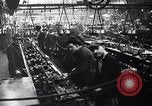
Labor Union movement grows significantly, but labor strife also continues during 1930s in the U.S.A.
Men work assembling transmissions on an automobile production line. John L. Lewis, President of the United Mine Workers Union, giving a speech supporting formation of the Congress of Industrial organizations (CIO). Group of workers gather to listen to a union speaker. Many wear miners hats. Cheering Union workers march in street carrying posters reading: "Long-Live the C.I.O." and "Forward with C.I.O." Leaders of the early C.I.O., Sidney Hillman, President of the Amalgamated Clothing Workers of America (ACWA); Philip Murray, Vice President of the C.I.O.; and John L. Lewis, C.I.O. President, circa 1938. David Dubinsky, President of the International Ladies' Garment Workers' Union (ILGWU); along with Sidney Hillman, and John L. Lewis, are seen mingling with clothing workers. View of a steel mill from workers' residential street on a snowy day. Steel worker in a mill. Deckhand and an engine man aboard a merchant ship. Roustabouts and riggers at an oil well. Nonferris metal miner in rail car. Worker in tire factory. Electrical worker. Union leader speaking to group of workers carrying banner reading: "Shirt workers, Local 128 Allentown, Pennsylvania Joint Board." Labor organizers passing out leaflets to workers leaving a factory. Labor discussions with workers at lunch tables. Draftsman preparing labor organization protest signs calling for "Sanitary Conditions" and "Fair Play." Working women singing a union song. Union workers marching and carrying signs for various causes. Man riding a bicycle displaying sign:"Don't Scab." Car overloaded with people with sign: "Come To Lafollette Labor Rally Monday, July 5, 1937." ACWA workers of Local 95, Atlas Plant. UMWA members of Lafollette, Tennessee. Miners playing cards and playing musical instruments. Miners on strike below in mine for 5 days, cheer leader. Poster encouraging Americans to travel and visit in the USA. Police with batons or billy clubs and military units repel, combat, beat, and arrest striking and protesting workers during labor disputes. Scenes of military uniformed men throwing tear gas grenades into crowds of workers as workers disperse. People assisting injured protesters. Police firing various weapons at protesting workers during labor protests and strikes in San Francisco. U.S. Army soldiers arresting a civilian and throwing tear gas grenades.
Improvement of miners, condition of mines and factories and civilians of war affected countries of Europe, by Marshall Plan.
Film titled 'Me and Mr. Marshall' depicts developments of coal mines in Germany and aid to other European nations affected by World War II. German coal miners dig deep in a coal mine soon after the end of World War 2. Volunteers awarded at a ceremony. Volunteers board a train and proceed for work at coal mines. Volunteers eat food, give their shoe size, under go training on mine machinery. Miners on lift move underground. Miners at end of the day walk out tired and blackened by coal dust, from a mine. Miners take hot showers after work and get clean clothing hung high on ropes. Salary given to workers for a day's work. Headlines of German newspapers about Marshall Plan. General George C. Marshall speaks his plans at a meeting in Washington DC, America. Aerial views of ruined buildings and factories, wrecked harbor, refugees in tenements in Europe after World War II. Buildings, monuments and bridges in London and Eiffel Tower and other buildings and civilians on roads in Paris, and view of Kremlin in Moscow, Soviet Union. Map shows countries under Marshall recovery plan. View of meeting in progress of Conference for European Economic Cooperation in July 1947, in the Grand Dining Room of the French Foreign Office. Meetings of leaders of nations adopting Marshall plan. Ruins of industries of Germany. Ruins on the ground after war in London, with Big Ben in the far distance. Workers at a factory. Miners take a horse inside a coal mine. Empty coal cars at a German coal mine. Men push coal cars full with mined coal out from mine, on rails. Views of buyers in suits at a German trade show and conference, promoting German products and industries to potential buyers in other countries, a few years after the end of World War 2. U.S. Congress and President Harry Truman in Washington DC approve the Marshall Plan and provide monetary aid to other European countries. Scenes in Germany as it recovers economically after the war: Workers in a factory. Harbor, fruit and vegetable market; customers in a bakery; coal cars and machinery at a coal mine under normal operation under the plan.
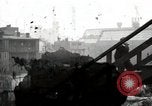
Smoke from factories, engines and houses causes pollution and congestion in New York in United States
Excerpt from "The City". Smoke comes out from industrial chimney in factoriesnd causes air and water pollution. Houses in the city are congested, streets are narrow and children have no ground to play. Smoke can prove to be hazardous as it may lead to various diseases like Tuberculosis, Rickets and Typhoid. People run across the railway track before a train arrives with its engine emitting smoke. A man and a girl walk through narrow city streets with congested houses. After the day gets over workers return to their houses as their wives do household chores. A women pumps out water as another worker washes his dirty face and hands after a long days work. Smoke coming out from factories, houses and rail engines cause pollution and leads to environmental degradation.
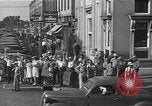
Americans in North Platte Nebraska celebrate victory over Japan in the second world war; Celebrations in town
People wave to celebrate the victory over Japan ("V-E Day") in the second world war, as they stand by a street corner in North Platte, Nebraska. Police officers and their families move in a procession through the middle of the road. Two officers drink champagne to celebrate the Victory over Japan day in World War 2. A man and a kid riding on a horse back and holding a flag of United States pass by a street amidst heavy traffic. Cops sit in the middle of a road and drink.
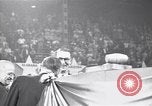
Democratic National convention in Chicago in Illinois
Senator Estes Kefauver and his wife wave to the crowd as they stand on the dais at Democratic National convention at International Amphitheater (4220 South Halsted Street Chicago, Illinois 60609 United States) in Chicago, Illinois. John F. Kennedy and other Statesmen also join him as they wave to a large crowd carrying banners, with the names of states written on them. Presidential candidate Adlai Stevenson also waves to the crowd as he stands on the dais.
CRITICALPAST.COM: About Us | Contact Us | FAQs - How to Order | License Agreement | My Account | My Lightboxes | Shopping Cart | Advanced Search | Featured Collections | Website Terms & Conditions | Privacy Policy ©2026 CriticalPast LLC.
License Agreement |
Terms & Conditions |
Privacy Policy
©2026 CriticalPast LLC.