


 Francais
 Deutsch
 Italiano
Refine Your Search
D-Day stock footage and images
- Showing 271 to 276 of 4857 results more
more Hide
Hide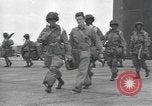
U.S. paratroopers board C-47 airplanes in England for the D Day invasion of Normandy, France in World War 2.
Paratroopers of the U.S. 502nd Parachute Infantry Regiment, 101st Airborne Division, at RAF Station, Greenham Common, proceed, in full battle gear, to board C-47 aircraft for their flight to Normandy, France, on June 5, 1944, during World War 2. Camouflage is seen on their helmets and their faces are blackened. One group is seen boarding C-47, tail number 43-15296. An officer reads briefing notes to them.They don life vests. A Captain and two Sergeants discuss briefing notes.Paratroopers help others who have difficulty climbing aboard the aircraft because of their heavy and ungainly equipment. Ninth Air Force Commander, Lieutenant General Louis H. Brereton speaks to Chaplain, Lieutenant Colonel Louis R. Goodrich, and shakes hands with some of the troopers, wishing them well, as they board C-47 number 42-92847, named, "That's All...Brother."(This was the lead aircraft for the airdrop, just behind the C-47s dropping pathfinders. It was piloted by the commander of the 438th Troop Carrier Group, Colonel John Donalson, and 87th Troop Carrier Squadron Commander, Lieutenant Colonel David Daniel.) The C-47s taxi out for takeoff, as senior officers watch them depart. (Note: There has been confusion about the name of the lead aircraft, C-47, 42-92847, because Colonel Donalson normally flew one named "Belle of Birmingham. " Research, including information from his daughter, indicate that he chose 42-92847, as lead aircraft, because it would have to be cut open to accommodate SCR 717C radar equipment, and he didn't want that done to his favorite airplane.)
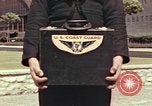
American soldiers board LCVPs at pier in Weymouth, county of Dorset, England, prior to D-Day, during World War II
Landing craft ferry Allied troops from pier in English port as they prepare for invasion of France during World War II. Two United States Coastguardsmen pose with members of British Women's Royal Navy Services (WRENS). Some British soldiers seated in a park with civilians on benches in the background. LCVPs ( Landing Craft Vehicle Personnel) tied up at the pier in Weymouth, Dorset. American soldiers are assisted by U.S. Coastguardsmen as they board LCVPs, which pull away from the pier as they are filled (ferrying troops out to transport ships). Several Landing Craft Infantry (Large) are seen in the port, including LCI(L)s 494, 92, and 490. View of Weymouth from a boat flying a green flag, in the bay.
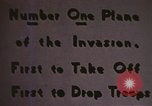
The first U.S. C-47 aircraft (and its crew) to drop Pathfinder Paratroopers on D-day eve in World War II.
U.S. Army Air Forces C-47aircraft , number 42-93098, of the 9th Troop Carrier Command Pathfinder Group, and its crew. This is the first aircraft and crew to drop American paratroopers (pathfinders) over France during the Allied invasion, in World War 2. The aircraft taxis on a British airfield. Crew of the aircraft are seen in front of it, including pilot, Lieutenant Colonel Joel Crouch, Copilot, Captain Vito Pedone, Navigator, Captain William Culp, Radio Operator, Harold Coonrod, along with two crew chiefs. Crew members shake hands and board the aircraft. Colonel Crouch waves from the cockpit of the C-47 (but has not started engines). Major J.L. Sweetman boards another aircraft. Colonel Crouche's C-47 taxis to where the Pathfinders will load up. View of Control Tower at RAF North Witham, with ambulance parked outside it. Three hours before takeoff.Colonel Crouch, is seen on a path near the airfield, with a Pathfinder Captain and Lieutenant, who will be aboard his aircraft and be the first to jump into France. They kid around. The Pathfinder officers note that Colonel Crouch wears paratroop wings. Later, two Pathfinders, of the 101st Airborne Division , with camouflaged faces and American flag insignia on their right shoulders, step from woods and pose momentarily. Pathfinder Paratroopers line up to board C-47 aircraft as Lt. Col. Crouch rides a scooter at the airfield. Aircrews and Pathfinders pose for photographs before taking off. The lead aircraft, number 42-93098, with Lieutenant Colonel Crouch at the controls, takes off from RAF Station North Witham at 9:54 PM, on June 5, 1944. to begin the invasion of France. (Note: This C-47 was shot down on September 18, 1944, during Operation Market Garden, and crash landed on Haamstede Airbase, Netherlands. Although shot at by German troops on the ground, pilot, Maj Joseph A. Beck, and Navigator Lt. Vincent J. Paterno, survived as prisoners of war. Copilot Capt Fred O. Lorimer and another crew member were fatally shot.)
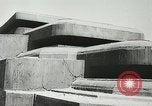
Allies penetrate into Normandy during D-day in World War II. Germans defend from Atlantic Wall and counter attack
Film begins showing the formidable German Atlantic Wall fortifications in place during World War 2. German soldiers look through binoculars. British troops are seen in the distance, where they have penetrated the River Orne, in an amphibious assault near the village of Ouistreham in Normandy. Obstacles are seen planted by the Germans all along the shorelines. German artillery and machine guns fire on those troops with devastating effect. German soldiers are seen examining abandoned British landing craft after the battle. One is labeled LC P L208. Closeup of German SS soldier. View of beach with markers on it and debris strewn along it. Closeup of a German soldier. A camouflaged German Marder tank destroyer heading to join in counterattack against Allied forces. German armor crossing a field, and then firing from wooded areas. German infantry running forward beside tanks.
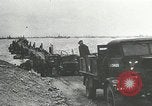
American troops advance through hedgerows outside Cherbourg after D-Day landings in Normandy during World War II.
The Allied invasion of Normandy, France during World War 2. Improvised port facilities being erected in "Operation Mulberry." Ships carrying troops and supplies pull up to the Mulberry piers. Troops and vehicles moving on the piers toward the shore at Normandy. A severe storm tears up the mulberry port facilities. A man crawls a rope invertedly to get to a ship. War materiel moving on the Normandy beaches. A map of Normandy. View of Seaport at Cherbourg, France. Allied and German forces moving to battle over the Cherbourg port. Large formation of Allied aircraft. United States troops battling Germans in hedgerows, on the way to Cherbourg. A United States soldier uses a SCR-536 Walkie-talkie while in hedgerow. Soldier smoking a cigarette in hedgerow. French farmers collecting hay with pitchforks. United States troops being welcomed by French residents. Meeting heavy resistance at outskirts of Cherbourg, the U.S. employs batteries of field artillery. Some infantry engaged in street fighting. Nazi German General Karl-Wilhelm von Schlieben surrenders to the American forces in Cherbourg.
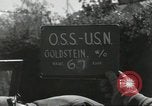
Allied soldiers move along a street in Bayeux after the D-Day invasion of Normandy, France during World War II.
View from U.S. Army vehicle traveling along road approaching Bayeux, France, during World War 2. Some residential buildings at the outskirts. An imposing chateau, with "Lion Noir" written on one wing. A fountain (not running) in the lawn. Numerous Allied soldiers walking on streets of downtown Bayeux. No evidence of war damage.
CRITICALPAST.COM: About Us | Contact Us | FAQs - How to Order | License Agreement | My Account | My Lightboxes | Shopping Cart | Advanced Search | Featured Collections | Website Terms & Conditions | Privacy Policy ©2026 CriticalPast LLC.
License Agreement |
Terms & Conditions |
Privacy Policy
©2026 CriticalPast LLC.