


 Francais
 Deutsch
 Italiano
Refine Your Search
Dayton Ohio USA 1947 stock footage and images
- Showing 1 to 6 of 25558 results more
more Hide
Hide
Dayton, Ohio plans to increase the number of persons employed in its war plants (WW2)
Film opens showing large factory building with all its lights on at night. Smoke stacks at industrial plant emitting white smoke against dark sky. Sparks flying outdoors from a steel plant at night. War production workers inside a fabricating plant drawing a ribbon of hot steel from a roller and dragging a newly made sheet of metal across the floor. Two men with shovels stoking a furnace. Men shaping parts on forging machines. A group of men using sledge hammers to drive down pipe supports under a large piece of sheet metal. Women employees at work inspecting U.S. Army helmets on an assembly line. Workers in a crowded machine shop. A sign reading: "500 workers needed NOW Training on the job." A display of job recruitment announcements in newspapers. A room full of idle manufacturing machinery (ostensibly due to labor shortages). Sign on iron fence outside a building, reads: "Essential WAR WORK Day or Night Men and Women" and "We have a war job for you. Apply here." Some more similar signs. Animated chart of Labor Needs with Labor supply lagging behind, superimposed on a drawing of a defense plant. Map of the USA highlighting areas of industrial might where labor shortages exist. Camera zooms in on Dayton, Ohio on the map. Aerial views all over the city of Dayton, Ohio. View from a tall building overlooking a major Dayton commercial street. The Gem City Savings building, with clock tower on top, at the corner of Third and Main streets. On April 7, 1943, two hundred leading citizens of Dayton are seen attending a meeting at which Stanley C. Allyn, President of the National Cash Register Company, is speaking. He speaks about the danger of Dayton falling behind its war production goals because of manpower difficulties. View of the audience, which includes several military officers in uniform. Allyn speaks of the potential for war work being moved elsewhere because of this, and challenges Dayton's leaders to solve the problem without requiring action from Washington. Next, an emergency committee of community leaders is seen around a table. Camera pans over attendees, including labor leaders from AF of L and CIO; Government officials present, including Area Director and Deputy Regional Director of the War Manpower Commission, and Chief of Program Requirements for the Region; leading industrialists and retailers are shown. Local officials seen include the Mayor of Dayton and Secretary of the Chamber of Commerce as well as the Commanding Army Air Forces Generals of Wright Field and Patterson field. In final scene, Stanley Allyn is seen at the head of the table, speaking to the group. He outlines three ways to obtain more war workers from the Dayton population during World War II.
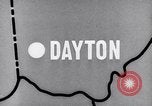
Recruitment of American women during World War II labor shortage in Dayton,Ohio.
A road to Dayton Ohio, crowded with cars of the 1930s. Men hitch-hiking near a sign reading: "Dayton 47." A steam locomotive pulling a passenger train,speeds past the camera. Arrows on map of Ohio, show areas around Dayton, from which defense workers are being drawn. Closeup of car wheel and tire. Another hitch-hiker at 48 miles from Dayton. Cars converging on the city of Dayton. A line of patrons extending out onto the sidewalk outside the Virginia Cafeteria at 28 East 3rd Street. Another queue of patrons with bags of clothes outside a laundry and dry cleaners establishment. A long line of patrons on the sidewalk outside of a motion picture theater, showing a Western movie starring Johnny Mack Brown and Tex Ritter. A woman places a "No Vacancies" notice over Plaza Apartments sign. Other "No Vacancies" signs posted elsewhere. Men and women war plant workers queue up to board buses to factories. Some men step over a rope line to get ahead of others. Closeup of workers crowding into the entrance of a commuter train. View from inside as workers (mostly women) try to board. A long line of men and women on the sidewalk outside a corner cafeteria in a large building. Woman removing "rooms to let" sign from her apartment wiindow. A man posting a "No Vacancy" sign. The office of the War Manpower Commission Area Director. Seated around a table are are seen members of The Dayton Local Labor Management Committee (Dayton War Manpower Committee). Inquiries being received by manufacturers hiring 8 persons or more, as well as personnel officers of the local Army Air Forces Air Fields, seen in uniform. Other employers answering the inquiries. Employers signing letters to the War Manpower Commission, pledging to stop hiring full-time workers, except those approved as war essential, with the understanding that part-time workers would be referred to them as substitutes. A woman in the War Manpower Commission office types a report to the Washington office. Draftsmen at work in an office. Two women going from house-to-house soliciting women war workers to work in the war effort. Views of various women being interviewed. One watching her young son climb on her porch railing, has to rescue him during the interview, and declined to participate. Next, a woman is seen taking small children to a building labeled "Day Nursery." View inside as women leave their small children in the care of other women providing care for them. Many children seated at tables having a meal. Closeups of some of the children. Street scene in busy downtown Dayton, Ohio with with many women pedestrians walking on sidewalks. A publication called "The War Worker," showing an illustration of a man and a woman side-by-side going to war jobs. It lists war jobs open to women (and men). A team of motion picture workers filming a woman operating a machine, in a publicity shot encouraging such war work. View of a finished film called "Dayton Women are Marching to War !." Men and women in a movie theater watching the film. Views of the faces and expressions of the audience watching the movie, and views of the movie screen. Reporters for radio stations WHIO and WING, interviewing women in defense plants. View inside a local home where women playing bridge are listening to the interviews on a large console radio during card game. Views of the City of Dayton with large outdoor advertising billboards encouraging people to get jobs to help the war effort. Newspaper headlines related to the status of the ongoing World War 2. Closeup view of newspaper headlines and of advertisements inside the newspaper encouraging women to get wartime jobs. Glimpse of the city. Brief view of many women inside a war plant seating at a table filled with cylinder shaped instruments. A man moves a finished cylinder to a table. (These are possibly parts of aircraft bomb sights). Aerial view of the city of Dayton Ohio.
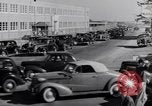
City of Dayton Ohio takes numerous measures to improve transportation and amenities for war workers during World War II
Opening scene shows workers arriving for a shift at a war plant in Dayton, Ohio, during World War 2. The arrive in cars and public transport (not seen) to stream across the road in front of the defense plant, as they enter. Others are seen leaving defense plants, in large numbers as their shifts end. A sign at a war plant advocating ride sharing or car pooling to conserve resources shows a cartoon of Adolf Hitler riding in the empty back seat of a man's car. It reads, "Hitler rides in the empty seat. Double Up!" Men and women are seen standing at a designated Transportation Center to arrange for sharing rides with others. A man steps from a sidewalk, in town, to get into a car that stops to pick him up as part of that activity. People gathering for buses under newly built shelters. A sign on a bus reads: We deliver the war workers. They deliver the goods." Buses moving through the city. One stops and many workers exit, in a town center. Other workers are seen lined up to board rail road trains. Workers entering their private cars in a crowded parking lot at a war plant. Workers crowd into the entrances of a defense plant, where their identification badges are evident on their work clothes. Large numbers of workers leave at the same time others arrive when a shift change occurs. Plant managers discuss ways to minimize absenteeism. View of workers in a crowded cafeteria providing hot meals. A sign reading: "Ladies Dining Room." outside a room filled with women workers having a meal. Men at work in a National Cash Register (NCR) factory assembling 60 pound magazines for 20mm Oerlikon anti-aircraft guns, used by the U.S. Navy, and built by National Cash Register in Dayton Ohio. A factory steam whistle blows, signaling a rest period, as workers take a break for a snack or a smoke. Worker eats an apple and other smoke cigarettes. Narrator describes health and logistical services offered on-site at production plants for workers to minimize time away from work. A sign on a door identifies the "Ladies Health Department." Hours posted on the door correspond to various shifts operating at the plant. Another worker health service is that of a dentist on the premises. View of dentist and nurse working on a patient. Another service area in a war plant shows clerks helping workers to obtain ration books, auto and driver licenses, dealing with Selective Service (draft) matters, income tax questions, ride sharing, and telephone and light utilities. Scene shifts to the Headquarters Building of the National Cash Register Company in Dayton. Ohio Inside, a company manager is interviewing a worker who plans to quit. They discuss the workers reasons and seemingly resolve some problem, because they shake hands and the film narrator implies that the worker is going to remain on the job. A factory building lit up at night. Inside men and women night shift workers are seen performing war work on machines, just as in the daytime. Next, a group of plant managers are seen being trained in particular skills required at their jobs. A view of the city from across a river. A radio announcer with station WHIO. A montage of newspaper clipping related to war workers.
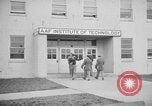
Procurement officers attend the Army Air Force Institute of Technology at Wright Field in Dayton, Ohio.
The Army Air Force Institute in Wright Field, Dayton, Ohio. Students attend the classes. Exteriors of experimental laboratories at Wright Field. Student observes laboratory tests of materials. Various equipment in laboratory. Procurement officers in the factory. 'Operations Altitude 300' building at Wright Field. A plane taxis and takes off.
Ground-breaking ceremony for expansion, including new runway, at Wright Field in Dayton, Ohio.
U.S. Air Force Material Command headquartered at Wright Field in Dayton, Ohio. Aerial photograph of Wright Field highlights new construction planned. People assembled out in the field for ground-breaking ceremony. U.S. Army Air Force officers shaking hands at start of ground-breaking ceremony. One officer speaks using microphone on a tripod. Heavy construction equipment in background. One officer performs the traditional ground-breaking, using a spade with a large ribbon tied to it.
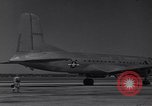
Cargo being loaded by winch in side door and jeep being loaded by elevator in a C-74 aircraft at Wright Field, Dayton, Ohio
U.S. Air Force C-74 Globemaster cargo aircraft at Wright Field in Dayton, Ohio. A C-74 Globemaster parked at Wright Field. Several ground crew stand in wheel well under No.3 engine of the aircraft. A ground crewman works on the tail of the C-74 aircraft, which displays the identification number: 265402 . No. 2 engine and open side door of the aircraft. A loadmaster stands in the open doorway with cable winch control in his hand. Man on ground secures cargo which loadmaster then raises with electrical winch .A jeep being loaded using platform elevator at underside of the C-74 Globemaster. Cargo hold of the aircraft with jeep being lifted up by elevator. Loadmaster secures elevator platform and then closes bottom cargo doors. Jeep is driven several feet forward inside the cargo compartment.
CRITICALPAST.COM: About Us | Contact Us | FAQs - How to Order | License Agreement | My Account | My Lightboxes | Shopping Cart | Advanced Search | Featured Collections | Website Terms & Conditions | Privacy Policy ©2026 CriticalPast LLC.
License Agreement |
Terms & Conditions |
Privacy Policy
©2026 CriticalPast LLC.