


 Francais
 Deutsch
 Italiano
Refine Your Search
Dong Tam Vietnam 1968 stock footage and images
- Showing 3535 to 3540 of 4393 results more
more Hide
Hide
United States Army Special Forces return at Pope Air Force Base in Fort Bragg, North Carolina and reunite with their families.
United States Army Special Forces return to Fort Bragg, North Carolina. United States Army soldiers and a band lined up as they hold American flags at Pope Air Force Base. They await the return of the special forces soldiers after an attempt to rescue American prisoners of war from a camp near Hanoi, North Vietnam. A United States C-123 aircraft taxis after landing. Soldiers of the special forces get off the aircraft as they return. Family members greet the soldiers. Photographers take pictures. Soldiers reunite with their families and friends. (Vietnam War period).
A U.S. Air Force officer briefs pilots about a mission at Ubon Air base, Thailand.
Ubon Air Base, Thailand. U.S. Air Force Eighth Fighter Wing insignia displayed on the wall. A U.S. Air Force officer briefs a group of pilots in preparation for a mission over Vietnam during the Vietnam war. He points at a map on a board and speaks to men seated at a table listening to him. The briefing officer leaves. Air crews discuss the mission.
Mission debriefing and briefing U.S. Air Force pilots of 433rd Tactical Fighter Squadron, Ubon Air Base, Thailand
Several U.S. F4 pilots of the 433rd Tactical Fighter Squadron, Ubon Air Base, Thailand, are debriefed following a mission over Vietnam. A board on a wall in the background. Major Williams debriefs pilots seated at a table. A pilot fills out mission re-cap form. A group pf pilots at another mission briefing. Major Williams conducts the briefing. He points at various maps and charts. View of the unit patch on podium, displaying head of the devil and reads "433rd Tactical Fighter Squadron, The Devil's Angels." Most of the pilots in the squadron have mustaches. (Vietnam War period).
First three B-52 aircraft of the U.S. Strategic Air Command 4433rd Bomb Wing land at U-Tapao Air Base in Thailand
View of the first three U.S. B-52 bombers (of a force of 15) landing at U-Tapao Airbase, Thailand on April 10, 1967. These bombers hit targets in Vietnam on their way to U-Tapao. (The entire force arrived during the period from April through July, 1967, on temporary assignment from the Strategic Air Command 4433rd Bomb Wing at Anderson Air Force Base, Guam.) The B-52s are under the command of the SAC 3rd Air Division. The aircraft land with wing flaps down and deploy drag chutes to slow their ground rolls.Officers of the 4258th Strategic Wing,and Royal Thai Air Force greet the arriving aircrews. The event is recorded by photographers, along with newsmen from Japan, Thailand, United States and Philippines. (Vietnam War period).
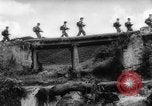
President Eisenhower returns from a tour of 11 free nations in United States.
Major events of the year 1959. Communist Vietnamese guerrillas march into South Vietnam. People flee their homes as a result of a war in Vietnam. President Dwight D Eisenhower returns after touring 11 free nations and receives a warm welcome at home. People in Washington DC greet his flight on its return to the USA. They hold sparkler fireworks by hand, creating a festive display along the street as he drives to the White House.
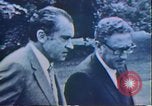
Dr. Henry Kissinger and Pat Buchanan speak about steps taken by U.S. President Richard Nixon to bring world peace
United States President Richard M. Nixon after being elected President of the United States. Special consultants, counselors and advisors to the President speak about Richard Nixon as the President. Richard Nixon and U.S. Secretary of State, Dr. Henry Kissinger discuss while walking in the White House. Dr. Kissinger talks about his role, assigned by President Nixon, in the U.S. Air Force One plane. Patrick Buchanan talks about Nixon's efforts to bring peace in Vietnam, Middle East and People's Republic of China. President Nixon with Chinese Premier Zhou Enlai and other Chinese leaders during a state dinner in Beijing, China. The Chinese band playing "Home on the Range." From a pro-Nixon "documentary" called "Portrait of a President" about President Richard Nixon. Released during his 1972 reelection campaign. (Vietnam War period)