


 Francais
 Deutsch
 Italiano
Refine Your Search
Eboli Italy 1944 stock footage and images
- Showing 685 to 690 of 7968 results more
more Hide
Hide
Strafing and attacking ground targets, ME-109 and FW-190, European Theater.
The 8th Fighter Command Operations, European Theater. 27-May-1944; Lieutenant R L Baker of 82nd squadron 78th fighter group flies the aircraft. Attacking the ground targets as seen via gun camera footage. Strafing of two flak towers. A decoy aircraft in flight. 29-May-1944; Captain B L McGratten of 335th squadron 4th fighter group flies the aircraft. Attacking ME-109 and FE-190. Aircraft fly fighter protection for formation of B-17's. Chasing and hitting of FW-190. 30-May-1944; Lieutenant J R Cook of 360th squadron 356 fighter group flies the plane. Strafing of large freighter, schooner and two small targets. (World War II period).
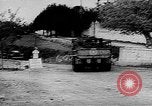
United States troops advance on mountain roads in Volturno River Valley, Italy, during World War II.
U.S. Army trucks moving along a paved mountain road in Volturno River valley region of Italy during World War 2. Sign at the road reads: "Road under direct observation and Artillery Fire. Keep 100 yds interval." U.S. troops gathered at roadside are passed by a jeep and a light truck with a protected anti-aircraft gun mounted in its back. Army signal corps soldiers installing telephone wires on an existing Italian pole. A peaceful valley pasture is disturbed by German artillery shells bursting in it. American army gunners firing a 105mm howitzers at German positions. A cluster of the shells bursting on a distant hillside. U.S. 155mm long tom guns being loaded and fired from camouflaged position in trees, and from under a camouflage netting. The shells exploding and raising white smoke along the base of hill overlooking the valley. Various views of the 155s firing. A wounded soldier being transported on a stretcher, down some mountainous terrain. U.S. infantry marching single file past a dead German soldier. Views of mountain roads blown away by retreating German forces. Combat engineers are challenged to build a bridge against a sheer cliff on the mountain. They employ jackhammers and manual tools and improvise support structures of heavy timbers. An engineer using a sledge hammer to drive a spike into the timbers. A team of men carry a heavy timber. Engineers creating a bridging structure, on the spot, to allow passage from one section of road to another. Finally, a jeep drives across the new bridge.
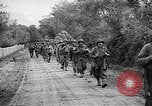
United States troops clear rubble at a town in Volturno River Valley, Italy.
United States troops in Volturno River Valley, Italy. Trucks and other vehicles cross roads. The roads smashed. Vehicles and troops cross the road. Sherman Tanks pass on the roads. Wrecked buildings and rubble in view. Troops search the wreckage and debris. Rubble in streets cleared. Troops advance on the roads. Italian refugees travel roads. Aerial view of the valley. Troops fire German aircraft. Vehicles cross pontoon bridges. (World War II period).
United States troops and vehicles in Rome during World War 2 liberation of Rome
Liberation of Rome, Italy from German forces by Allied troops during World War 2. Opening scenes are of German occupation of Rome earlier in the war during winter campaign, and German forces marching British and American captured allied forces through the streets of Rome. The Roman Colosseum (Piazza del Colosseo, 1, 00184 Roma RM, Italy) seen in background as Allied forces are marched by German armed guards. Buildings along the sides of the street. Damaged buildings and wrecked equipment scattered are seen in the city. German Field Marshall Albert Kesselring looking through field glasses at battlefield. Smoke arises due to firing and bombardment from the Allied and the German army. Heavy artillery is fired including German 280mm cannon. After Germans retreat, the U.S. forces of the 5th Army enter Rome in triumph. U.S. Army General Mark Clark enters with other officers and soldiers in the city. Civilians cheering and applauding. U.S. troops and tanks passing through the city. Bells of Saint Peters basilica ringing. A large crowd gathers in Saint Peters Square (Piazza San Pietro 00120 Città del Vaticano Vatican City) inside the Vatican. Pope Pius XII addressing the crowd. Prince Umberto II of Italy arrives in front of the crowd. Crowd cheering and applauding. American soldiers queue to enjoy real beer served from wooden barrels, made from supplies shipped from the United States. Smiling soldiers fill metal cups with beer. Wrecked railroad marshalling yards in Civitavecchia Italy are seen, as U.S. Army soldiers inspect an abandoned large German Krupp K5 rail gun (Krupp 28-cm-Kanone 5 (E). The gun shown here is either "Robert" or "Leopold" as termed by the Germans, also known by Allied names "Anzio Annie" or "Anzio Express".
The soldiers of the U.S. 5th Army unload and arrange the war supplies at the Port of Naples, Italy during the World War II.
Allies amass war supplies in Italy for drive on Rome. The Port of Naples, Italy. Tanks, guns and other war material is unloaded from the ships. The soldiers of the U.S. 5th Army help to unload and arrange the supplies.

Newsreel 'Global War finds United Nations on many fronts' shows action in New Guinea and Italy in World War 2
Allied troops attack Japanese bases in New Guinea. Australian jungle troops cover difficult to climb terrain, hauling supplies by manpower alone. New Zealand troops in snow covered Italian Alps. The Army troops from New Zealand wear white camouflage coverings in the snow terrain, and advance up mountain terrain. Aerial view of beach area at Anzio, Italy. U.S. Army forces escort capture German troops who continue to surrender. Some include Nazi troops from the Hermann Goering division. view of German Prisoners of War as they receive medical care for minor and major injuries. American nurses arrive in Anzio and tend the wounded. A German aircraft attacking Allies in Anzio is shot down and the German warplane plunges toward the ground trailing smoke. View of U.S. Army personnel examining the wreckage of a German plane that crash landed in Italy.
CRITICALPAST.COM: About Us | Contact Us | FAQs - How to Order | License Agreement | My Account | My Lightboxes | Shopping Cart | Advanced Search | Featured Collections | Website Terms & Conditions | Privacy Policy ©2026 CriticalPast LLC.
License Agreement |
Terms & Conditions |
Privacy Policy
©2026 CriticalPast LLC.