


 Francais
 Deutsch
 Italiano
Refine Your Search
Eboli Italy 1944 stock footage and images
- Showing 1795 to 1800 of 7968 results more
more Hide
Hide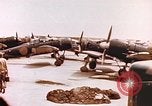
Aircraft of 19th Fighter Squadron and 6th Night Fighter Squadron land at Saipan, after its capture during World War ii
U.S. Army Air Forces begin operations on Saipan after its capture from the Japanese during World War 2. Japanese Zero fighter planes parked in a jumble on Saipan, after its capture by American forces in 1944. American soldiers are seen walking about and U.S. Army engineers are repairing the field for use. The first American P-47 to arrive, after Saipan is secured, lands on the airfield. Its pilot, Major Henry E. McAfee, Commander of the 19th Fighter Squadron, 318th Fighter Group, poses by his P-47 named "Jeanie." At another area of Saipan, U.S. Marines administer medical aid, including blood plasma, to a wounded comrade. A P-61 of the 6th Night Fighter Squadron lands on the field. Aerial views of Saipan, showing destroyed structures and buildings.
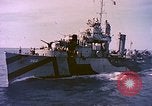
Destroyer USS Drayton DD- 366 and Heavy Cruiser USS Salt Lake City, CA-25 during World War II in the Pacific
U.S. Destroyer ship, USS Drayton (DD-366) in camouflage paint, underway off Okinawa in World War II. Crew members crowd her decks as she sends a man,by high line transfer in large enclosed canvas sling, to nearby heavy cruiser USS Salt Lake City (CA-25). View of the transfer from the cruiser. The Drayton moves away. A Vought OS2U Kingfisher scout plane lands in the slick of USS Salt Lake City and bounces about in rough water. View from the Salt Lake City of Japanese shells, from shore battery on Marcus Island, falling into the sea. Momentary view of Lieutenant Commander, Eddie Peabody and his troupe, entertaining sailors aboard the Salt Lake City in port at Ulithi, on Nov. 11, 1944.
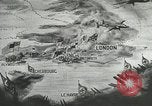
Allied invasion fleet prepares and leaves England for D-Day invasion in World War II
Montage of war scenes related to World War 2 Allied invasion of France. German sentry looking though binoculars. German coastal rail gun. Field Marshal Hermann Goering with Marshal Wilhelm Keitel, Chief of German High Command, inspecting Atlantic Wall coastal defenses on French coast. Allied D-day forces boarding ships in England. Troops loaded and waiting for orders to depart. Barrage balloons aloft. British and American troops, Coast Guard men, and sailors being briefed and studying aerial photographs and maps of the coast of France in the Normandy beach landing region. General James Gavin briefing American Airborne troops. American and British aircrews being briefed for missions. British King George VI visiting Royal Navy sailors aboard British warship. Sailors use light signals; ships weigh anchors,cast lines. Task force convoys underway. General Eisenhower visiting US Army paratroopers of 101st Airborne Division. U.S. paratroopers boarding C-47 airplanes the night of June 5, 1944. A C-47 named: "That's All Brother."C-47s with D-Day paint stripes taking off at nightfall.
D-Day invasion of Normandy during World War II.
Allied Invasion of Normandy, France during World War 2. British Armstrong Whitworth Whitley bomber in flight. Allied paratroopers of 6th British,and American 101st and 82nd Airborne Divisions jumping from aircraft. Allied troops in gliders being towed across the English Channel. A British pilot in cockpit of aircraft towing a glider. Several gliders descending over French farm fields.Formations of Martin B-26 bombers overhead. Allied Navy warships underway. Scenes on decks of the warships. Navy heavy guns being loaded and fired from Battleships and cruisers. American B-26s and British Armstrong Whitworth Whitley bombers in flight overhead. British spitfire fighter aircraft overhead. U.S. B-26 in D-day stripes. Bombs exploding on German enemy targets. Navy ships bombarding shore. Allied infantry descending rope nets from troop ships. B-17 bombers aloft.Gunner in a B-17. British warship in camouflage bombarding French coast. British spitfire zooming low over landing craft. Allied American and British soldiers in landing craft going ashore at several different Normandy beaches. London, with streets quiet, in early morning, June 6, 1944. Journalists assemble at British Ministry, and a U.S. Army Colonel tells them the invasion at Normandy is underway. The reporters run from the room to file their stories. People reading about it in their newspapers in various cities of the world.
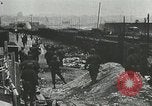
Allied capture of Cherbourg France, during World War II.
Allied capture of Cherbourg, France, on June 25th, 1944, in World War 2. German prisoners of war marching under guard, with hands on their heads following surrender. Aerial vies of the Cherbourg harbor, extensively sabotaged by the Germans. Allied engineers working to repair the port. Power shovels, welders, and divers seen at work. Troops moving up the peninsula from Cherbourg. Weapons being distributed to French members of the Maquis guerilla resistance, in Allied occupied areas. French irregular soldiers firing against German forces in mountains, and sabotaging German facilities. Numerous dead bodies of French civilian villagers, killed by a Battalion of the Nazi SS Panzer Grenadier Regiment "Der Führer" (an infantry regiment of 2. SS-Panzer-Division "Das Reich"), and destroyed buildings in the French village of Oradour-sur-Glane where the massacre took place. Temporary stakes marking their graves.
The upper deck of a U.S. LST (Landing Ship, Tank) is loaded with army vehicles at Falmouth, England during World War II.
Loading of a U.S. LST (Landing Ship, Tank) at Polgwidden (A.K.A Trebah) beach , Helford River, near Falmouth, Cornwall, England during World War 2. (From the superstructure visible this is probably LST 532, USS Chase County.) A jeep pulls a trailer aboard the LST. Two jeeps on the elevator of the LST as it rises to upper deck. The upper deck of the LST shows a truck backing up on a ramp. (Note:This footage was taken on June 1, 1944, as the troops and equipment embarked for the D-Day invasion of Normandy. They spent the next 5 days very uncomfortably aboard due to stormy weather that delayed the landings until June 6th.)
CRITICALPAST.COM: About Us | Contact Us | FAQs - How to Order | License Agreement | My Account | My Lightboxes | Shopping Cart | Advanced Search | Featured Collections | Website Terms & Conditions | Privacy Policy ©2026 CriticalPast LLC.
License Agreement |
Terms & Conditions |
Privacy Policy
©2026 CriticalPast LLC.