


 Francais
 Deutsch
 Italiano
Refine Your Search
Eboli Italy 1944 stock footage and images
- Showing 2227 to 2232 of 7968 results more
more Hide
Hide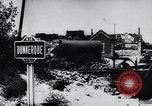
Evacuation of Allied forces from Dunkirk in World War 2; French children being evacuated; Italy readies for war
Highway sign reads M 16, Dunkerque. German Ju-87 Stuka dive bombers fly low and drop bombs. Offshore, a flotilla of warships and civilian ships and boats approaches. British spitfire fighters engage German warplanes. Gun camera footage of dogfights. Allied troops boarding boats while being bombed. Rescued French and British soldiers on decks of ships. View of destruction at the Dunkirk shore. Rescued troops disembarking in England. Prime Minister Winston Churchill reviews group of ordinary British citizens who participated in the evacuation and shakes hands with naval officers. Generals of the French High Command expressing dismay. Map shows battlefront. Parisians getting newspapers and French parents and families evacuate French children South for safety. Women are seen kissing their children goodbye as they load onto buses to be evacuated to safety. Anguished women wave as their children depart. Change of scene to sandbagged French defensive positions in Paris. American intelligence officer, using animated map,describes German sweep of France. Benito Mussolini with son-in-law, Minister of Foreign Affairs, Count Galeazzo Ciano. Italian motorcycle troops and infantry enter France. U.S. President Franklin D. Roosevelt condemning the Italian action. Mussolini accompanied by Italian officers, struts along a street as Italian troops watch from sidewalk. He reviews a contingent of youth in uniforms that look like Alpini.
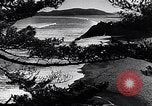
Expansionist policies of Japan, Italy and Germany converge, leading to World War 2
Film begins with peaceful scenes of Japan, including Mount Fuji; women in traditional Kimonos strolling among cherry blossoms; exquisite gardens; Geisha girls in traditional dress holding fans; and picturesque peasant farmers binding sheaves of grain. Evidence of Japan adopting Western styles and ways, shown by modern buildings, motor vehicles, and many Japanese in Western clothes going about their daily business on busy city streets. A Japanese stadium filled with spectators at a baseball game. One difference from an American baseball game is that the players are seen marching onto the field accompanied by a military band and later all sharing in raising the Japanese flag to start the event. View of line of players in jerseys as flag is raised (jersey team name Tomasyo?) Views of the baseball game underway. Baseball player with "Y" logo on front steps up to plate to bat. Scene changes to demonstrations of Japanese Navy as senior Naval Officers review Japanese sailors aboard a warship. A formation of Japanese warships underway. Closeup of a Japanese destroyer. A flotilla of Japanese warships being overflown by several formations of Naval aircraft. A flight of Kawanishi H6K Naval flying boats flying in loose formation. A parade of Japanese light and medium tanks including Type 95 Ha-Go tanks (some with offset turrets). View from rear of the parade. Many tanks crossing a field. Emperor Hirohito, riding a white horse, reviewing Type 97 Chi-Ha medium tanks and their crews standing at attention. Tanks raising dust as they move in formations on a road and in a field. Japanese infantry soldiers high step march in review past the Emperor on his white horse. Massed Japanese infantry on parade. View, again, of the high-stepping Japanese infantry marching past the Emperor as a segue to Italian infantry goosestepping on parade. Several views of such parades. Mussolini giving an impassioned speech to Italians from balcony on the Palazzo Venezia in Rome on November 4, 1938. A huge flat field filled with Italian SPAD XIII army biplanes parked in symmetric rows. Emperor Haile Selassie of Ethiopia speaking from a shelter, rallies his tribesmen to resist invasion by Italian forces. They are seen in tribal dress, armed with spears and ancient rifles, as they answer the Emperor's call. View of Italian L3 light tanks advancing across desert terrain. Italian cavalry charging. Italian infantry moving forward. Italian Caproni Ca.111bis light bomber in flight. Bombs dropping through the air. Barrages by batteries of Italian artillery. Shells striking a hilltop fortress. An open air stadium with one section containing many Japanese attendees waving Japanese flags. A Japanese statesman reading a speech in Japanese. View of the stadium filled with Italians. "Saluti" written on the edge of the section occupied by Japanese attendees. An Italian spokesman in black uniform welcomes the Japanese contingent. A Japanese translator stands beside him. Closeup of cheering Japanese who have heard the greeting translated. Scene shifts to Japanese infantry hi-stepping past Emperor Hirohito and immediately to Italian troops goosestepping and then to German troops goosestepping as they (according to narrator) march into Austria on March 13th 1938. View of German troops marching into Austrian town to cheers from civilians on sidewalks waving Nazi swastika flags and rendering Nazi salutes. Numerous utility vehicles carry German soldiers through the town. More German soldiers arriving in tanks and on motorcycles. Some arrive on horse-drawn caissons towing field artillery pieces.
German Chancellor Adolf Hitler attends the signing of the European Axis Pact between Germany and Italy (The Pact of Steel).
The signing of the European Axis Pact (called, by Mussolini, the Pact of Steel) in Germany on 22th May, 1939. Italian Foreign Minister, Count Galeazzo Ciano arrives in Berlin by train and is met by his German counterpart, Joachim von Ribbentrop. Ciano reviews honor guards as a band plays. Then he and von Ribbentrop drive in a car through throngs of cheering Berliners. Later, when the principals and German and Italian officials are assembled for the signing, Adolf Hitler enters the hall and walks over to greet Ciano and Goering and several German and Italian officials present. He then sits down at the table and is flanked by the two foreign ministers who sign the pact. Hitler says farewell to Ciano and leaves the hall. Von Ribbentrop publicly explains the pact.
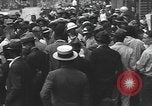
African American citizens in New York City volunteer to serve King Haile Selassie I in potential war with Italy
African American people line up to volunteer for helping King Haile Selassie I of Ethiopia in case of an Italian invasion (Italo-Ethiopian War). People register themselves as Ethiopian volunteers in New York City. A young African American woman registers herself for service as a nurse in Africa.
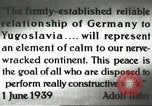
Tripartite Pact signed by Germany, Italy and Japan in Berlin, Germany. Ensuing attacks by Germany and Japan in World War II
This film is a scattering montage of World War 2 scenes from 1939 through 1945. Part of an agreement between Nazi Germany and Yugoslavia is shown in English. It is dated June 1, 1939 and ostensibly signed by Adolf Hitler. Next, German Ju 87, Stuka dive bomber aircraft are shown peeling off from formation, on April 6, 1941, to attack Yugoslavia. Bombs bursting on the ground. Closeup of a Stuka airplane in a dive, making its characteristic whine, and dropping bombs. Bombs exploding just outside some concrete walls. German infantry running along railroad tracks and entering backyard of house in a village. German soldiers observing from overlooking hill; climbing over rubble; and marching along a road toward a village. Animated map showing German invasion areas early in World War II, extending through most of Europe and into Norway, by 1941. Animated map shows further invasions into France, Belgium, low countries, the Balkans, and Eastern front towards the Soviet Union. Map highlights Tokyo, Rome, and Berlin. Delegations walking in hall of Reich Chancellery in Berlin, to sign Tripartite pact, on September 27, 1940. The group is led by by Count Galeazzo Ciano (Italian Foreign Minister, and Mussolini's son-in-law); Joachim von Ribbentrop, Germany's Foreign Minister and Japan’s Ambassador Saburō Kurusu. The diplomats are seen, next, standing near a table as Adolf Hitler enters rendering Nazi salute. He shakes hands with Count Ciano and Ambassador Kurusu. Hitler is seated to watch the proceedings. Von Ribbontrop is seen signing for Germany. Next scenes show German armored units heading East in Operation Barbarossa (June of 1941). A sign identifies the town of Eydtkau (Eydtkuhnen) on the German-Lithuanian border. German armor and artillery moving eastward. German troops destroying international crossing barriers. German troops firing siege guns. Montage with glimpses of German battle scenes showing tanks, guns, rockets in action with attendant explosions, fires, and destruction. Formations of German warplanes in flight, including Junkers Ju-52s that carry troops, including paratroops. View from above of Junkers Ju-87 Stuka dive bombers in formation. Battle of Britain scenes, with view of St. Paul's Cathedral in London, England (which miraculously survived the Blitz). The Tower Bridge in London, seen through a haze following blitzkrieg. German Junkers 87 Stuka dive bombers peeling off from formation to attack. British anti-aircraft searchlights shining beams skyward. Diving bombers illuminated by the lights. Anti-aircraft guns firing. Nighttime scenes showing gunfire flashes, explosions, tracer bullets and fires in London. British fire brigades fighting fires in London buildings as some collapse from the German bombing during the so-called "Blitz." Scene shifts to Pearl Harbor, December 7, 1941, as a Japanese bomb explodes on a U.S. Navy warship. The USS Arizona billowing smoke and listing as it succumbs to Japanese bombing. Another view of the Arizona sinking. Smoke rising from Battleship Row, at Pearl Harbor. Glimpse of postwar Nuremberg trial.
Benito Mussolini visits Adolf Hitler at the Wolf's Lair near Rastenburg, Poland, following his rescue from imprisonment in Italy, during World War II
Benito Mussolini arrives in a German Junkers Ju-52 aircraft, at an airport serving Adolf Hitler's Eastern Front headquarters (Wolf's Lair) near Rastenburg, Poland, a month after being rescued by German commandos from imprisonment in the Campo Imperatore Hotel, high in the Italian Apennine Mountains, during World War 2. He is warmly greeted by Adolf Hitler (who personally ordered the rescue mission). Mussolini's son, Vittorio, also greets him. Hitler escorts Mussolini to a staff car bearing both the Italian and German (Swastika) flags. The car arrives at the Wolf's Lair, and German Foreign Minister Joachim von Ribbentrop greets Mussolini as he steps from the car. Hitler escorts Mussolini into the building. Next, Reichmarshal Hermann Goering is seen pointing out something to Mussolini. Change of scene shows Mussolini in hat and overcoat being escorted by Hitler, out to their waiting staff car. Back at the airport, Mussolini says his goodbyes to German officers and Hitler. He boards the Junkers Ju-52 trimotor aircraft which taxis out as Hitler waves goodbye.
CRITICALPAST.COM: About Us | Contact Us | FAQs - How to Order | License Agreement | My Account | My Lightboxes | Shopping Cart | Advanced Search | Featured Collections | Website Terms & Conditions | Privacy Policy ©2026 CriticalPast LLC.
License Agreement |
Terms & Conditions |
Privacy Policy
©2026 CriticalPast LLC.