


 Francais
 Deutsch
 Italiano
Refine Your Search
Eboli Italy 1944 stock footage and images
- Showing 2605 to 2610 of 7968 results more
more Hide
Hide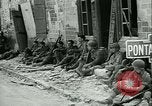
U.S. Forces rest in Pontaubault on their way to Paris in France.
United States Army forces rest in Pontaubault on their way to Paris. Soldiers seated on the roadside. They relax and smoke. Destroyed buildings and ruins in the city. U.S. Army soldiers march on the streets and enter St. James (Marche) France, widening the Brittany corridor, as crowds of French citizens welcome them. Soldiers in jeeps and trucks. Market area in the town. Civilians, nuns and children wave out to soldiers. Civilians with flowers and French flags welcome the troops. Soldiers on vehicles as people cheer for them. People gather around as a man pastes a proclamation on the city walls. (World War II period).
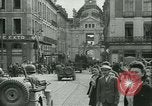
U.S. General George S Patton's forces liberate the city of Rennes from Germans.
Rennes in Brittany falls to Allied troops. Civilians in the streets. Military vehicles pass by. Forces of U.S. General George S Patton liberate the city from Germans. U.S. soldiers in trucks and jeeps as the crowd welcomes them. French policemen among the crowd. U.S. paratroopers freed by the Germans are welcomed back. The troops are greeted and kissed by French women. (World War II period).
Allied troops isolate the port city of Saint Malo in France (WW2)
Allied forces entering the port city of Saint Malo, France, during World War II. Smoke from explosions. Allied soldiers load and fire artillery. Tanks, damaged buildings, and soldiers in the streets. Soldiers fire machine guns and rifles across a street in the city. Soldiers in a building. Two soldiers take a wounded comrade to safety. A soldier attends to a wounded comrade lying on the ground. Nazi German prisoners are marched on the streets.
Plywood used to make crafts, boats and airplanes for the Invasion of Normandy during World War 2
Plywood used to make war material for the Invasion of Normandy. Birch, maple and mahogany logs are boiled for 24 hours. The logs are rounded on rollers and then peeled into long sheets of veneer. Women war production workers take out thin sheets of wood made from the logs. The sheets are then put into drying ovens to reduce the moisture. Women make an alternating wood and glue pile. These are stacked and put into a machine press to make the finished plywood. Workers put together and weld the prepared plywood. The plywood is used to make landing crafts, boats, pontoons, army holding boards, gliders and fighter planes. Men construct boats and crafts. A glider takes off. Worker under the plane. British de Havilland Mosquito bombers parked in a row. The plywood was a major component of the Mosquitoes .
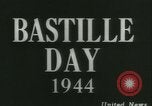
French and U.S. troops celebrate Bastille Day in liberated Cherbourg.
U.S. and French troops parade in liberated Cherbourg on Bastille Day. The troops and civilians gathered in a city square. Men, women and children watch. Soldiers and civilians hold flags. The US, French Navy and French Forces of the Interior (FFI) march alongside. The band plays. People watch from their homes. General Charles De Gaulle present at the celebration. 'Vive De Gaulle' on a banner. The square is renamed 'Place General De Gaulle.' Soldiers and policemen salute. Children hold flowers. People sing and dance in the square. Musicians play their instruments. (World War II period).
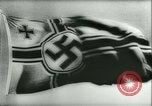
Fuhrer Adolf Hitler and Commander of the Luftwaffe Hermann Goring inspect air raid damage in Berlin.
The German Swastika flag. Fuhrer Adolf Hitler and Commander of the Luftwaffe Hermann Goring inspect air raid damage in Berlin. Soldiers prepare to fire an antiaircraft gun. A gathering in Berlin. Hitler takes the stage. Military officers, dignitaries and soldiers at the gathering. Soldiers with flags. Hitler and other officers stand at attention. (World War II period).
CRITICALPAST.COM: About Us | Contact Us | FAQs - How to Order | License Agreement | My Account | My Lightboxes | Shopping Cart | Advanced Search | Featured Collections | Website Terms & Conditions | Privacy Policy ©2026 CriticalPast LLC.
License Agreement |
Terms & Conditions |
Privacy Policy
©2026 CriticalPast LLC.