


 Francais
 Deutsch
 Italiano
Refine Your Search
Eboli Italy 1944 stock footage and images
- Showing 37 to 42 of 7969 results more
more Hide
Hide
Navy film about amphibious assaults. German films about the building of the German coastal defenses known as the "Atlantic Wall."
U.S. Navy film entitled, "the Battle for the Beaches." Several Higgins boat landing craft arrive at a shore and U.S. soldiers leave them to run ashore. Scene is then overlayed by the title slate. View of the White Cliffs of Dover, England. British civilians preparing defenses during World War 2. Civil Youth loading sand bags and erecting sand bag parapets around buildings. Home guard troops march up a road carrying rifles. British defenders occupying fortified positions They stand along a coastline looking out at sea. Street scene in an English village. Guards walking up along a barbed wire fence erected on the outskirts of the village. Film shifts to the German coastal Atlantic Wall defenses. German troops march along sandy shores containing all manner of obstacles at the water's edge. German officers stand on an overlooking cliff, and peer through binoculars. German sentry and large coastal gun barrel under camouflage net are silhouetted against light sky. Three German officers confer over plans for coastal defenses. View from above of slave laborers working and shoveling sand as they build defenses. German soldiers dismantling wooden forms around completed concrete fortifications. Glimpse of a huge German coastal gun being raised by a crane with heavy steel cables, as it is steadied by dozens of workers with hands on its barrel. German troops manning a machine gun in coastal defense position where a twin mounted antiaircraft gun is also seen. Momentary view of two German soldiers walk past rotating barrel of a huge coastal defense gun under a camouflage net. Workers, with shovels, placing fresh concrete to build up a section of concrete barriers along the coast. Allied troops storming a sandy shore from landing craft, as shells explode near them; possibly related to 1944 D-Day. One contingent are British soldiers. American troops landing at a beach from landing craft. Dead allied soldiers lying in the surf. Film shifts abruptly to U.S. Lieutenant General Mark Clark with some officers in Italy. In another switch of war theaters, General Douglas MacArthur is seen congratulating crew of a B-25 named "Smiling Jack." U.S. troops, in a training exercise, storming ashore from Higgins boats directly and closeup at the camera. They take up defensive positions in the sand, and move a jeep towing a field artillery piece.
African American soldiers engaged on all fronts in World War 2
Film opens with map of the world showing the various theaters of operation in World War II. Narrator refers to Allies liberating town after town, as they advance. View of American troops being welcomed in a European town during an advance (probably Italy in 1944). Next, African American troops are seen boarding troop transport ships. A huge convoy of ships is seen from the air. Huge piles of war materiel on a dock. Ammunition being delivered by landing craft from the transport ship USS Hunter Liggett (APA-14) to American troops at a beachhead in the Pacific. An African American sailors directs the lowering of a piece of artillery from a ship into a landing craft. Construction equipment being used to clear the way for a new landing field. Docks, roads, and bridges being built as the Allies advance. American troops in the swamps of the South Pacific. American Army engineers clearing trees to build the Alaska Highway (ALCAN Highway) in 1942. Corps of Engineers building the Ledo Road (from India to China) during the war. African American soldiers building a bridge across a river in Europe. A U.S. Army truck under fire, driving along a dirt road in Europe as shells burst all around it. U.S. troops firing various kinds of field artillery and tank guns. U.S. infantryman using a flame thrower. Closeup of African American soldier using a bayonet and others firing small arms. A tank being blown up by artillery fire. A Japanese Mitsubishi A6M3 Zero aircraft maneuvers overhead in the Pacific theater. An African American soldier runs to man his Browning .50-caliber, water-cooled antiaircraft machine gun, and begins firing as the Zero fighter plane strafes his position. Closeup of Japanese pilot in his cockpit and his machine guns firing from leading edges of his plane. His rounds strike all around the U.S. gunner, who turns and follows him with more fire. His tracers show behind the plane. Closeup of the African American gunner as he continues firing. View of the Japanese airplane rolling over and diving. Next the Japanese plane, aflame, crashes on a tropical island and explodes. (Note: It is apparent that some of these combat scenes have been made up of clips from other sources, edited into this film.) (World War II; WW II; World War 2; World War Two)
Training film for U.S. troops with the Army of occupation in Germany after world War II
Opens with bell tolling Victory against Germany in World War II. Next, a slate reads: "Victory Leads to Peace," and a farmer is seen with cattle pulling a plow. But narrator says "the problem now is future peace," and a map of Germany is shown overlaid with "Your Job in Germany." A cartoon of a soldier is superimposed on the map, along with one of a World War 1 American soldier and a figure of possible future soldier with similar mission. Camera focuses on parts of German aircraft in a jumbled heap. Closeups of weary defeated German soldiers at end ot World War II. Glimpse of Adolf Hitler speaking and haranguing an audience from a podium in an animated and forceful way. Swastika flags displayed from houses in a quaint German town. Joseph Goebbels, Nazi Reich Minister of Propaganda, at a microphone. Glimpse of a German concentration camp. But as they appear, each of the Nazi elements promptly disappears, showing the scenes without such Nazi symbols and persons. Skeleton remains of bombed buildings. Flower displays. Bucolic German rural countryside and quaint old villages in peaceful settings. Camera focuses on a book titled "German History." Chapter I, titled "Blood and Iron," shows Image of Otto von Bismarck. German troops march in a parade. Narrator states that "under Bismarck, the German empire was built." (He formed the German Empire in 1871, unifying Germany with himself as Imperial Chancellor, while retaining control of Prussia at the same time.) The film shows mounted German lancers as it alludes to Bismarck's campaigns against Denmark in 1867; Austria in 1866; and France, in 1870. Germany's leaders celebrating its status, in 1871, as the mightiest power in Europe. Troops marching and girls dancing nearby. Farmers plowing field with a horse and cow. Classic peaceful rural alpine scenes with local people in agricultural pursuits. A group of local German musicians playing folk music as village people dance outdoors. Back to the book, Kaiser Wilhelm II is shown on Chapter 2, entitled: "Deutschland über Alles." Gathering of German soldiers in Pickelhaube (spiked helmets). A German Big Bertha howitzer firing. German troops marching against Serbia; Russia; and France (with view of war damaged French cathedral). German invasion of Belgium in 1940 (with view of clock tower resting in rubble). German troops seen in Italy, walking past battle-damaged buildings. German Zeppelin dropping bombs on British targets and view of bombed out London neighborhood. Next scene shows a capsized ship with survivors running across its hull. Film slate labels the scene as United States, as if it is a U.S. ship attacked by Germany. (Actually, it is the Austro-Hungarian Battleship, SMS Szent Istvan, torpedoed, by Italian torpedo boats, during World War I.) Next, American soldiers in trench are seen going "over the top" and into "no man's land" on the western front of World War 1. Glimpse through a window of Kaiser Wilhelm II, after defeat of Germany, in 1918. View of Germans in a Beer Garden. Picturesque view of German town. A German orchestra performing. American soldiers marching out of Germany, with flags waving. Back to the history book,as chapter III is revealed, entitled "Today Germany, tomorrow, the world," and featuring Adolf Hitler. German troops invading Austria (where a civilian lies dead on the ground). German troops entering Czechoslovakia (where local people in tears render the Nazi salute). They march into Poland (where a girl weeps over someone, not seen, on the ground). They march into France (where a wounded, bandaged child cries in a bed). Next, is a scene from England, where a British child victim of bombing lies dead in the remains of a shelter. German troops invading Norway, Holland, Denmark, Belgium, Luxembourg and Russia (where a woman tries to rouse a dead woman). They invade Yugoslavia (where women sit near coffins of children) and Greece (where a woman rescues a naked child). A U.S. merchant ship explodes after being torpedoed by a German submarine (unseen). Scenes of destruction with people plucking dead victims from rubble of buildings. American troops invading Normandy, France on D-day, June 6, 1944. Several American soldiers fall to German gunfire on the beach. Wounded American soldiers being transported in jeeps on the battlefield and being placed on landing craft for evacuation. Americans walking past huge piles of destroyed aircraft parts. A landing craft filled with wounded American soldiers. American wounded and dead on a battlefield. Sailors abandoning a burning American ship by jumping into the sea. A sailor picked up in a life boat. A wounded American soldier being dragged from the beachhead at Normandy. Various wounds being treated by U.S. Medical Corps personnel. More scenes of American wounded being moved on stretchers. Scene shifts abruptly to German people folk dancing. Film concludes with question marks about the future.
Shows the importance and application of camouflage techniques during combat in World War 2.
A film 'Camouflage in Combat' underlines the importance of tactical exploitation and counteraction of shadows and use of nets, underbrush and other camouflage during World War II. The film shows U.S. soldiers going into a theater in the United States and watching a movie 'Camouflage'. The movie shows a soldier in a forest. He is shot down. A soldier approaches him. He looks skywards. He applies mud on his face to camouflage himself. Soldiers paint each other's faces with GI paint. On 5th June 1944, fully camouflaged Airborne and pathfinder U.S. paratroopers preparing for D-Day invasion jump over Normandy, France. Soldiers with camouflaged helmets. A soldier camouflages his helmet with grass and twigs. A soldier on an island with his helmet camouflaged with grass and twigs found in the area which gives him a perfect blend. U.S. soldiers with camouflaged helmets in France. A camouflaged tank rolls. An officer inspects soldiers standing in a line. Their helmets are camouflaged. A U.S. soldier hiding in shadows in Casino, Italy fires his gun. His ring sparkles. A soldier in a prone position fires. A New Zealand soldier fires while in shadows.
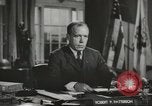
American Undersecretary of War speaks to difficulties facing Allies in confronting Germany and Japan in World War II
Undersecretary of War, Robert Porter Patterson, Sr. speaks about a report from the General staff outlining the needs for combating Germany and Japan in World War 2. He cites Operation Husky, the invasion of Sicily, as an example of what will be needed. He continues to narrate in the background as an animated map appears showing the buildup of supplies and Allied forces in North Africa; Allied air forces flying 60 thousand sorties over Sicily and, the direct amphibious assault using 3,200 vessels. Map also depicts opposing forces of 12 (“unwilling”) Italian Divisions and 3-1/2 German Divisions. View of Allied troops carrying some of their 31 thousand casualties on stretchers from field ambulances. Allied medics attending to the wounded. Some are seen lying on stretchers in a row on the ground near a wall. Interior of a field hospital where surgeons and other medical personnel treat the wounded. Animated map shifts to Europe with Germany at its center, showing , in contrast to Sicily that was only an “outpost,”, the heavily fortified perimeter of Axis controlled areas; the axis industrial might; and the disposition of 300 German Divisions (mostly on the Eastern front) defending the region. Next, the map illustrates Japan’s defended regions in the Pacific Image returns to Undersecretary Patterson i n his office, speaking of the Allied offensives planned for next year (1944), and emphasizing their challenge and difficulty. Scene shifts to General Jonathan Wainwright and his garrison at Corregidor, in the Philippines, surrendering to Japanese forces in 1941. Japanese military camera pans over the Americans being taken prisoner. Other Americans and Filipinos are seen being marched together under guard. Scene shifts to classic views of the Japanese attack on Pearl Harbor, Hawaii, on December 7, 1941. View of Japanese soldiers executing two Chinese civilians in 1937. Dangling bodies of persons hung by Nazis during Operation Barbarossa in Russia, in 1941 A Russian soldier comforts a little girl as he escorts her across a snowy landscape. Time bomb left by German forces retreating from Naples, Italy, in 1943, blows up a Post office building . Views of damage to building and bodies of victims. American Military Police assisting a victim. American soldiers carrying an injured civilian on a litter. Scene shifts to British Foreign Minister, Anthony Eden, Soviet Foreign Minister, Vyacheslav Molotov, and U.S. Secretary of State, Cordell Hull, entering a hall in the Spiridonovka Palace, during the 1943 Moscow Conference in Russia. Close-up of the American, Soviet, and British flags on a table. View of many delegates seated around the table. Close-up of Molotov, Eden, and Hull signing conference document.
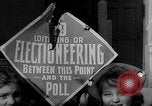
The 1944 U.S. Presidential election in World War II
On Election Day, November 7, 1944, in World War 2, Americans are seen waiting patiently to vote. They stand in a long line extending down a city sidewalk next to brick and stone buildings. Views of several persons in the line. Scene shifts in flashback to the election of Woodrow Wilson, in 1912. Four men on horseback arrive at a polling place. Another travels to vote, in his 1910 Ford Model T truck. Change of time and place shows farmer arriving by horse-drawn wagon and walking to polling place past 1930s car and truck. A fully laden truck stops at a rural gasoline station, temporarily serving as polling place. American town residential street scene in the 1930s. Citizens gathering to vote at a polling place set up at a laundry shop, in the Bronx Borough of New York City. Views of various places in the United States, serving as polling places. Americans seen waiting to vote at various places, in the 1944 national election. Among the sites shown is Bridgeport Central High School, built in 1916, (which later became Bridgeport City Hall), at 45 Lyon Terrace in Bridgeport, Connecticut. Persons in various places, registering to vote, including actor Lewis Stone, actress Esther Williams, and USO entertainer, Bob Hope. Voter closing curtain behind him as he votes in a voting booth. Views of voters' feet, below curtains, as they vote. Various types of boxes. Newspaper headline speaks of the large voter turnout in millions during the 1944 election. Shipyard workers at end of their shift, are seen heading to the polls to vote.