


 Francais
 Deutsch
 Italiano
Refine Your Search
Eboli Italy 1944 stock footage and images
- Showing 5107 to 5112 of 8000 results more
more Hide
Hide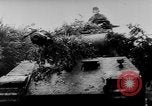
German forces defending against Allies during Normandy invasion of World War II
German forces defending against Allies during invasion at Normandy in World War 2. Camouflaged German Panther tank on the move. Others with German infantry on the way to engage invading Allied forces . Views from German positions of artillery fire and German machine gunners. A huge explosion. Battery of German 15 cm mobile rocket launchers (Nebelwerfer 41) firing. Rockets being fired from an Opel Maultier halftrack equipped with 10 tubed rocket launcher (Panzerwerfer 42) and a Wurfrahmen 40 (launch frame 40) multiple rocket launcher on SdKfz 251 halftrack. German forces firing on allied forces. A huge oil fire. German soldier using a flame thrower.
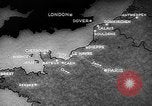
German soldiers respond to the front in Normandy, France, following the Allied invasion in World War II
Map shows French coast and principal cities of interest, during the Allied invasion in World War 2. Truckloads of German troops, including one filled with German woman in uniform, drive rapidly along a dirt road to confront the Allied invasion at Normandy, France, during World War 2. An improvised sign in a tree reads, "Einhahnstrasse Z. Front," identifying the road to the front lines. A German soldier hands out newspapers to others passing on bicycles. A headline in the paper reads:"Eisenhower hat uns nicht überrascht" (Eisenhower didn't surprise us). German soldiers on bicycles ride past the camera. A Sign in large letters reads:"Feindeinsicht" (Enemy in sight) and adds precautionary comments. German army vehicles camouflaged with foliage drive past destroyed Allied armored vehicles. Closeup of a German soldier with foliage on his helmet, looking about as he rides along in an open vehicle. Formations of allied warplanes appear overhead. German troops on the road scurry to the sides of the road and take cover as precaution against Allied air attack. German antiaircraft batteries in action. One Allied aircraft is hit. The pilot bails out. His chute is visible. A U.S. B-17 bomber falls, with part of its left wing blown off. Smoke rising from wreckage of two Allied aircraft on the ground.
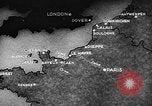
German fighter planes and antiaircraft battle Allied bombers during Allied invasion of Normandy, France, in World War II
Map shows French coast, English Channel and principal cities of interest, during the Allied invasion in World War 2. German Messerschitt Bf 109 aircraft on a flight line are starting up. Pilots getting buckled into cockpits and ME 109s taxiing for takeoff. Switch to German Focke-Wulf FW 190 aircraft taking off in formation from forward airfield. Contrails seen from high flying aircraft. Formations of American aircraft overhead, are fired at by German antiaircraft gun from hidden position. German antiaircraft batteries in operation. Wreckage of downed Allied aircraft, showing two left engines of a B-17; an A-20 or B-26, in D-day white stripes, with tail number 30148; and a crash-landed B-17 of the USAAF 96th Bombardment Group, 339th Bomb Squadron, with left horizontal stabilizer and elevator shot to pieces. Three surviving crew members stand behind the aircraft as they are approached by two German soldiers who check them for weapons.
German forces countering Allied forces during Normandy invasion of World War II
German forces engaging Allies after Normandy invasion. French firefighters use hoses on burning buildings ostensibly hit by Allied bombing during World War 2. German soldiers relaxing and talking in France. A German commanding officer congratulating several young German officers, in the courtyard of a building. German Generals meeting and consulting together. The senior General and staff depart in a camouflaged army vehicle. French road sign points to town of Saint-Lo. Camouflaged German tank moving along road. German Tank Destroyer StuG IV (Sturmgeschutz IV Sd.kfz.163) following behind, on road to Saint-Lo. Closeup of German officer riding in open top of a camouflaged armored car. German infantry soldiers walking on road. One carries an 8,8 cm RPzB.54 "Panzerschreck" rocket launcher, over his shoulder. Another behind him carries a flame thrower. The next group of German soldiers shown are very young, seemingly boy soldiers. Several smile for the camera. German soldiers digging in at side of road. One has improved version of Panzerschrek (Model 8,8 cm Raketenpanzerbüsche 54) that has a shield to protect operator. The German soldiers fire mortars. Several sit quietly as the sounds of bombardment surround them. One taps wireless message on communication equipment. Two carry a wounded SS trooper, who stands as best he can to report to his commander.
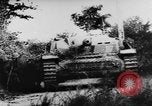
German forces responding to Allied invasion of Normandy in World War II
German forces rushing to combat Allied forces following the invasion of Normandy during World War 2. German sturmgeschütz (stug IV) tank destroyer and other armor heading toward the Allied invasion forces in Normandy France, during World War 2. German infantrymen moving and firing mortars. German infantry moving alongside armor camouflaged with tree branches and other foliage. German infantry moving cautiously by side of dirt road. Huge explosions nearby from Allied shells. A knocked out and burning American M4 Sherman tank. Several more Knocked out Shermans. Closup of parts of a destroyed Sherman tank. German soldiers climbing over and inspecting a knocked out tank of the U.S. 3rd Armored Division. A German officer points out places where shells had penetrated the tank. German Army vehicles passing burning U.S. trucks burning at the roadside. Views from a German vehicle moving along a paved road past several destroyed Allied tanks and trucks. Several British prisoners of war being escorted by a German armed guard. Sign in German pointing to prisoner collecting place. A large number of American soldiers walking into a courtyard of sorts. Camera closeup of wriing on back of one soldier's jacket, reading: "Patchie, P.A. Hershey." American POWs sitting and standing in the confinement area. Armed German guard at the prisoner compound.
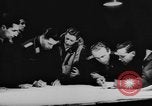
Views of German air and naval nighttime operations in World War II
Nighttime operations in World War 2, by German military air and naval units. German Air Force aviators discuss a mission. German armorers fastening large bombs under fuselage of a German Dornier 17 twin engine bomber, at night. The aircrew boarding the aircraft. Engines running and the bomber taxiing out for takeoff. Scene switches to a German coastal gun firing in the darkness. Next, the wake from a German torpedo boat, is seen at night. Interior of the boat, showing controls. A gun on deck, and face of sailor operating the boat. TWo torpedoes being launched. Explosion and fire from torpedo striking a ship, seen at night. Controls of a ship set to full speed ahead. A torpedo being launched from a surfaced submarine at night. A huge explosion from the torpedo striking a target ship.
CRITICALPAST.COM: About Us | Contact Us | FAQs - How to Order | License Agreement | My Account | My Lightboxes | Shopping Cart | Advanced Search | Featured Collections | Website Terms & Conditions | Privacy Policy ©2026 CriticalPast LLC.
License Agreement |
Terms & Conditions |
Privacy Policy
©2026 CriticalPast LLC.