


 Francais
 Deutsch
 Italiano
Refine Your Search
Egypt 1953 stock footage and images
- Showing 523 to 528 of 1095 results more
more Hide
Hide
A B-47 Stratojet takes off and smoke trails come out of the plane at Brize Norton Air Force Base in Oxfordshire, England
A training mission of the United States Air Force 305th Bombardment Wing on aircraft B-47 Stratojet at Brize Norton Air Force Base in Oxfordshire, England. A B-47 Stratojet takes off. Smoke trails come out of the plane. Trees in the background.
A crewman removes a wheel chock and a B-47 Stratojet takes off at Brize Norton Air Force Base in Oxfordshire, England.
A training mission of the United States Air Force 305th Bombardment Wing on aircraft B-47 Stratojet at Brize Norton Air Force Base in Oxfordshire, England. A ground crewman removes a wheel chock from the front of the landing gear. A B-47 Stratojet takes off. Trees and mountains in the immediate background. The B-47 Stratojet taxis down in front of three stationary B-47 Stratojets. The B-47 Stratojet is poised at the end of the runway for the take off. A sign on a hut type building reads '305th Bomb Wing Headquarters'. It is attached to a telephone line pole. A sergeant enters a quonset hut type building after puttting a sign on a wall.
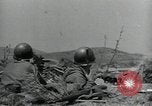
U.S. Army Medical Service at work during the Korean War.
The role of the American Army Medical Service during the Korean war. U.S. Army Captain Carl Zimmerman introduces Major General George E. Armstrong, Surgeon General of the U.S. Army who speaks from Washington, DC, about the work of the medical service. Scenes from the Korean War. U.S. troops rushed from japan, in July 1950 after a Chinese offensive at the 38th Parallel. Troops disembarking from ship and unloading artillery. Medical personnel offloading from assault boats, including doctors, medics, ambulances and drivers. A crane offloads medical equipment and supplies from a ship. Nurses with a mobile surgical hospital unit. Medics remove a casualty from an ambulance, on a stretcher. U.S. infantry slogging through difficult terrain. An ambulance driven on a mud road. Korean refugee families. Children sit and eat. People walk. An old Korean man is helped into a car. U.S. C-54 transport aircraft unloading supplies and evacuating wounded on stretchers. Medical supplies being unloaded from an aircraft and loaded into a truck. Surgeons in a tent hospital. A doctor treats a patient who is receiving blood plasma in an IV. Medics moving with tanks and infantry. Walking wounded being assisted. U.S. wounded lying on the ground, attended by medics. The U.S. medics treat injured soldiers during a tank battle. Soldiers on tanks. Thousands of paratroopers jumping from aircraft, their parachutes filling the skies. U.S. Army wounded being treated on stretchers around the Yalu River. Tenth Corps Troops in long winter withdrawal. U.S. Marine aircraft evacuating wounded. Troops withdrawing by sea in Landing Ships.
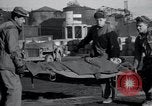
The U.S. Army Medical Service. Medical service personnel treat wounded American soldiers during the Korean war.
U.S. Army medics carrying wounded soldiers on stretchers to evacuation aircraft. Scenes of battlegrounds. Ambulances and medics tending wounded . Paratroopers landing from a jump. A wounded U.S. soldier being carried by two buddies, across a river. Wounded U.S. soldiers being carried on stretchers while under hostile fire.
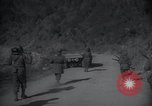
U.S.Army Medical Service. Successive treatment of casualties, from battlefield to evacuation to japan, during the Korean War.
U.S. tanks and troops under fire in Korea. A medic crawling through mud to keep up with infantry. Medics rendering emergency aid to wounded on battlefield, treating them for blood loss and shock, administering blood plasma and treating wounds. U.S. trooops carrying their wounded, under fire, to Battalion aid stations. Ambulatory wounded walking to air station. U.S. wounded being loaded into ambulance for transport to the Regimental Collection Station. Wounded on litters being carried on jeeps, Wounded on litters being loaded on helicopter. View of Division Clearing Station. Helicopter brings wounded to a hospital at Pusan. U.S. Army doctors, who specialize in surgery, orthopedics, etc. seen at work. Surgeons scrubbing before surgery. Casualties being loaded on open trucks for transport to airfield for evacuation by combat cargo planes. Group of C-47 aircraft parked on ramp. Casualties on stretchers being carried aboard a C-54 aircraft. The air evacuation aircraft takes off for Japan.
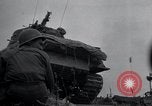
U.S. army medical Service in Korea. soldier speaks about the medical aid provided to him during the Korean war.
Medical aid being provided to U.S. soldiers during the Korean War. A tank moves on a rugged field. U.S. army medical team treats wounded soldiers on the battlefield. Private Lubak, of the 7th Division, praises the work of front line medics and nurses in treating him when he was wounded, beginning on the battlefield, and throughout his subsequent care, ending in a hospital in Japan.