


 Francais
 Deutsch
 Italiano
Refine Your Search
Etain France 1944 stock footage and images
- Showing 643 to 648 of 9933 results more
more Hide
Hide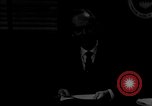
USAF Lieutenant General Ira Eaker speaks about his experiences in the U.S. Air Force in the United States.
An interview of United States Air Force Lieutenant General Ira Eaker conducted by Dr. Maurer in the United States. Dr Maurer and General Eaker seated at a desk. Dr Maurer talks about the work and the contribution of General Eaker in the U.S. Air Force. He says that General Eaker was the Commander of the 8th Air Force. In 1944, he became the Commander in Chief of the Mediterranean Allied Air Force. Then from 1945 until his retirement in 1947, he was the deputy commander of the Army Air Forces and chief of the Air Staff. General Eaker talks about his experiences. He talks about the first airplane flight he saw. He further speaks that he was sent to a training camp in 1917. A man came in the camp looking for some fliers. He was already selected for an examination of regular army. He says that in November 1917, he was on a parade grounds. An airplane was in flight overhead. The aircraft landed and he looked at the engine of the aircraft.

German spectators attend ice show in bomb damaged Berlin Sportpalast (WW2)
Nazi German administration organized an ice show for the war weary populace in the Berlin Sports Palace or Sportpalast (Ehemaliger Standort Sportpalast Berlin, Potsdamer Str. 172B, 10783 Berlin, Germany) in World War II. A woman ice skater is seen figure skating on the large ice rink of the Berliner Sportpalast. The stadium is roofless from bomb Allied bombing since January 1944. The narrator calls it "burned out." The steel skeleton of the roof supports is visible. The stadium seating is filled with spectators dressed in warm clothing. Some also use blankets. The audience includes many German soldiers in uniform, on whom the camera focuses during the film. German figure skater Lydia Veicht performs some spins to complete her performance, as the audience applauds enthusiastically. The audience clapping their hands. A man and woman perform next, dancing together on the ice. Finally, a troupe of women skaters perform on ice.
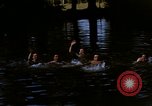
War correspondents and actor Edward G. Robinson in France soon after Allied Invasion of France in World War II
War correspondents in France after the Allied Invasion in World War 2. War correspondents swim and bathe in a French river. Correspondents including Ralph Moss, Huey Broderick, Joe Priestly and actor Edward G Robinson standing by the riverside and smoking cigars. The correspondents outside a large, stone, Normandy Barn where actors and actresses put up shows to entertain troops. A banner at the entrance reads: 'Normandy World Premier'. Robinson talks and acts for the camera.
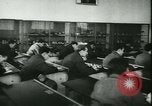
Young French workers in occupied France learn German, manufacture aircraft and visit a city in France during World War II.
France under Nazi rule during World War II. Young French workers at a German ammunition factory. The workmen attend classes to learn German. A woman instructor teaches them German. The workmen take notes. The instructor uses a black board to give instructions. She calls a student to write in German. Workers in an aircraft manufacturing plant. The men in protective gear work at various machines and use various equipment. They work on a semi-assembled aircraft. The workers tests the landing gear of aircraft. Men read a poster in French regarding a visit to the city on Sunday. Buildings on a street. Soldiers walk along as a tram passes on the road. From captured German newsreels.
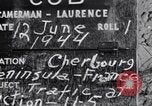
Signs on a board at beachhead in Cherbourg Peninsula, France, several days after Allied invasion of France in World War 2.
Signs on a board at beachhead in France. "Water point", "Collection and clearing station" indicated by the signs. United States military policemen directs vehicular traffic on the beach. Heavy traffic on the beachhead. United States soldiers carrying full field packs walk on the field.
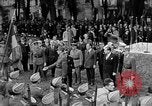
General Charles De Gaulle addresses the people of France,French officers and guards in France.
General Charles De Gaulle addresses the people in France. The French guards stand in a line. Several people around watch. The General and the other officers move. General De Gaulle stands on a raised platform and speaks to the people. Several microphones on the platform. The officers around the platform. The crowd listen to the General. Few people with umbrellas. Several people hold flags. The general moves towards the French guards. Other officers look on.
CRITICALPAST.COM: About Us | Contact Us | FAQs - How to Order | License Agreement | My Account | My Lightboxes | Shopping Cart | Advanced Search | Featured Collections | Website Terms & Conditions | Privacy Policy ©2026 CriticalPast LLC.
License Agreement |
Terms & Conditions |
Privacy Policy
©2026 CriticalPast LLC.