


 Francais
 Deutsch
 Italiano
Refine Your Search
Etain France 1944 stock footage and images
- Showing 7975 to 7980 of 9964 results more
more Hide
Hide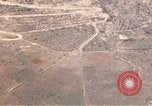
An aircraft flies over a bomb damaged town after Allied bombings in Italy during World War II.
Aftermath of Allied bombings in Italy during world War II. Aerial view of a bombed town. Mountains, battle scarred farmland and buildings. A marshaling yard and rail tracks. A waterfall and an Italian town. Aircraft flies over farms and buildings. An Italian town on a ridge.
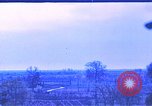
Allied aircraft strafes a train and an open field in Italy during World War II.
Aerial views of Allied air attack in Italy during World War II. Aerial views of an open field as an aircraft strafes it and smoke rises. A railroad train strafed, smoke rises. A radio station strafed. Buildings on a farm. Railroad trains strafed. A building strafed, a large explosion occurs.
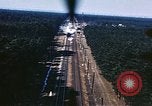
Allied aircraft strafe railroad trains in Italy during World War II.
Aerial views of the Allied air attack on Italy during World War II. Aerial views of a railroad train being strafed, smoke rises. Railroad trains strafed, a large explosion occurs. A train burns on a track. Coastline of an Italian town.
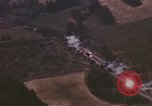
Allied aircraft strafe trucks on road in Italy during World War II.
Allied aircraft in Italy during World War II. Aerial views of moving trucks being strafed by Allied aircraft. Trucks on roads strafed, smoke rises. A man aboard an aircraft as he holds a reconnaissance picture of Calabria, the toe of Italy.
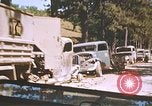
Wrecked vehicles lined up along a road and an Italian flag on a building in Italy during World War II.
Wrecked vehicles in Italy during World War II. A line of wrecked vehicles on the roadside. Italian flag hoisted on a building and a sign on the building reads 'A morte Mussolini'.

New recruits enter training at the U.S. Great Lakes Naval Training Center during training during World War II.
A U.S. Navy training film titled 'You're Navy now' about the recruitment and training of sailors in U.S. Navy during World War 2. Opening scene shows a tram at the Inter-urban trolley station near the gate of the Great Lakes Naval Training Center, during World War 2. Arriving military recruits in civilian clothes step from the train cars as U.S. Navy sailors in uniform wait to board. A Petty Officer instructs the newcomers to follow him. A Petty Officer, second class, and his friend, stand on the trolley platform and comment about the new recruits, as they walk past. The recruits follow their guide into the center and walk across the campus. A Wave (woman sailor) in uniform is seen walking on another path. One recruit remarks: "Look at the lady sailor." On their way, the recruits see a contingent of sailors marching in formation. Scene shifts to the barracks where the new recruits are settling in. Interior parts of the barracks are labeled with naval terms, such as "passage way,"instead of hall. One recruit peeks inside door marked,"Crews Head." Recruits make the best of their first night in the barracks, trying to rest, playing cards, and thinking. The next day they are lined up outside a building. Next, inside that building they are instructed to prepare labels to ship their civilian belongings home. They disrobe for physical examination and walk up a stairway to be reviewed by doctors and dentists, who check their eyes, teeth, and vital signs (blood pressure). One stands up for a chest X-ray. View inside the Training Center hospital. Recruits seen donning new white uniforms, and later going "below,"in work uniforms.
CRITICALPAST.COM: About Us | Contact Us | FAQs - How to Order | License Agreement | My Account | My Lightboxes | Shopping Cart | Advanced Search | Featured Collections | Website Terms & Conditions | Privacy Policy ©2026 CriticalPast LLC.
License Agreement |
Terms & Conditions |
Privacy Policy
©2026 CriticalPast LLC.