


 Francais
 Deutsch
 Italiano
Refine Your Search
Etain France 1944 stock footage and images
- Showing 3949 to 3954 of 9964 results more
more Hide
Hide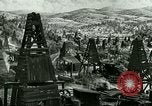
African American soldiers serving in wars, especially World War I; Memorials to African American United States soldiers.
A film on contributions of African American soldiers in various wars, but mostly focusing on World War I era. African American workers at an oil field with oil derricks talk to each other. Depiction of African Americans serving in the Spanish-American War and advancing towards a battlefield. African American man speaks about his experience of the war. Scenes of excavation and construction of the Panama Canal. Huge earth moving equipment at work and a man triggers an explosive detonation during the dig. A U.S. Navy ship underway in the newly completed Panama Canal. World War I scene of a U.S. Army unit including African American soldiers marching through a town in France, in formation, with a military band leading the march. African American soldiers of the 813th Pioneer Regiment near Marseilles France work to build a railroad. Also scenes with soldiers from the 332nd Labor Battalion, and the 808th Pioneer Regiment clearing an area near Verdun. African American soldiers of the 8th Illinois infantry (later the 370th infantry) running with the rifles as they mobilize for battle in France. African American soldiers of 371st Regiment and 372nd regiment crossing battlefield during World War I. Members of the 369th regiment in battle. Railroad guns and heavy artillery firing during World War I. American soldiers leaping from a trench and running across no mans land during battle. African American soldiers of the 369th infantry ("Harlem Hellfighters") receiving awards, medals, and citations at an awards ceremony in France during World War 1. Henry Johnson and other African Americna soldiers marching in New York City victory parade soon after the armistice ending World War I. Graves of soldiers at Arlington Cemetery as seen from a moving vehicle. Images of grave markers for several African American soldiers and officers. Two African American soldiers approaching the All Wars Memorial to Colored Soldiers and Sailors, in Philadelphia, Pennsylvania. Close-up view of the memorial and plaque on the memorial. Several other memorials in the U.S. showing African American soldiers. View of a facsimile of the 371st Infantry Regiment, 93rd Division (colored) memorial in France, near the towns of Ardeuil and Séchault. Dramatized depiction of the memorial being destroyed by the invading German Army on June 15, 1941. African American preacher speaks in a church.

On New Caledonia, near Australia, residents learn news of D-Day invasion of France and react to the news.
An announcer speaks invasion news into the microphone in New Caledonia, Australia. United States and French military personnel and civilians read news of invasion which is posted to outdoor bulletin board. Interviewer discusses invasion news with a French soldier and a New Caledonian housewife who supported the Free French Forces. Men and women go upstairs in a building. Women talk amongst themselves. Man teaches children outside a school. Girls on the bicycles on the street. Other civilians in discussion on the street. French flag on standard. (World War II period).
Barrage from allied warships at shores of Normandy and allied aircraft take off for D-Day invasion of France, World War II.
Allied ships in the English Channel fire at German fortifications on French coast to soften up defenses at start of D-Day Invasion. Views of large guns on many ships firing toward shore. Discarded shells are seen on board the deck of the ship. United States gliders and C-47 aircrafts on field in Britain. Gliders being towed along the field for take off. View of U.S. Army soldiers leaving troop carriers and boarding landing crafts (LST) for Invasion of Normandy beaches. G.I.s climb down landing nets and board a landing craft. Allied bombers overhead flying toward Normandy targets. Smoke emerges from the sinking United States destroyer USS Corry (DD-463) off the shore of Utah Beach near Iles Saint-Marcouf.
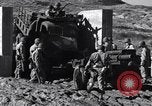
American troops practice loading and handling of vehicles aboard concrete landing craft in France during World War II.
American troops practice in the military training area at Braunton Burrows North Devon, England, in preparation for the D-Day landings in Normandy, during World War 2. They practice handling and loading of 105mm Howitzers, trucks and vehicles aboard concrete landing craft mock ups Vehicles being unloaded from one of the mock ups.
Preparations for allied invasion of Normandy France during World War II.
'Normandy: Air borne invasion of fortress Europe ' Allied invasion of Normandy. Lieutenant General William S Knudsen introduces the film to be presented, expressing thanks to makers of the glider aircraft used in the invasion, who are the intended audience of the film. Field Order no1, 9th Troop commander Carrier. A man puts a Top Secret seal on the order. The Captain of United States 82nd Air Borne Division briefs men about the terrain with the help of a mosaic. A map of Europe shows principle cities of the continent. Map and narrator describe German Atlantic Wall coastal defenses on European continent. A giant concrete coastal gun emplacement. A large German railroad coastal gun moved out of a concrete shelter. Various concrete structures, sandbag structures of coastal guns. A concrete base gun turret revolves. Huge coastal guns protrude from concrete gun emplacements. Huge steel and concrete tank barriers stretched across. Large concrete and steel structures built along the coast to prevent assault craft from landing. Combined Chiefs of staff of the United Nations at a meeting. George Marshall and Henry Arnold at the head of the table during the meeting. A map shows invasion area near Le Harve. Troop Carrier units departing for Allied invasion on Sicily, Africa on 10 July, 1943. The United States C-47 aircraft take off towing gliders from an airfield in Africa. Troops transported from British 1st Air Borne division and United States 82nd Air Borne division. Dust rises as aircraft take off from a desert field. Demolished gliders on field and beside water. Multiple views of demolished gliders. C-47 in flight and paratroopers jump from the plane in New Guinea. Instructor trains paratroopers in United States. Discussion and demonstration of improvements in glider equipment and usage after Sicily Invasion and prior to D-Day Normandy invasion. Two men attach link nose chain to glider. Parachute extended and held open by men. Pilot of a glider talks to the pilot of the plane towing the glider over intercom.
U.S. soldiers aboard a Landing Ship Tank and aboard a LCI(L) preparing for the invasion of France in World War II
American troops preparing for the invasion of Europe during World War 2. United States Army soldiers on board an LST (Landing Ship Tank) docked in England, three days before D-Day. (Slate month is wrong.) Soldiers eat C rations on the deck of LST. They rinse their mess kits in hot water. Several soldiers assigned kitchen police duties wear helmets displaying "KP." Soldiers sit along gunwales of Landing Craft Infantry LCI(L) number 88. (This craft is one of five that will land on Omaha Beach on D-Day, as part of Assault Group O-1, Commanded overall by Captain Fritzche, U.S. Coast Guard. The LCI(L) 88 belongs to Flotilla 10, and is commanded by Lt. Henry K. Rigg, USCGR)
CRITICALPAST.COM: About Us | Contact Us | FAQs - How to Order | License Agreement | My Account | My Lightboxes | Shopping Cart | Advanced Search | Featured Collections | Website Terms & Conditions | Privacy Policy ©2026 CriticalPast LLC.
License Agreement |
Terms & Conditions |
Privacy Policy
©2026 CriticalPast LLC.