


 Francais
 Deutsch
 Italiano
Refine Your Search
Etain France 1944 stock footage and images
- Showing 3997 to 4002 of 9964 results more
more Hide
Hide
French and British troops advance and drink cider served by French civilians in Sées during World War II.
The French 2nd Armored Division and British troops advance through Sées, France during World War II. Tanks pass wrecked military vehicles on the streets of Sées. Tanks and artillery advance. Soldiers on foot. A painted sign on the wall reads 'Falaise'. Troops drink cider being served by French civilians.
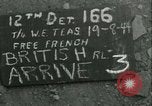
French and British troops on foot, motorcycles and tanks advance through the streets of Sées during World War II.
The French 2nd Armored Division and British troops advance through Sées, France during World War II. Tanks pass wrecked soldiers on the streets of Sées. War damage around. Soldiers on tanks. A painted sign on the wall reads 'Falaise'. Soldiers and tanks pass by the sign. Other military vehicles follow the tanks. Soldiers on tanks and motorcycles. Tanks move past a restricted district sign board amidst rubble on the ground.
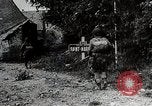
101st Airborne takes prisoners and trophies. Allied supplies and reinforcements arrive in Normandy in World War II
U.S. Army soldiers on road to Saint Marcouf, after invading Normandy in the D-Day invasion of France during World War 2. Paratroopers from the U.S. 101st Airborne Division take German prisoners. A U.S. soldier talks to small French boy and girl. The girl smiles. 101st Airborne troopers display a captured Nazi flag. Allied supplies and reinforcements coming ashore on the Normandy beachheads. German prisoners of war being escorted under guard and loaded aboard USS LCI(L) 584. Disabled USS LCI-30 and some dead U.S. soldiers on the beach.
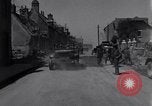
Secretary of State, Cordell Hull and General Omar Bradley travel through town of Carentan to Omaha beachhead
Secretary of State Cordell Hull and Lieutenant General Omar N. Bradley travel by jeep through the town of Carentan to the Omaha beachhead in France. Houses and buildings line the streets. A man walks on the street. A statue at a small square in center of town. A wheel cart nearby the statue. The jeep arrives at a bluff overlooking the beachhead, where General Bradley points out places and things of interest. Secretary Hull dons a steel helmet. They drink some refreshments. Below them the U.S. Army has a contingent of soldiers bivouacked on the beachhead. (World War II period).
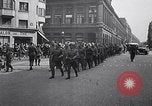
French civilians mistreat British and U.S. prisoners of war as they are marched through the streets of Paris by German guards (WW2)
Mistreatment of Allied prisoners in Paris, France during World War II. A long column of British and U.S. prisoners of war marched through the streets of Paris under German guard. French policemen and civilians stand by and watch. The prisoners marched through commercial areas. German soldiers keep guard. French civilians strike and kick the prisoners as they pass. The prisoners lined up.
A fleet of warships, amphibious vehicles, LCM, LCI, LST underway to Normandy on D-Day invasion during World War II.
Normandy invasion Religious Service before D-Day invasion during World War II. A fleet of warships and amphibious vehicles cruise the sea to reach the beach of Normandy in France. LCM, LCI, LST in the sea water. A warship anchored in the sea.
CRITICALPAST.COM: About Us | Contact Us | FAQs - How to Order | License Agreement | My Account | My Lightboxes | Shopping Cart | Advanced Search | Featured Collections | Website Terms & Conditions | Privacy Policy ©2026 CriticalPast LLC.
License Agreement |
Terms & Conditions |
Privacy Policy
©2026 CriticalPast LLC.