


 Francais
 Deutsch
 Italiano
Refine Your Search
F-86 stock footage and images
- Showing 1777 to 1782 of 2472 results more
more Hide
Hide
Council of Foreign Ministers of France, Britain, Russia and the United States at a meeting at Luxembourg Palace in Paris.
Council of Foreign Ministers of France, Britain, Russia and the United States at a meeting at Luxembourg Palace in Paris, France. The Foreign Ministers Georges Bidault of France, Ernest Bevin British Secretory of Foreign Affairs, Russian Vyacheslav Molotov and Foreign Secretory of United States James F. Byrnes step out of their cars and proceed towards the meeting hall. They shake hands and greet each other. A round table conference to decide a final peace treaty after the World War II.
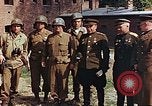
American and Russian military officials meeting at Torgau, Germany at end of World War 2
American and Russian military officials meeting at Torgau Germany at close of World War II in Europe; an event sometimes referred to as East Meets West. Forces of U.S. Major General Emil F. Reinhardt, Commander of the U.S. 69th Infantry Division and Russian officer Major General Rusakov, Commander of the 58th Guard Division meet. Officers stand in front of a building damaged due to bombing. They shake hands and talk to each other.
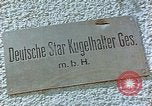
A wrecked German factory with destroyed chimney from bombing by the Allied bombers in World War 2
A German factory destroyed by bombing of Allied bombers during World War II. A signboard saying 'Deutsche Star Kugelhalter Ges. m.b.H' (of Schweinfurt Germany). The chimney of the wrecked factory with painted letters 'F & S'. Factory premises destroyed by bombing, remains are ruin and rubble. The bent girders have sprung out due to explosions.
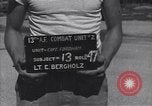
General Twining congratulates pilots of the 339th Fighter Squadron, on Guadalcanal, Solomon Islands during WWII
Major General Nathan F. Twining, Commanding General, 13th Air Force. arrives to congratulate fighter Pilots of the U.S. Army Air Forces, at Henderson Field, on Guadalcanal, Solomon Islands, during World War 2. (The 339th had successfully accomplished a highest priority mission, shooting down Japanese Admiral Isoroku Yamamoto's airplane on April 18, 1943.) Major General Twining, wearing a pith helmet, steps out of his jeep and walks towards a group of 339th Squadron Pilots. He examines the nose wheel of a P-38, as a group of pilots stand around him. General Twining converses for a while with Major John W. Mitchell, Commander, 339th Fighter Squadron, who led the mission to down Admiral Yamamoto's airplane. Later, members of the 339th Squadron are photographed in conversations with one another.
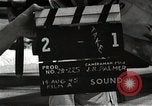
General Thomas Farrell, Deputy Commander, Atom Bomb Project expresses his views at North Field base in Tinian Island, in WW II.
Atomic bombing mission in Japan by the United States Army Air Force, during World War II. U.S. military base in North Field, Tinian Island in Mariana Islands, South Pacific. Brigadier General Thomas F. Farrell, Deputy Commander, Atom Bomb Project thanks all people who contributed in the manufacturing of the bomb. He hopes that future use of the atomic power will be for peaceful purposes only.
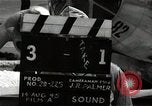
Interview of Capt. William S. Parsons, U.S. Navy, crew member on Enola Gay, after the Hiroshima atomic bombing mission
Setting: North Field, Tinian Island in Mariana Islands, South Pacific, almost a week after the atomic bomb was dropped on Hiroshima Japan, August 8, 1945, during World War II. Public Relations Officer, Major John F. Moynahan (not seen) is interviewing members of the Crew of the B-29, Enola Gay, from which the bomb was dropped. Here he interviews Captain William Sterling "Deke" Parsons of the U.S. Navy who was weaponeer aboard the Enola Gay, during the mission. and who now serves as Scientific Head of the Atomic Bomb Project in the Pacific Theater. Captain Parsons describes the events of the mission from their early morning departure through the actual bombing. He notes that the actual bombing went smoother than earlier practice missions.
CRITICALPAST.COM: About Us | Contact Us | FAQs - How to Order | License Agreement | My Account | My Lightboxes | Shopping Cart | Advanced Search | Featured Collections | Website Terms & Conditions | Privacy Policy ©2026 CriticalPast LLC.
License Agreement |
Terms & Conditions |
Privacy Policy
©2026 CriticalPast LLC.