


 Francais
 Deutsch
 Italiano
Refine Your Search
Florennes Belgium 1945 stock footage and images
- Showing 439 to 444 of 6929 results more
more Hide
Hide
Montage of World War I scenes. Postwar French military preparedness. Tensions between Germany and France early in World War II.
German cavalry on horseback entering Belgium and Berman infantry marching in France, at the start of World War 1 (1914). The famed Taxicab army is seen carrying French soldiers in Paris. General Ferdinand Foch reviewing elements of the French 9th Army. French and British troops firing a British BL 8-inch howitzer. French troops rushing across no-man's land of trenches and barbed wire, as shells burst. German soldiers taken prisoners in trench. General Foch shaking hands with U.S. General Pershing, aboard a U.S. warship. Sketch of signing of the armistice, November 1, 1918 on a railway carriage at Compiegne. Monument to Marshal Foch. Monument to Minister of War, Andre Maginot. concrete being poured. French construction of the Maginot Line. Animated illustrated cross-section of the line.View of troops moving on rail cars in the Maginot line. Glimpse of Maginot line guns on surface. At outbreak of World War 2, French troops deploy to the Maginot line. French troops inside bunkers and tunnels of Maginot Line. Marshal Petain reviewing the troops as they deploy. Muzzle of a Maginot line gun. Hitler with Military Chiefs planning. View of French Foreign Minsister, Aristide Briand,during signing of the 1928 Kellogg-Briand antiwar pact in Paris.Frank R. Kellogg, U.S. Secretary of State at the table to Briand's left. His signature on the document. A field full of French Morane 406 airplanes. French airman poses with Potez 58 airplane. French AMC 34 tanks. Crowd milling about at Renault Building and unrest elswhere in Paris, France. Newspapers chronicle failure of the League of Nations. Movie cartoon about weakening of France by Nazi inspired social strife and sabotage. French Army troops in mess hall eat at long tables and pour wine with meal. Idle French troops across the Rhine River targeted by German propaganda and psychological warfare including banners; messages by balloons;German bands playing French tunes; large loudspeakers broadcasting in French.
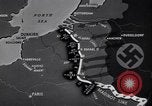
U.S. officer explains Successful German invasion of France ending with Allies trapped at Dunkirk in World war II
With the help of an animated wall-size map, an American Army Lieutenant Colonel intelligence officer explains details of the German successful breakthough to France during May, 1940, in World War 2. The map depicts the opposing German and Allied lines after the German advances through Belgium and the low countries, and the officer shows their surprise assault through the Ardennes, across the Meuse River and into France, where they shattered the French 9th Army. The map is animated and illustrates as the Officer narrates the events, which end with the successful advance across France to the port of Abbeville, on the Somme River. The subsequent German operations forced British and French forces into an untenable position backed to the English Channel at Dunkirk, France.
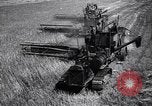
Farmers in Ukraine save crops from invading German forces in World War II Civilians prepare fortifications and defenses
Three Soviet harvesting machines in formation cut wheat in Ukraine before arrival of invading German forces during Operation Barbarossa, in World War 2. Several varying closeups of the harvesting operations and the farmers as they work. Tractor pulls a harvesting machine. Closeup of farmer teaching his wife how to operate the machinery. View of her at the wheel. People (mostly women and children) gleaning grain from the fields after the machinery has finished. Soviet soldiers carrying long handled scythes walk past the wing of an aircraft parked in a field, to join those in the harvesting. A windmill is seen in the far background. Civilians and soldiers work together with hand held tools to cut wheat. Closeup of woman twisting stalks to form a rope to bind the wheat sheaves. Views of soldiers carrying sheaves of wheat. People gathered around and atop a threshing machine. Workers,using pitch forks, toss wheat sheaves up to the threshers, who push them into the threshing machine. A tractor pulls a many wagons filled with flour, from a mill. Complete change of scene shows civilians hard at work building fortifications. Several ensuing scenes show civilians sandbagging and strengthening fortifications in other Allied countries, such as France, Czechoslovakia, Poland, Norway, Holland, Belgium, Spain, and China. Soviet men with shovels digging deep antitank defenses. Many hundreds of Soviet women at work with shovels building defenses along a hillside. A cadre of Soviet women, in uniform, march under command of a military officer, at a square in Moscow. Some appear to be carrying rolled up stretchers or litters over their shoulders, reflecting their role as nurses or medics. Red Cross nurses train for an emergency. One practices bandaging the arm of another. Several Red Cross nurses line up in a formation to march

Blizzards and cold weather bring chaos and economic loss in Europe.
Scenes of unusual winter cold and snow in Europe in 1963. View in Britain. Man checking bags of food and dropping food to animals by airplane. Birds on snow near a lake. In Netherlands, the canals are frozen. Boats in frozen water can be seen. Men use cross country or nordic skis to reach lamb stuck in snow drifts (by their mothers for protection). View of harbor in Belgium frozen solid with no ships moving. A stationary ship in frozen water.
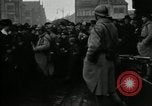
French and British military occupy a German town square to enforce German reparations payments after WWI
March 1921 occupation of the Ruhr (Düsseldorf, Duisburg, and Ruhrort), with Allies occupying industrial areas to enforce German reparations payments after World War 1. A British soldier with a rifle polices a perimeter as local citizens watch in Germany. A wagon train of horse-drawn wagons, manned by soldiers from France or Belgium, moves along cobblestone street by a lake and assembles in a town square. A crowd of spectators is lined up at the edge of the square. British officers maneuver a British Mark IV tank into the square where French and British officers confer. Many children are seen watching at edge of the town square. An officer moves some of them back from the camera, as he walks by.
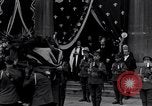
State funeral procession for British Nurse Edith Cavell.
Following a State Funeral at Westminster Abbey, coffin bearing Nurse Edith Cavell's body is carried out and put on gun carriage. Mourners attend the funeral. Mourners, sailors with wreaths, nurses and other services in procession with horse-drawn carriage move on road. Soldiers lift the coffin. Coffin transferred at a ship for its transport to Norfolk for burial at Norwich Cathedral. (This state funeral followed disinterment of Cavell's body in Belgium, after her execution on October 12, 1915).
CRITICALPAST.COM: About Us | Contact Us | FAQs - How to Order | License Agreement | My Account | My Lightboxes | Shopping Cart | Advanced Search | Featured Collections | Website Terms & Conditions | Privacy Policy ©2026 CriticalPast LLC.
License Agreement |
Terms & Conditions |
Privacy Policy
©2026 CriticalPast LLC.