


 Francais
 Deutsch
 Italiano
Refine Your Search
Foggia Italy 1944 stock footage and images
- Showing 2137 to 2142 of 8000 results more
more Hide
Hide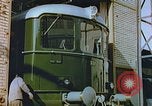
European rail and air transportation developments and operations after World War II
Postwar rail and air transportation facilities and operations in Europe. A new railroad locomotive moves out of a factory in Switzerland. The engineer looks out his side window as it rolls out. A train moves along a track next to a road that then crosses in a level crossing. A car stops for the train, as it passes. People walk on the modern concourse of Roma Termini railway station (Piazza dei Cinquecento, 1, 00185 Roma RM, Italy) in Rome, Italy. A train moves on the Lorraine railway viaduct (Lorraineviadukt 3013 Bern, Switzerland) in Bern, Switzerland. Views of several new bridges in Europe. Traffic on a road hub with cloverleaf loops. A British Overseas Airways Corporation (BOAC) De Havilland Comet jet passenger airliner taking off. Sign reads “Order of Formalities on arrival 1. Sanitary control 2. Passport control 3. Declaration of currencies 4. Baggage inspection”. Sign reads “…De Police control de Policia…”. An immigration officer stamps the passport of a female passenger. Sign reads “Controle Sanitaire Sanitary Control Arrival – Contro…”. Officer stamping passport at airport. “Controle Currency Control”. A man hands over his passport to an officer. Passenger opening baggage for inspection while going through customs at a French airport. Customs officer marks the baggage. View from under the tail of a DC-6 passenger plane taxiing out for takeoff. View of a Transworld Airlines (TWA) Lockheed Constellation passenger plane in flight shortly after takeoff from airport.
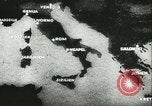
German troops and equipment successfully cross the Strait of Messina under Allied air attack over Sicily during World War II.
German troops in Sicily, Italy during World War II. A map of Italy. German ships at a coast. Allied aircraft in flight as a German convoy moves across the Strait of Messina. An aircraft drops bombs at the convoy and explosions occur at sea. Landing crafts in water. German troops aboard an aircraft. German anti aircraft guns fire at the Allied aircraft. Smoke rises as an aircraft is shot down. German crafts are anchored at a beach and equipment being unloaded. Troops disembark from vessels. A soldier smokes a cigarette. A damaged U.S. Army Air Forces aircraft after it was shot down. German General Hans Hube being congratulated for successful withdrawal.
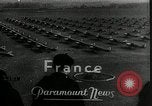
A formation of thirty French Caudron bi-planes in flight, and nine Italian aircraft stunting in Europe.
Increased aircraft production in Italy, France and Germany. The nose of a large aircraft showing gun turret. The two machine guns are pointed down over pilots compartment. A formation of thirty French Caudron bi-planes in flight. An airfield in Germany. 'Berlin' written on top of one hangar. Formation of nine German Bucker Jungmann trainers taking off. Junker C-38 taking off. Prime Minister of Italy Benito Mussolini and Italian military officials walk past a line of Breda and Savoia Marchetti on Italian airfield just outside Rome. Nine Italian aircraft stunting over Rome.
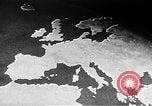
The Marshall Plan is implemented in different European nations so that they can recover from economic problems.
A documentary reviews the beginning of the Marshall Plan in response to the post war (World War II) needs of Europeans. It depicts its effect on the lives of people during the first year of its implementation. People on a street. A map of Europe. Animation depicts the production of textile, output of coal, requirement of manufacturing industries, and declined food production. U.S. Secretary of State George Catlett Marshall, Jr., tells the people of Europe that if they work together the U.S. will supply money for food and raw material. Wide and close views of newsstand in England, United Kingdom. British man buys a newspaper to read about Marshall's appeal in the newspapers. Traffic on the streets in Paris, France. Foreign Minsters of Great Britain, France and Soviet Foreign Minister Vyacheslav Mikhailovich Molotov arrive in Paris and ascend steps of building for a meeting to discuss the Marshall Plan. The delegates and representatives at the meeting. Molotov comes out from the meeting. Animated map depicts 16 European nations which get together to work for economic development. The delegates seated in a hall in Paris. The Organization for Economic Co-operation is formed. Delegates of European nations signing a document. Wide view of a port area in Norway. A book on a table reads 'First Annual Requirements Program Submitted to O.E.E.C.' Wide view of Piazza del Popolo in Rome, Italy with Flaminio Obelisk in the center and traffic on roads Traffic and people on roads of Ulus Square (Ulus Meydanı) in Ankara, Turkey, with the equestrian statue Monument of Victory, depicting Mustafa Kemal Atatürk on horseback. Busy street and pedestrian traffic along O’Connell Street in Dublin, Ireland, with Gresham Hotel visible. Traffic passing over the O’Connell Bridge spanning the River Liffey. The U.S. Capitol in Washington DC. A meeting of the Congress for the Marshall Plan. View of Paul G. Hoffman who was appointed the administrator of the Marshall Plan. Man smoking cigarette and tuning radio to listen to broadcast. Families and people in living rooms listen on radios to news about the European Recover Program (ERP). Men unload food supplies sent by the U.S. from ships at a dock. People listen to a dignitary. Men unload machines from the ship. Workers in the Netherlands ride bicycles. A man unloads cotton from a freight car. A sign for ERP on the freight car. Men at work in a textile mill in the Netherlands. A coal hoist is delivered in Britain and British miners dig out coal and use the hoist. The coal is loaded aboard a ship for trade. Fiat automobile assembly line seen in operation in Turin, Italy, with workers building new 1948 Fiat Topolino cars.
People get work and production increases in different sectors after the implementation of the Marshall Plan in Europe.
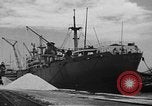
A documentary depicts the effect of the Marshall Plan on the lives of people during the first year of its implementation in Europe. A ship at a dock. Men unload sulphur from the ship. A framers sprays sulpahte in a field. A boat underway. Norwegian fishermen aboard the boat are fishing. A fishing net in water. Fishes in the net. A fisherman empties a box containing fishes. People at work in fish canning industry. Women working in Norway put fish in tins. Women packing fishes in cans. The packed cans on display in a shop. A woman buys packed fish cans. The packed cans on a table of a shop in Britain. A man selling spaghetti at a store in Italy. Cattle at a dairy. Tractors in front of a house. A farmer man sits on a tractor. Animated map shows export of tractors from the U.S. to France. Animation depicts contribution of the people for the recovery program. A man ploughs a field with the help of a tractor. A power plant in France being built (appears to be the Roselend Dam hydroelectric complex in the French Alps at Savoie. View includes what may be the penstock gallery leading down to the La Bâthie power station. French Men at work building the power plant. Men construct highways with the help of modern machinery in Greece. Men at work. Construction of new houses for homeless people. Men at work. A man makes shoes. People at work in a shoe factory. Shoes at display in a shop. A man looks at the displayed shoes in a store. Increase in production in different sectors after the implementation of the Marshall Plan. Food kept on a table. Coal production increased to 11%. Coal being shoveled by hand. Textile production increased to 18%. Steel production increased to 40%. A railroad train moves on tracks. Man in Italy plays bocci ball with his unemployed friends. A British family eating food in their kitchen. A French family gathered for a meal. Woman taking a roasted meat from oven and putting it on table for large family in France to eat. Members of a union seated around a table. A coal miner works in a mine. A man plows a field.
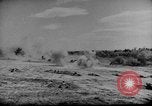
U.S. Army Quartermaster Corps prepare mortars, fire anti aircraft guns, and provide supplies during World War II.
Clip opens with brief World War I scene, circa 1917, of new American army recruits receiving army uniforms being issued by a U.S. Army Quartermaster. Clip then covers U.S. Army Quartermaster Corps' combat operations in various Theaters of Operations during World War II. Quartermaster Corps soldiers with rifles under the cover of a military truck during battle. Troops in trucks. An aircraft in low flight over a field. A U.S. Army truck. A Quartermaster fires an anti aircraft gun. Explosions occur and smoke rises. A British tank in a field. Soldiers beside a truck. Cans and barrels stacked on the ground. An enemy German tank in a field. Soldiers take cover. Quartermasters with guns in a trench. They come up the trench in prone positions. Dramatized battle scene with several Quartermaster corps casualties beside a wire fence. Soldiers prepare a mortar gun. An anti aircraft gun on an army truck. A soldier takes aim and fires a rifle during training. The Quartermaster flag hoisted on a pole. Actual footage shows aerial view of Bataan, and then ground views of groups of remaining U.S. Army soldiers around time of surrender of Bataan in April 1942. American soldier seen with their hands up and under guard of Japanese soldiers during Bataan surrender. Landing crafts arrive at a beach in North Africa. Supplies being offloaded at various battle fronts of World War 2. Soldiers and supplies off-loaded on the beach. Quartermasters seated on supplies boxes. Landing crafts arrive at a beach in the South West Pacific. Troops move across the beach. Troops disembark from landing crafts and move across a beach in Sicily, Italy. The Quartermasters unload boxes of supplies during various beach landings. They unload supplies and fire artillery on a beach head in Italy. Troops in trucks. A convoy of trucks loaded with supplies. Ammunition, ration and personnel in trucks move from Algeria to the front in Tunisia. Explosions occur and smoke rises. Trucks advance through smoke at night and in difficult conditions. Quartermaster General Major General E. B. Gregory speaks about the Quartermaster Corps. He says that the Quartermasters distribute goods to the army during training and combat. The movement of the Corps should be so regulated so as to deliver the goods at the right time in the right quantity.
CRITICALPAST.COM: About Us | Contact Us | FAQs - How to Order | License Agreement | My Account | My Lightboxes | Shopping Cart | Advanced Search | Featured Collections | Website Terms & Conditions | Privacy Policy ©2026 CriticalPast LLC.
License Agreement |
Terms & Conditions |
Privacy Policy
©2026 CriticalPast LLC.