


 Francais
 Deutsch
 Italiano
Refine Your Search
Fort Oglethorpe stock footage and images
- Showing 379 to 384 of 739 results more
more Hide
Hide
Ruins of United States Army western forts from the late 1800s, and United States Army cemetery near "Battle of Little Big Horn"
Ruins of United States Army (Union) forts established in the Great Plains of the United States from the time of the American Civil War until the late 1800s. View of various paintings by Remington that depict the Union Army regular soldiers in encampments and in battle with Native American Indians in western regions of the United States. Tombstones in a graveyard or cemetery near the Battle of the Little Big Horn. The grave of Corporal of the 2nd U.S. Cavalry James Kelley dated December 21, 1866. The grave of 2nd U.S. Cavalry Blacksmith Dennis Hurley dated July 29, 1878. The grave of Trumpeter 1st U.S. Cavalry Albert Anderson dated 22nd February, 1929. The grave of the an Unknown Soldier.
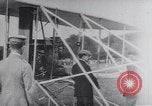
The Wright airplane flies over Fort Myer in Virginia, United States during an official exhibition of its flight.
Official trial of the Wright airplane at Fort Myer in Virginia, United States demonstrating compliance with specifications in the presence of the Aeronautical Board, U.S. Signal Corps. Orville Wright prepares to board the airplane with U.S. Army Lieutenant Frank Purdy Lahm. A crowd around the launching tower. U.S. soldiers pull a weight up in the tower. The airplane is launched and it flies over barracks and administration buildings. A crowd attends the event. The airplane lands. The airplane being readied for a flight. Orville Wright stands near the cockpit of the aircraft.
Aerial view of the Fort Lesley J McNair, the Jefferson Memorial, Washington Monument and Lincoln Memorial in Washington DC.
Aerial views of Washington DC monuments and the surrounding area in the United States. Aerial views of the Fort Lesley J McNair. The Jefferson Memorial, the Washington Monument and the Lincoln Memorial.
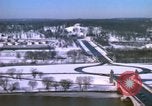
Aerial view of the Fort Lesley J McNair, RFK Stadium and the Capitol building in Washington DC after a snow storm.
Aerial views of Washington DC monuments and the surrounding area in the United States. Aerial views of the Fort Lesley J McNair. The Robert F. Kennedy Memorial Stadium. Buildings along the sides of the Potomac River. Capitol building in the far background.
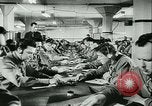
U.S. Army Signal Corps officers train at Fort Monmouth and production of signal communication items in the United States.
The role and contribution of the U.S. Army Signal Corps in combat and war. U.S. Army Signal Corps officers train at the Signal Corps Officer Candidate School (OCS) Fort Monmouth, New Jersey. Officers train at telegraph machines under the supervision of an instructor. Officers seated at desks in a classroom. Instructors take classes with the help of charts, diagrams and black boards. Officers seated atop electric poles for training. Two officers train in hand-to-hand combat at the OCS. Officers learn to use Radio Relay. Students listen to an instructor as he demonstrates the process. A U.S. soldier lays field wire across a hilly terrain to establish wire communications in the European Theater during World War II. Soldiers on the hill. Soldiers set up a sending station at the point where the wire can't go forward. A receiver is set up at the point from where the wire can go forward again. A soldier receives a photograph of a map through facsimile. Items of signal communication including radio relays, receivers, walkie-talkies, radio boxes and fuses to be produced and distributed by the USA Signal Corps to all other ground forces, navy and the Allies. New, modern, improved efficient signal communication equipment. A soldier displays two old type fuses and their counterparts.
Funeral of U.S. Army General Jacob Devers, at Fort Myer in Virginia.
A group of men comes out of the Old Post Chapel at Fort Myer followed by U.S. Army pallbearers from the 3rd Infantry Regiment, carrying the coffin of U.S. Army General Jacob L Devers. Members of the funeral party stand on either side of the path, as the pallbearers carry the flag draped casket out of the chapel and place it on a horse drawn caisson carriage.