


 Francais
 Deutsch
 Italiano
Refine Your Search
Goodenough Island New Guinea 1943 stock footage and images
- Showing 601 to 606 of 13636 results more
more Hide
Hide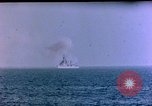
U.S. Navy ships bombard beach at Kerama Retto, Okinawa, during World War II
U.S. Navy bombardment of beach at Kerama Retto, Okinawa, during World War 2 invasion of Okinawa. LSMs (Landing Ship, Medium), destroyers and battle ships underway. Rocket barrage fired. Rocky shoreline of the island in the background. Details seen include: Time 00:25 is the battleship USS New Mexico, BB-40 firing main and secondary batteries. Time 00:41 is a detailed closeup bow-on view of the battleship USS New Mexico, BB-40. (Note: As seen, the USS New Mexico did retain its casemated 5-inch/51 caliber guns for the Okinawa invasion, contrary to some historic references.)
Influx of foreign immigrants add to total population in Northeastern States of the United States.
Animated map of Northeastern United States bounded with Middle States and Southeastern States. Map depicts geographical condition of Northeastern States. Map marks States of Maine, New Hampshire, Vermont, Massachusetts, Rhode Island, Connecticut, New York, New Jersey, and Pennsylvania. Map shows Northeastern settlement during colonial period by Scotch, English, Dutch, Germans, and Swedes. Also shows influx of French Canadians during early 19th century and immigrants from different countries occupying urban Northeastern centers. Map explains the population occupying region.
Peacetime activities and contributions by the U.S. Army in the United States.
Scenes from Army Day on April 6, 1934. Secretary of War George Henry Dern, in broadcast to the nation about importance of the Army, in peacetime. Brief glimpses of the Yellowstone River lower falls and Old Faithful and Beehive geysers erupting in Yellowstone Park, Wyoming. View amongst log buildings in Reproduction of Army Fort Dearborn, at the 1933 Century of Progress Exposition in Chicago, Illinois. A pioneer wagon; Native American Indians in ceremonial regalia; antique locomotives and trains at the Exposition. Army General Leonard Wood being sworn in as the Governor General of the Philippines. Closeup of General of the Armies, John J. Pershing, America's highest ranking Military officer. Headquarters of Walter Reed Army hospital, in Washington, DC, named for U.S. Army Major Walter Reed, who confirmed that yellow fever is transmitted by mosquito. Acting on this, the U.S. was able to complete the Panama Canal. View of French dredging equipment sitting idle in the water after Yellow Fever prevented them from completing the Panama Canal. Closeup of U.S. Army General William C. Gorgas, who, in 1904, headed the Sanitary Department that controlled mosquitoes and eradicated Yellow Fever, so the Panama Canal could be finished. View of alligator in swamp near the Panama Canal. Photograph of George Washington Goethals, Chief Engineer credited with making the canal happen. Explosives employed in Panama Canal construction. Earth and rocks being loaded into open rail cars. A steamship transiting the Panama Canal. The Washington Monument; U.S. Library of Congress; and the Lincoln Memorial, cited as examples of accomplishments by U.S. Army engineers. The Wilson Dam, under construction by Army engineers, in Muscle Shoals, Alabama and system of levees being built to control the Mississippi River. The raging Mississippi River during 1927 flood. Flood victims being assisted by U.S. Army soldiers, at a tent camp, receiving food and clothing. An Army airplane flying over a forest fire. Army personnel supervising men in the Civilian Conservation Corps or CCC. Mail being loaded aboard an Army airplane, as airmail service is being opened between Washington DC and New York City. President Woodrow Wilson talking with Army pilot Major Reuben H. Fleet. Mail being loaded into the nose of an airplane. U.S. Army Douglas World Cruiser airplanes in flight, returning from their trip around the world in 1924. A pilot sitting in front seat of a Douglas O-38 airplane, pulls a fabric hood over his cockpit to practice "blind flying". View of the aircraft in flight, with instructor pilot in the open rear cockpit. Army aviators taking a camera and a rifle aboard their airplane as they prepare to leave on an aerial mapping flight. Aerial view of skyscrapers of Manhattan Island, New York City. Army Signal Corps personnel working on communications devices. A cable laying ship operating at sea, in support of the U.S. Army's Alaskan cable and telegraph system. Men loading chemicals into hoppers on Army crop dusting airplane. Several views of Army airplanes crop dusting. Glimpse of boll weevil, the target of their efforts. Closeup of Karl Connell, who as a major in the AEF, in World War I, invented a superior gas mask known as the “Connell” or “Victory” mask. A group of miners wearing gas masks enter a smoky mine entrance. The Army invented tear gas, which is shown being used to thwart a bank robbery, in a staged demonstration. Brigadier General Hugh Johnson, appointed by President Franklin Roosevelt, as head of the Great Depression era National Recovery Administration, or NRA, is seen about to give a speech. Narrator cites him as an example of U.S. Army officers who also serve the country in civilian life. Scene shifts to cadets on parade at the United States Military Academy, West Point, New York.
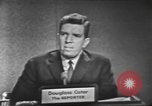
Kennedy and Nixon comment on nuclear disarmament before summit conference during a presidential election debate in the U.S.
The third Kennedy-Nixon Presidential Debate in the United States. Douglass Cater from Reporter magazine asks Democratic candidate Senator John F Kennedy about what sort of prolonged period does he envisage before there could be a summit conference and if he thinks that there could be any new initiatives on the grounds of nuclear disarmament during that period. Kennedy answers and talks about the need of strengthening of U.S. conventional forces and increasing missile production. On the question of nuclear weapon disarmament he states that the new administration should renew negotiations with the Soviet Union. He disagrees with the present administration's efforts regarding nuclear controls and general disarmament. He states that if he would get a chance he would make efforts to provide for control of nuclear weapons testing and begin general disarmament levels. Republican candidate U.S. Vice President Richard M Nixon mentions about his speech on this subject. He disagrees with Kennedy's statement that the administration is not making any effort because this is the highest level of operations in the whole State Department which is under the President himself. Roscoe Drummond from New York Herald Tribune asks Vice President Nixon about defending Quemoy and Matsu islands. Nixon answers and states that the U.S. should not deal with dictators and should not indicate which particular area it would defend. He gives the examples of the Korean War and World War II where the U.S. made a mistake. He says that Kennedy should change his position in this regard and not encourage the Chinese Communist and Soviet aggressors to react. Kennedy says that the treaty with the Republic of China excludes Quemoy and Matsu from the treaty area. He states that the treaty only includes defending of Formosa (Taiwan) and the Pescadores. He concludes that the U.S. should meet its commitments and raise war if the Chinese Communists attack the Pescadores and Formosa.
Operations of the air defense team in United States, during World War II.
The operations of the air defense team in United States. A B-26 aircraft flies over a snow-covered area. Views of American domestic sites that need antiaircraft protection. View of Southern Manhattan Island, showing skyscrapers. Views of factories, mills, canals, bridges, steel mills, refineries, industrial sites, and a major Dam. Warships passing through a canal. Soldiers man antiaircraft gun in New York City, with view of skyscraper buildings in background. Barrage balloons fly in the sky. Soldiers stand near barricades and 37mm antiaircraft artillery . Short range radar in the field to detect and locate the position of enemy aircraft. Soldier sits and watches the radar. Men and women in Air Defense Area Operations Center. They coordinate fighters, antiaircraft artillery, barrage balloons, radar, and searchlights. They discuss and detect the positions of the enemy. An area controller talks on the telephone. Men and women locate enemy aircraft on a map. Soldiers stand near antiaircraft artillery.
Celebrations in the U.S. on the surrender of Italy and the conditions in Sicily leading to the surrender.
The Allied Forces crush the Axis troops in the Mediterranean during World War II. Italy surrenders. Newspapers in the U.S. show headlines of surrender of Italy. People in the streets read the newspapers. In New York the Americans of Italian descent celebrate Italy's surrender. Roll of honor. A child holds an American flag. American and Italian flags side by side. An Allied convoy moves towards North Africa. Allied troops land in North Africa. U.S. General Eisenhower, the Supreme Allied Commander; British General Montgomery, commander 8th Army and Lieutenant General Clark, commander of U.S. 5th Army are shown. U.S. President Franklin D Roosevelt and the British Prime Minister Churchill meet at Casablanca. Prelude to surrender- Allied planes drop bombs on islands off Italy. Allied warships off the coast of Sicily. Fighting off the coast. Sicily is invaded by the Allied troops. Americans land on shore. The U.S. 7th Army and the British 8th Army land on Italy's mainland behind a naval bombardment. The Allied soldiers in the streets. U.S. Army Corporal Salvatore DeMarco, of Italian origin, reunites with his family after having left home at age 15. German troops surrender to the U.S. troops and are sent out of the country in ships.
CRITICALPAST.COM: About Us | Contact Us | FAQs - How to Order | License Agreement | My Account | My Lightboxes | Shopping Cart | Advanced Search | Featured Collections | Website Terms & Conditions | Privacy Policy ©2026 CriticalPast LLC.
License Agreement |
Terms & Conditions |
Privacy Policy
©2026 CriticalPast LLC.