


 Francais
 Deutsch
 Italiano

Refine Your Search
Goodenough Island New Guinea 1943 stock footage and images
- Showing 67 to 72 of 13663 results more
 Hide
Color Sound
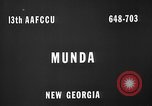
U.S. reconstructs captured Japanese airfield at Munda Point, New Georgia Island, in World War II.
Wreckage and debris on Munda Point airfield, New Georgia Island, after its capture by U.S. forces during World War 2. Dead Japanese soldiers. Destroyed aircraft on island as result of U.S. bombing. Reconstruction workers clear and enlarge runway and operations tower as Americans improve and expand the airbase for their own operations. U.S. flag raised on pole. Seen are the first aircraft to land at Munda Point (on August 14, 1943). The first is a Royal New Zealand Air Force P-40 with letter K and white stripe on fuselage and a white tail. It is followed by a J2F Duck carrying U.S.Marine Brigadier General Francis P. Mulcahy to set up his new headquarters at Munda Point.
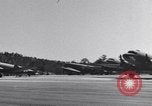
U.S. 801st Medical Air Evacuation Squadron tends wounded evacuated in C-47s from New Georgia Island, in World War II.
Sequence starts at Tontouta Air Base in New Caledonia, on the near left side of runway 2 in the area of the 13th Troop Carrier Squadron ( a.k.a. the Thirsty 13th) with their plane "Lady Eve" on the right. (The 801st Medical Air Evacuation Squadron was assigned to the 13th TCS on January 9, 1943, and remained with it until the end of the war. But they also flew on planes of the 63rd and 64th TCSs, and with the Marines.) Takeoff is on runway 11 at Tontouta Air Base. A pilot and a co-pilot at the controls in the cockpit of a C-47. A navigator at work. C-47s in flight west over New Georgia, 10 miles southeast of Munda, near Eghelo. The plane landing at Munda has no tail number and is probably a U.S. Marine Corps plane. They evacuate wounded soldiers from Munda airstrip on New Georgia Island in the Solomon Islands during World War 2. Doors of the aircraft are opened. An ambulance backs to the door of the aircraft. Litter patients are removed from the ambulance and loaded aboard the C-47.
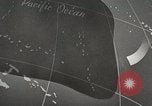
American Forces advance against Japanese held areas of New Guinea during World War II.
Animated map shows U.S. forces extending control in the Pacific the the Marshall and Gilbert Islands in the Pacific during World War 2. An American soldier sentry near a destroyed Japanese reinforced concrete bunker. Another looks at a destroyed Japanese coastal gun. More American soldiers looking over destroyed Japanese coastal defenses. A destroyed Japanese type 95 HA-GO tank. A U.S. troops look at a destroyed Japanese Mitsubishi G4M (Betty) bombers on a captured airfield. Animated map of New Guinea.showing Allied advance to Hollandia. U.S. aircraft carriers with their aircraft flying overhead. Closeup from behind of a Navy Grumman F6F Hellcat aircraft taking off from a carrier. Formations of U.S. Navy carrier-based aircraft in flight overhead. Escort aircraft carriers (called "Jeep" carriers by the narrator) are seen with decks full of airplanes. Douglas SBD Dauntless aircraft taxiing on a carrier deck. An F6F fighter plane taking off. A formation of Douglas SBD Dauntless airplanes viewed from above, flying over the sea. Gun camera films from U.S. aircraft strafing parked airplanes on Japanese airfields.
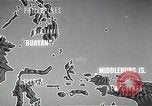
U.S. heavy bomber B-24 Liberator drops bombs over target areas in Buayan in Philippines Island during World War II.
Philippines Campaign in Philippines during World War II. A pictorial map showing distance of 650 MI from Middleburg in New Guinea to Buayan in Philippines Island. U.S. Army men at work. Two U.S. officers on ground below an aircraft during inspection. A U.S. heavy bomber B-24 Liberator taxis and takes off. The B-24 in flight. The nose section of the aircraft. Other aircraft in flight. Bombs being dropped on target areas in Buayan in the Philippines Island. Smoke rises from explosions. Aerial views of inhabited areas in the Philippines Island. A wooded region in view. Paved ways in view on ground. A column of smoke rises from the bombarded areas
Americans strategy to attack and weaken Japanese position in South West Pacific during World War II.
An orientation film about the American campaign against the Japanese in the South West Pacific during World War II. A map of the South West Pacific area depicts islands of New Britain and New Ireland as the chief objectives of the Americans. By taking over these islands the Japanese would be isolated in the area. But a strong defense zone around these islands proves to be the main deterrent. U.S. officers including U.S. Army General Douglas MacArthur discuss the strategy to attack and isolate the Japanese in the South West Pacific region. Animated map of the region depicts American plan to capture the Admiralty Island by attacking the island of Manus and Los Negros to be followed by an attack in Madang in New Guinea. This would result in isolation of New Britain and New Ireland and weaken apanese position in the region.
U.S. Army Air Corps strike on Langoan, Samate and Boela, during Philippines Campaign in Philippines Island during World War II.
Philippines Campaign in Philippines during World War II. A pictorial map showing the location of Langoan in Philippines. The bombs strike on Langoan on Celebes Island. A map showing the location of Samate. Bombs being dropped on Samate in New Guinea. A map showing the location of Boela. Bombs being dropped on Boela on Ceram Island. Smoke rise from explosions.
CRITICALPAST.COM: About Us | Contact Us | FAQs - How to Order | License Agreement | My Account | My Lightboxes | Shopping Cart | Advanced Search | Featured Collections | Website Terms & Conditions | Privacy Policy ©2026 CriticalPast LLC.
License Agreement |
Terms & Conditions |
Privacy Policy
©2026 CriticalPast LLC.